
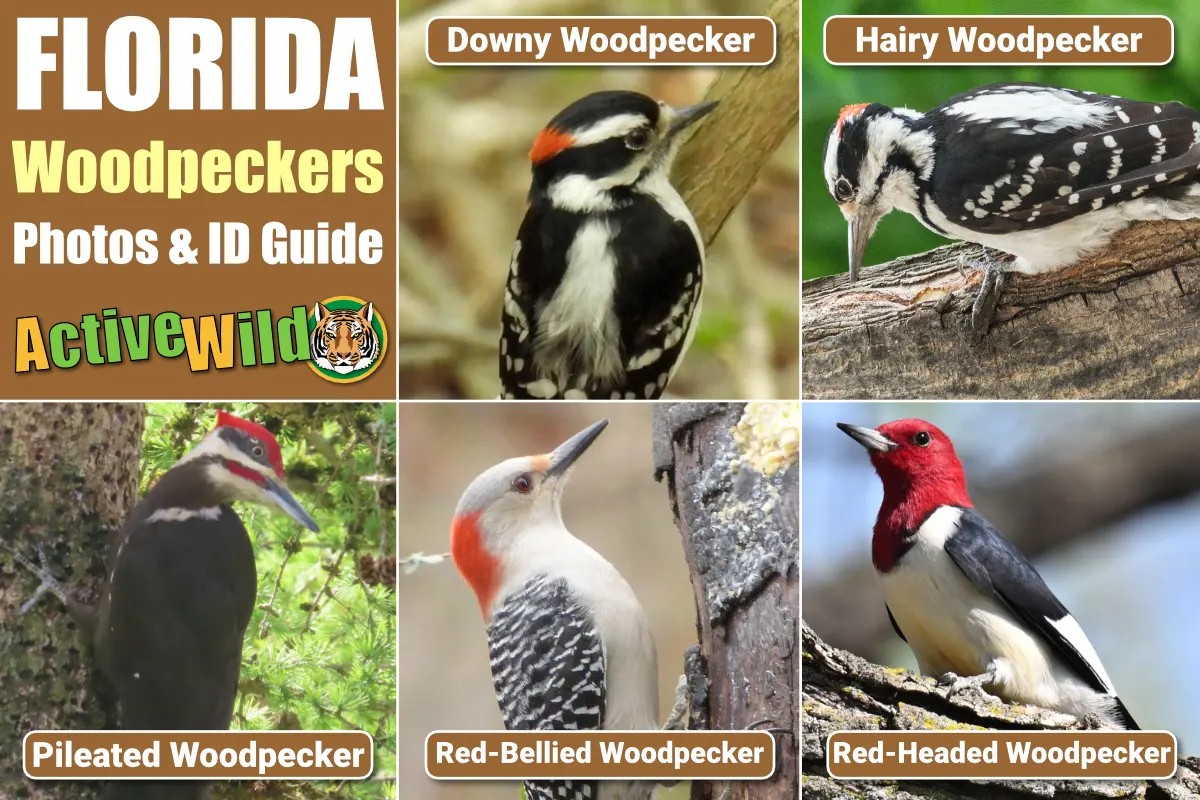
Florida Woodpeckers play an important role in the Sunshine state’s forest ecosystems by controlling populations of insects that can damage trees, including beetles, ants, and other wood-boring pests.
The nesting cavities excavated by woodpeckers also provide shelter for many other wildlife species, such as owls, bluebirds, squirrels, and bats, making woodpeckers valuable contributors to forest biodiversity.
This guide highlights key woodpecker species commonly found in Florida, including the Downy Woodpecker, Hairy Woodpecker, Ivory-billed Woodpecker, Northern Flicker, Pileated Woodpecker, Red-bellied Woodpecker, Red-cockaded Woodpecker, Red-headed Woodpecker, and Yellow-bellied Sapsucker.
Each species is described with a focus on identification features and natural history to assist birdwatchers and naturalists in recognizing these birds in the field.
Have you seen any of these woodpecker species in Florida? Share your own observations, thoughts and questions in the comments section at the bottom of the page – we’d love to hear from you!
The Active Wild Team
Page Index
Downy Woodpecker
- Scientific name: Dryobates pubescens
- Family: Picidae
- Rank: species
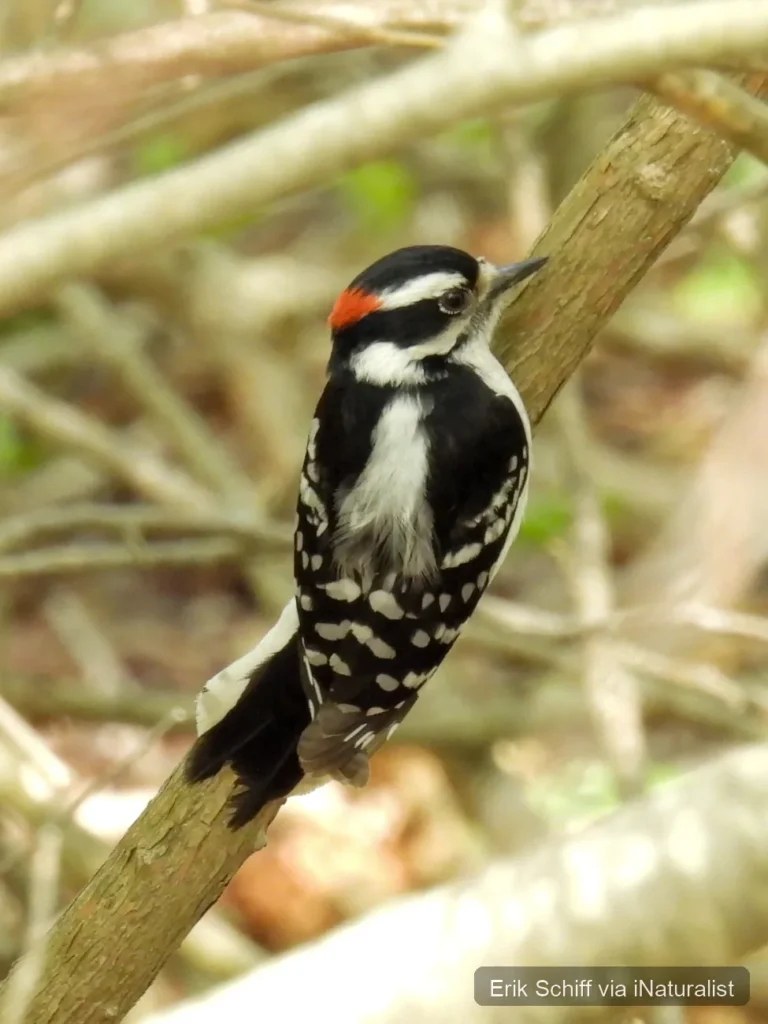
The Downy Woodpecker is a small bird, about 6 to 7 inches long, easily recognizable by its black and white plumage. It has a white underside, black wings with white spots, and a white back stripe.
Males have a small red patch on the back of the head, while females lack this mark. Its short, straight bill is noticeably smaller compared to similar woodpecker species.
In Florida, the Downy Woodpecker is commonly found in wooded areas, parks, and suburban yards with trees. It often clings to tree trunks and branches, searching for insects hidden under the bark.
Hairy Woodpecker
- Scientific name: Dryobates villosus
- Family: Picidae
- Rank: species
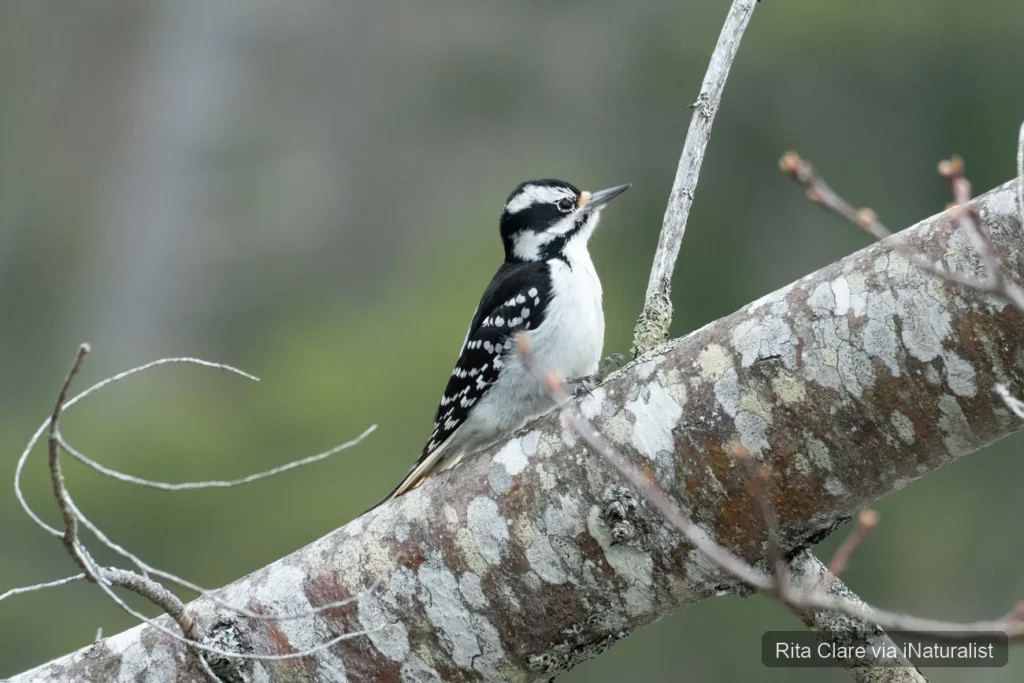
The Hairy Woodpecker is a medium-sized bird, measuring about 9 to 10 inches in length, with a sturdy body and a relatively long, straight bill. It has a black and white pattern, featuring a white underside, black wings with white spots, and a prominent white stripe down its back. Like several other woodpecker species, males have a small red patch on the back of the head, while females lack this red marking.
In Florida, the Hairy Woodpecker is typically found in mature forests, woodlands, and sometimes in suburban areas with large trees. It is often seen clinging to tree trunks and branches, using its strong bill to forage for insects beneath the bark. Its larger size and longer bill help distinguish it from the smaller Downy Woodpecker, which is a common look-alike in the region.
Ivory-billed Woodpecker
(No photo – species presumed extinct)
- Scientific name: Campephilus principalis
- Family: Picidae
- Rank: species
The Ivory-billed Woodpecker was one of the largest and most striking woodpeckers in North America. Known for its glossy black plumage, bold white markings, and prominent crest, it inhabited the extensive old-growth forests and swamp woodlands of the southeastern United States and parts of Cuba, where it fed primarily on insects found beneath the bark of dead and dying trees.
The species suffered catastrophic declines during the late nineteenth and early twentieth centuries as logging destroyed vast areas of its habitat and hunting pressure increased.
Despite occasional reported sightings, no conclusive evidence of a surviving population has been obtained in recent decades, and the Ivory-billed Woodpecker is widely presumed extinct, making it one of the most famous examples of modern species loss in North America.
Northern Flicker
- Scientific name: Colaptes auratus
- Family: Picidae
- Rank: species
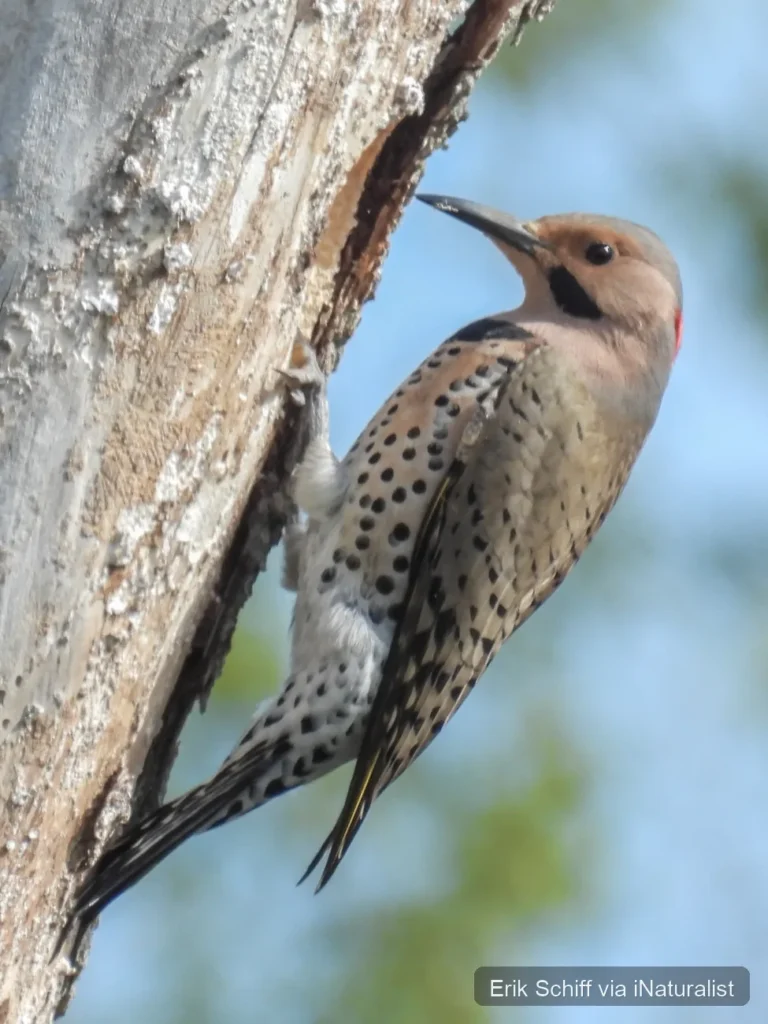
Northern Flickers are medium-sized woodpeckers commonly found in open woodlands, forest edges, and suburban areas across Florida. They measure about 11 to 12 inches in length and have a distinctive barred brown back and spotted beige underside. Their wings and tail show a bright yellow or red flash, depending on the region.
These birds have a prominent black crescent-shaped mark on the breast and a spotted belly. Males can be identified by a red or black mustache stripe on the face, which females lack.
Northern Flickers often forage on the ground, searching for ants and insects, unlike many woodpeckers that mostly feed on tree trunks. Their size, spotted underparts, and colorful wing flashes help distinguish them from other woodpecker species in Florida.
Pileated Woodpecker
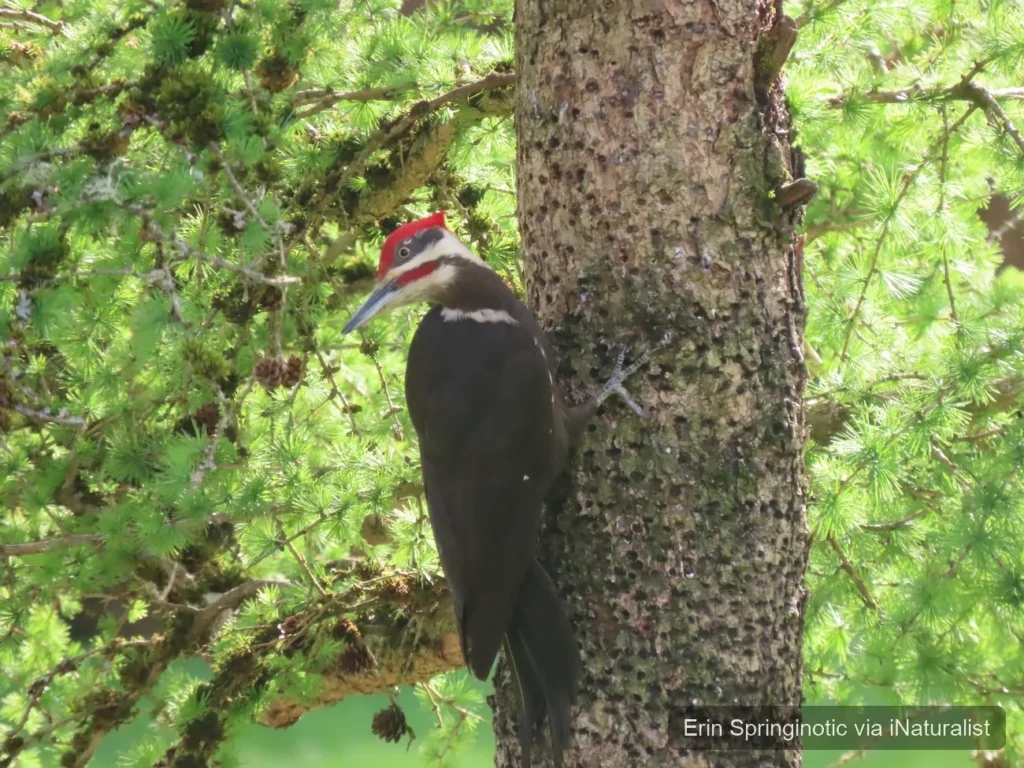
- Scientific name: Dryocopus pileatus
- Family: Picidae
- Rank: species
The pileated woodpecker is a large bird, about 16 to 19 inches long, notable for its striking black body and prominent red crest. Its white underwing patches are visible in flight, and it has a long, chisel-like bill used for excavating wood. The face features white stripes running down the neck, and males have a red line on the cheek, while females’ cheeks are mostly black.
Common in mature forests and wooded areas across Florida, this species often nests in large dead trees or snags. Its loud, ringing calls and distinctive drumming are key signs of its presence.
The pileated woodpecker’s size, bold red crest, and white underwing flashes make it easy to distinguish from other woodpeckers in the region.
Red-Bellied Woodpecker
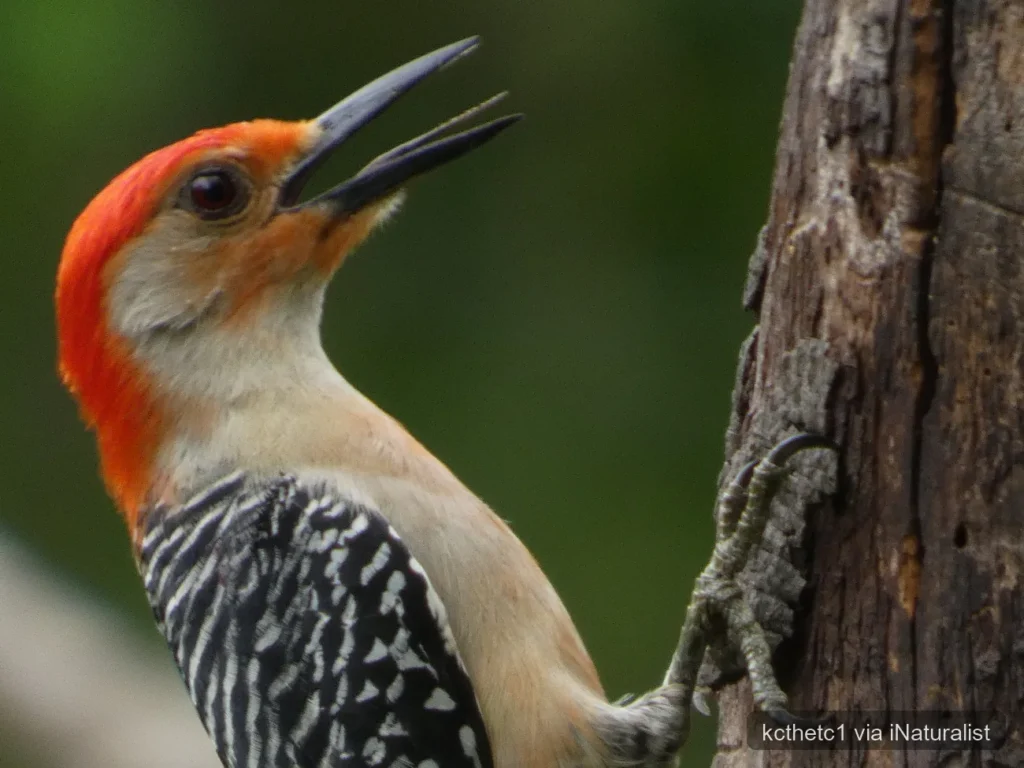
- Scientific name: Melanerpes carolinus
- Family: Picidae
- Rank: species
The red-bellied woodpecker is a medium-sized bird, measuring about 9 to 10 inches long, with a sturdy body and a slightly rounded head. Its back is barred with black and white, creating a distinctive pattern.
The species is named for the pale, often faintly reddish, belly patch, which can be hard to see in the field. Both sexes have a bright red cap extending from the bill to the nape, but males show more extensive red on the head, including the nape, while females have red mainly on the crown.
This woodpecker is commonly found in a variety of wooded habitats throughout Florida, including hardwood forests, suburban parks, and wooded residential areas. It often forages on tree trunks and branches, using its strong bill to probe for insects and occasionally eating fruits and nuts.
Red-Cockaded Woodpecker
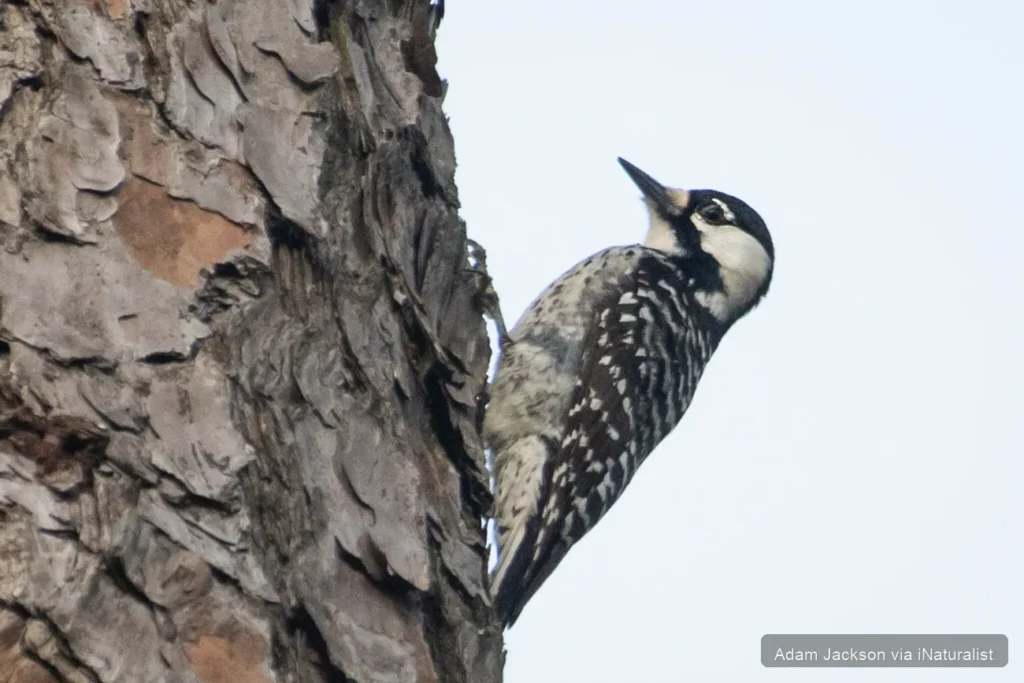
- Scientific name: Leuconotopicus borealis
- Family: Picidae
- Rank: species
The red-cockaded woodpecker is a small to medium-sized bird, about 7 to 8 inches long, with mostly black plumage marked by white barring on its wings and back. It has a distinctive white cheek patch and a narrow black cap.
Males are identified by small red streaks, called “cockades,” on the sides of their black cap, which are not visible on females. Its bill is slender and pointed, suited for drilling into pine trees.
This woodpecker is closely associated with mature pine forests in Florida, especially those with old, living pines softened by heart rot for cavity excavation. It often forages on tree trunks and branches, searching for insects.
Red-Headed Woodpecker
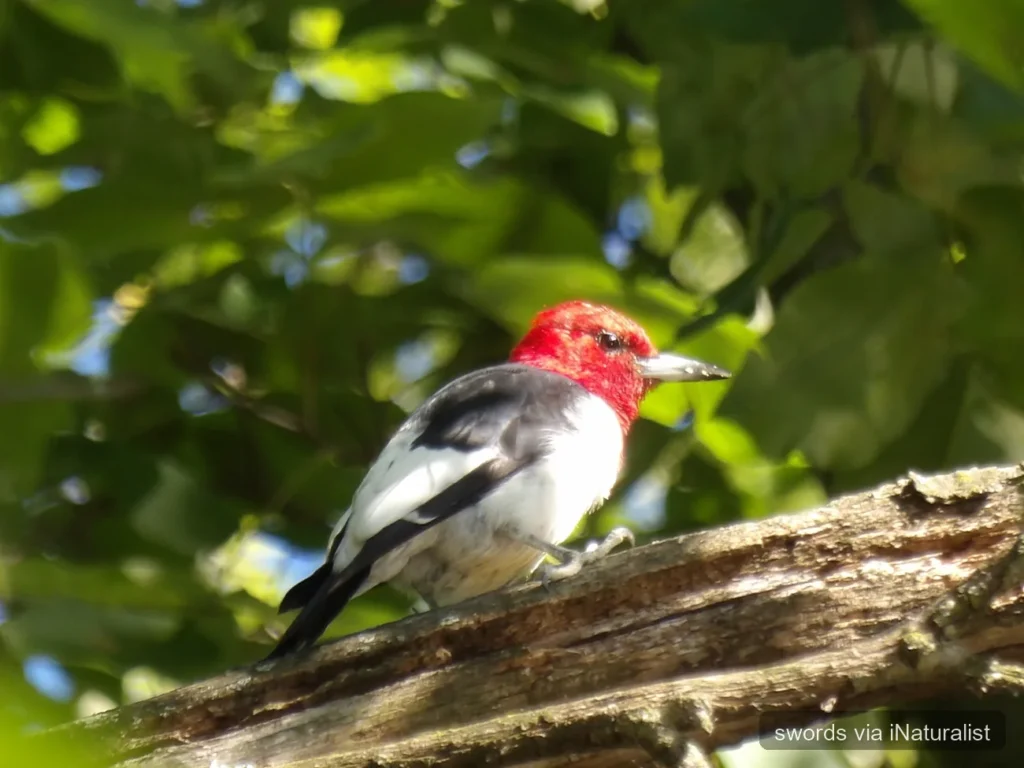
- Scientific name: Melanerpes erythrocephalus
- Family: Picidae
- Rank: species
In Florida, the red-headed woodpecker is often found in open woodlands, groves, and edges of forests where dead trees or large branches are available. It is a medium-sized bird, about 8 to 9 inches long, with a striking appearance. Its head, neck, and throat are bright red, contrasting sharply with its white underparts and black back and wings. The wings have large white patches that are visible in flight.
This woodpecker’s bold coloration makes it easy to identify, especially compared to other woodpeckers in the region. Both males and females look alike, showing no significant differences in plumage.
The red-headed woodpecker feeds on insects, nuts, and fruits, often seen clinging to tree trunks or catching insects in midair. The red head and the pattern of black and white on the body are key features to recognize this species in Florida.
Yellow-Bellied Sapsucker
- Scientific name: Sphyrapicus varius
- Family: Picidae
- Rank: species
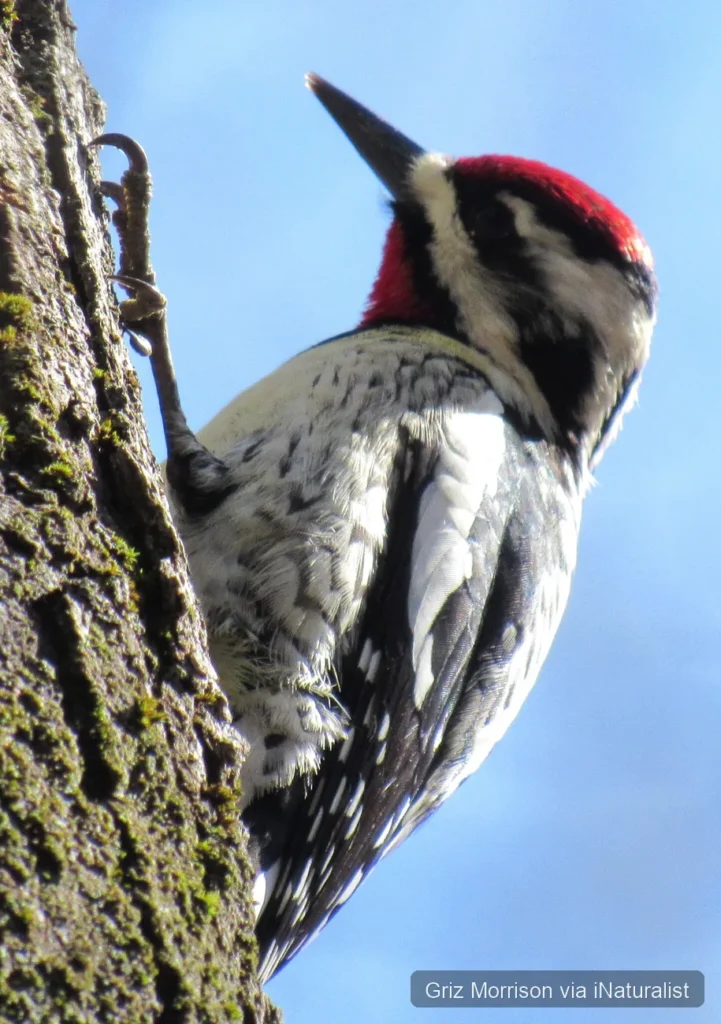
The Yellow-bellied Sapsucker is a medium-sized woodpecker about 7 to 8 inches long, notable for its distinctive yellowish belly and bold black and white facial markings. It has a barred black and white back and a white wing patch visible during flight.
Males exhibit a red throat patch, while females have a white throat, aiding in sex identification. Both sexes have a red crown and a black-and-white striped face.
This species frequents mixed woodlands, especially where deciduous trees are present, and is often found tapping shallow holes in tree bark to feed on sap. Its habit of drilling neat rows of sap wells in trees is a key identification clue.
Further Reading
You can find out more about Florida bird life on the following pages:
Discover more about wildlife in Florida: