
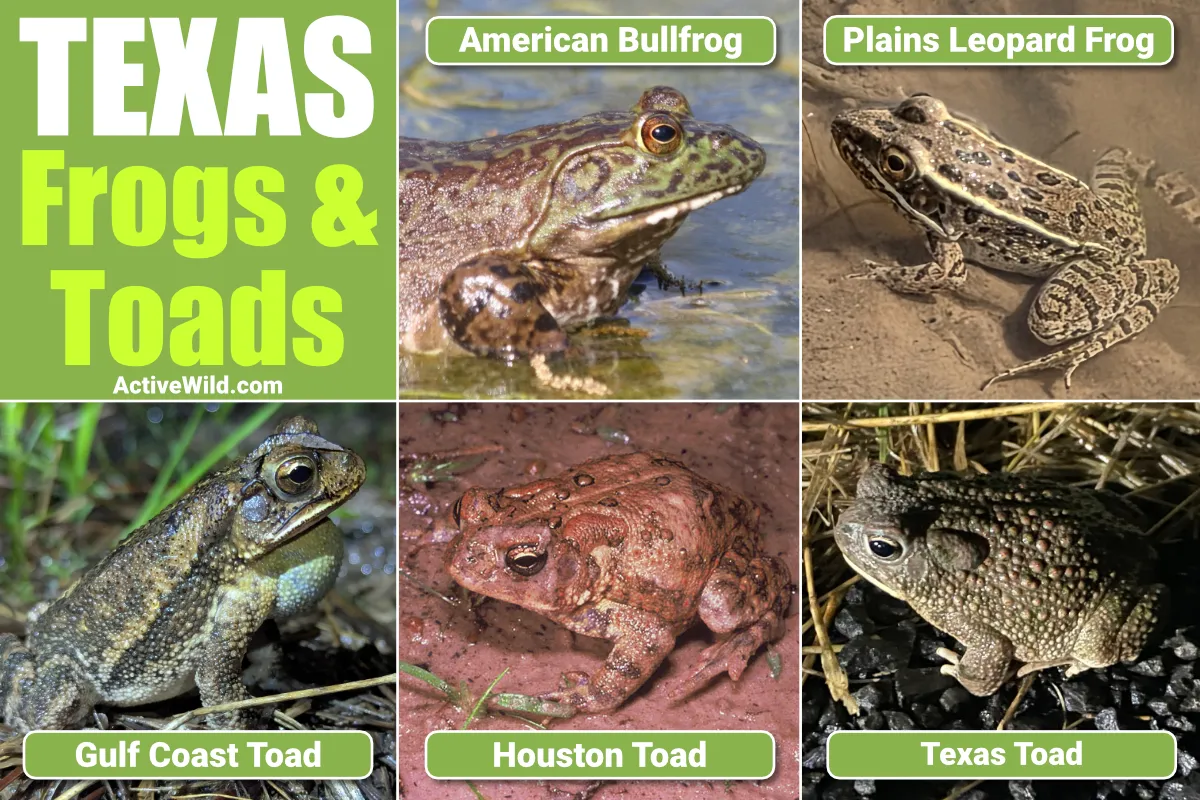
A list of Texas frogs and toads that includes features useful for identification, such as physical characteristics, typical habitats, calls, behavior, and general distribution.
The state of Texas is home to a wide range of frogs and toads, from widespread species such as the American Bullfrog and Gulf Coast Toad to more localized species such as the Houston Toad and Cliff Chirping Frog.
On this page, you’ll find a guide to common and less common Texas frog species, giving you a useful overview of the amphibian population of Texas.
Because ranges and appearances can vary, especially among similar leopard frogs, treefrogs, and toads, careful observation of size, pattern, habitat, and vocalizations is often important for accurate identification.
Page Index
American Bullfrog
- Scientific name: Lithobates catesbeianus
- Family: Ranidae
- Rank: species
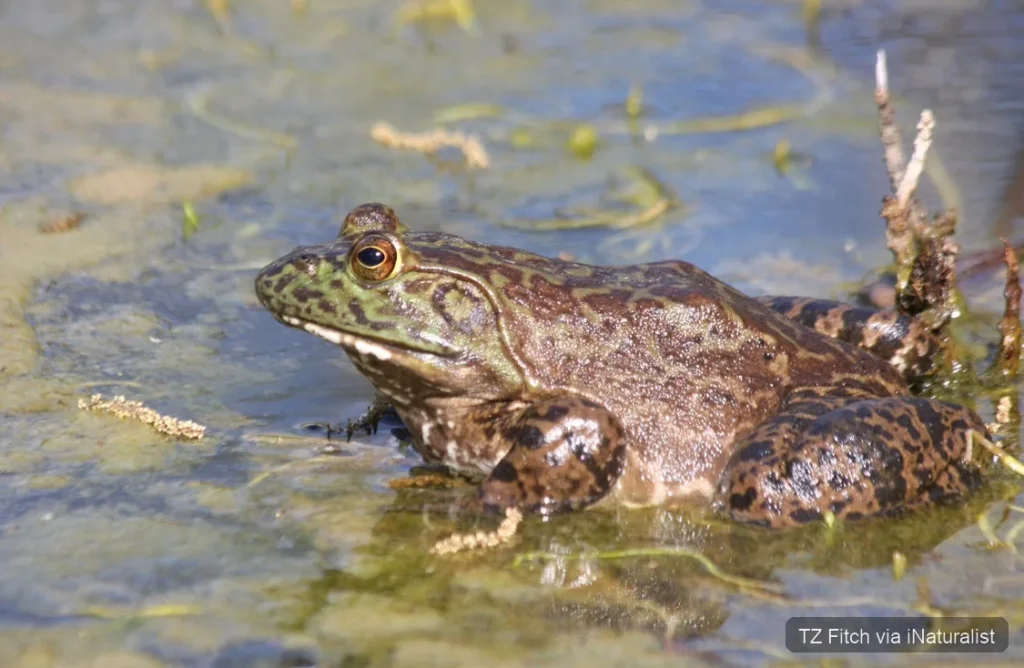
The very large size and exposed round eardrum are the best clues to the American bullfrog. Adults are bulky frogs, usually about 3.5–8 in (9–20 cm) in body length. They are green to olive or brown above, often with darker mottling, barred hind legs, and a pale belly that may be gray-mottled.
Unlike many similar frogs, American bullfrogs don’t have raised ridges running down their backs. Instead, the ridge curves around the eardrum behind the eye—a useful clue for identifying the species in the field. Males have a yellow throat and an eardrum larger than the eye; females have an eardrum about eye-sized.
In Texas, American bullfrogs are most often found in permanent water, including ponds, lakes, marshes, slow streams, stock tanks, and drainage ditches. They commonly sit at the water’s edge and jump with a loud splash when approached.
Blanchard’s Cricket Frog
- Scientific name: Acris blanchardi
- Family: Hylidae
- Rank: species
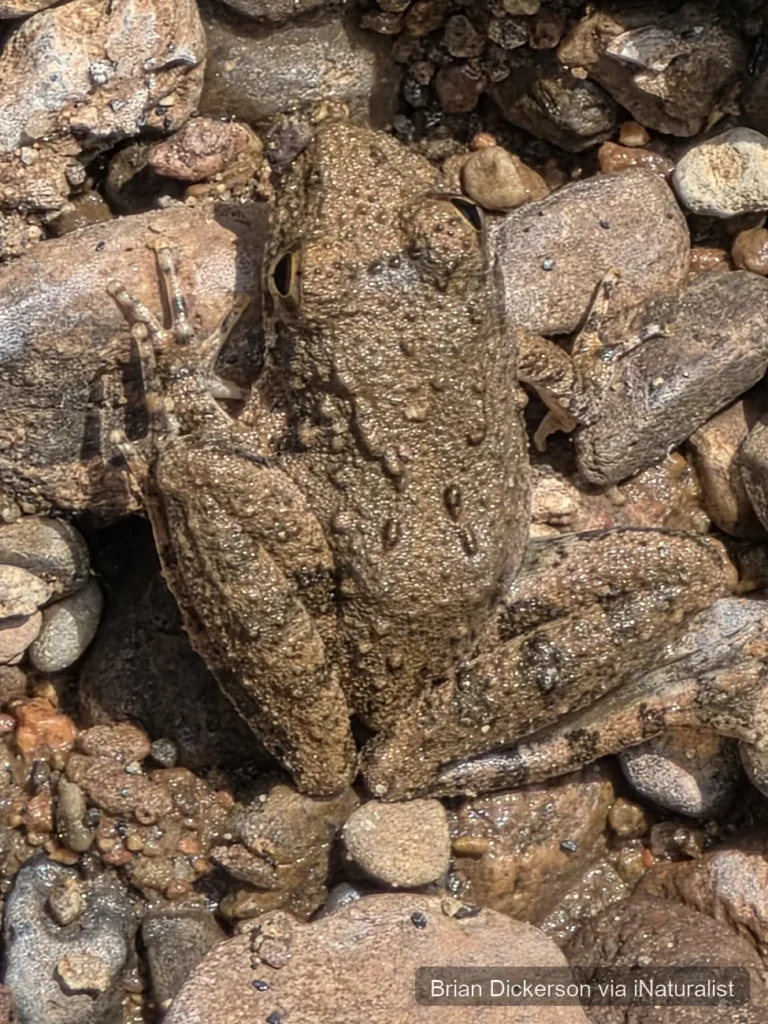
Small and low-bodied, the Blanchard’s cricket frog is usually about 0.6–1.5 in (1.6–3.8 cm) in body length. It has a narrow, pointed snout, long hind legs, rough warty skin, and only tiny toe pads. Color is variable, including gray, brown, tan, or green, often with a pale or bright stripe down the back and a dark triangle or bar between the eyes.
In Texas, this cricket frog is often seen along pond edges, marshes, slow streams, roadside ditches, and other shallow wet places. It usually sits in open mud or low vegetation and escapes with quick, erratic jumps.
Identification clues for this species include its very small size, rough skin, dark leg bars, and dry, clicking call like two pebbles being tapped together.
Cliff Chirping Frog
- Scientific name: Eleutherodactylus marnockii
- Family: Eleutherodactylidae
- Rank: species
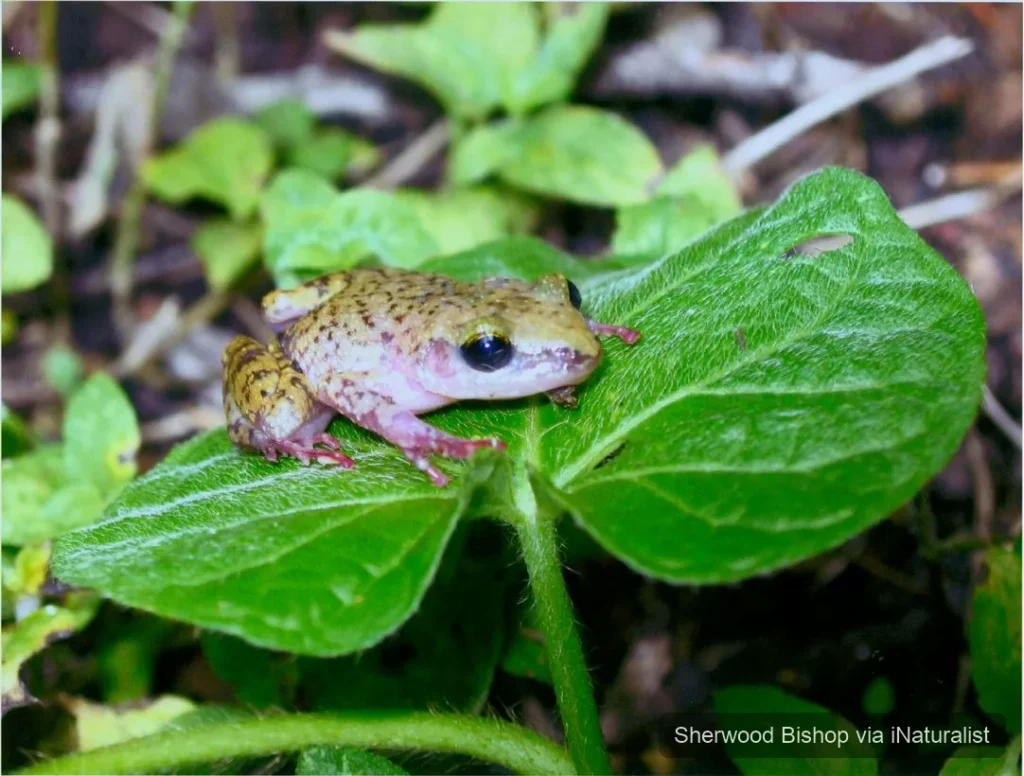
Mottled gray, tan, or brown and noticeably small, the cliff chirping frog is a compact, flat-bodied frog about 0.7–1.3 in (1.8–3.3 cm) in body length. It has a broad head, relatively large eyes, rough or granular skin, dark flecking or blotches, banded legs, and small expanded toe tips. The toes are mostly unwebbed, helping separate it from many small aquatic frogs.
In Texas, this frog is most often encountered in the Hill Country and Edwards Plateau around limestone cliffs, rocky ravines, caves, ledges, and stone walls. It hides in cracks and under rocks by day and is most noticeable on humid nights or after rain, when its sharp, repeated chirping call comes from crevices.
Cope’s Gray Treefrog
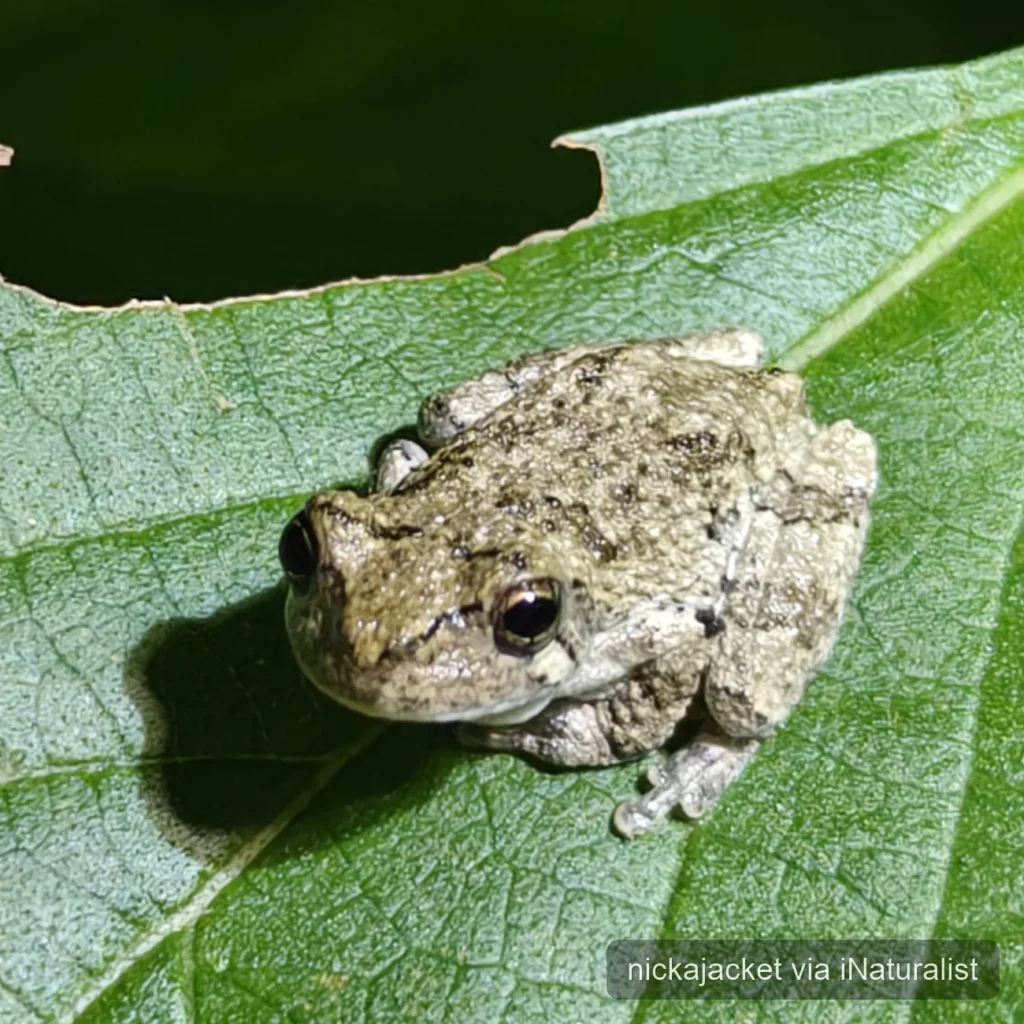
- Scientific name: Dryophytes chrysoscelis
- Family: Hylidae
- Rank: species
This medium-sized treefrog is about 1.25–2 in (3.2–5.1 cm) in body length. Its color changes from gray to green or brown, usually with darker mottling that resembles bark or lichen. The skin is slightly warty, the toe pads are large and rounded, and the inner thighs are bright yellow to orange. A pale spot below each eye and a fast, harsh trill help identify calling males.
Wooded wetlands, bottomland forests, pine woods, and shaded yards in eastern Texas are typical places to encounter the cope’s gray treefrog, especially at night or after rain. It often rests on tree trunks, shrubs, vines, walls, or window glass, and breeds in temporary pools, ponds, and flooded ditches.
Couch’s Spadefoot
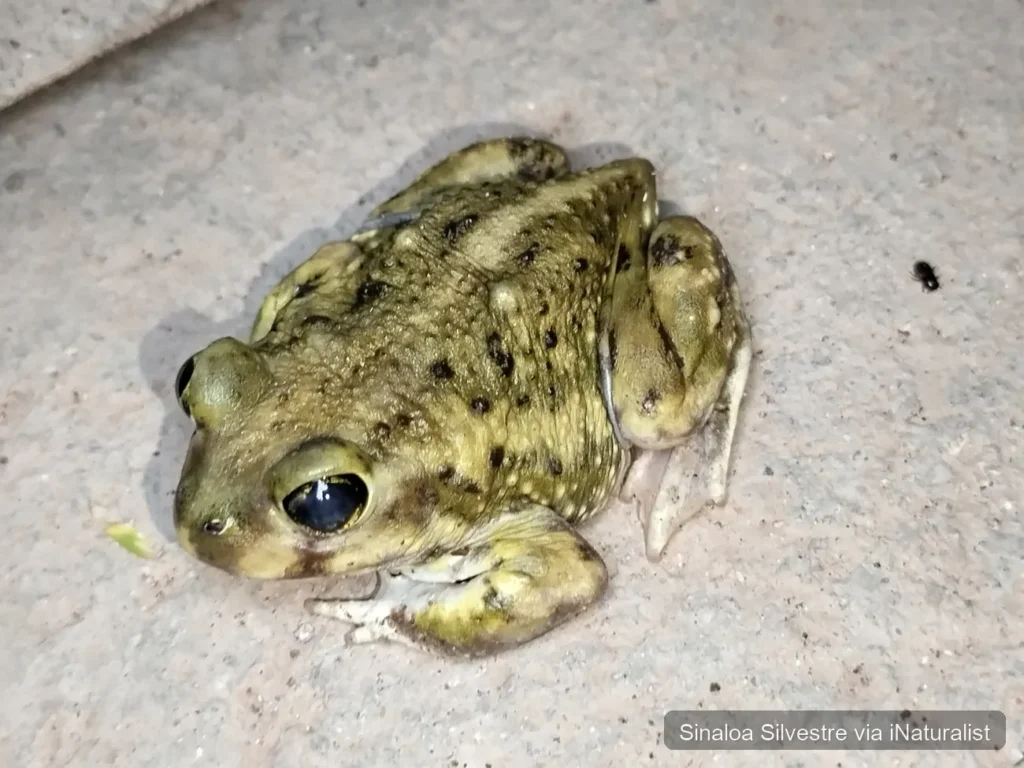
- Scientific name: Scaphiopus couchii
- Family: Scaphiopodidae
- Rank: species
This stout, toadlike amphibian is about 2–3.5 in (5–9 cm) in body length, with smooth to slightly granular skin, large golden eyes with vertical pupils, and no large parotoid glands. Color is tan, gray, olive, or yellowish, often with dark mottling or netlike markings.
The spadefoot’s “spade” is a small, shovel-like projection on each hind foot that is best seen at close range. It is used for digging.
In Texas, the couch’s spadefoot is most often encountered in arid and semi-arid grasslands, desert flats, thornscrub, sandy washes, fields, and roadsides with loose soil. It stays underground during dry weather and emerges at night after heavy warm rains.
Breeding groups gather in temporary pools, flooded ditches, and playas; males give a loud, nasal, sheep-like bleat.
Eastern Narrow-Mouthed Toad
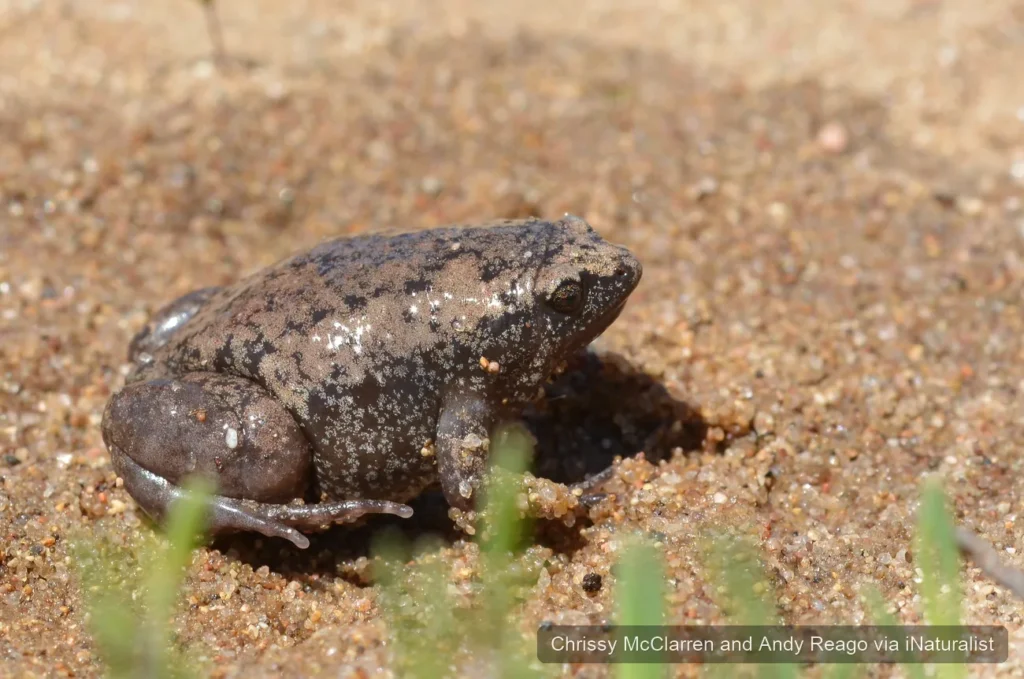
- Scientific name: Gastrophryne carolinensis
- Family: Microhylidae
- Rank: species
A very small, squat, oval-bodied frog, the eastern narrow-mouthed toad is about 0.75–1.5 in (1.9–3.8 cm) in body length. It has a pointed snout, tiny head, short legs, smooth skin, and no large parotoid glands. Color is gray, brown, tan, or reddish, often with darker mottling or a faint stripe pattern. A fold of skin across the back of the head and the narrow, pointed face are useful identification clues.
In Texas, this species occurs mainly in the eastern part of the state in moist woods, bottomland forests, pine lands, yards, and gardens. It is often found under logs, leaf litter, boards, or debris. After warm rains, males call from temporary pools and ditches with a high, nasal, bleating note.
Gray Treefrog
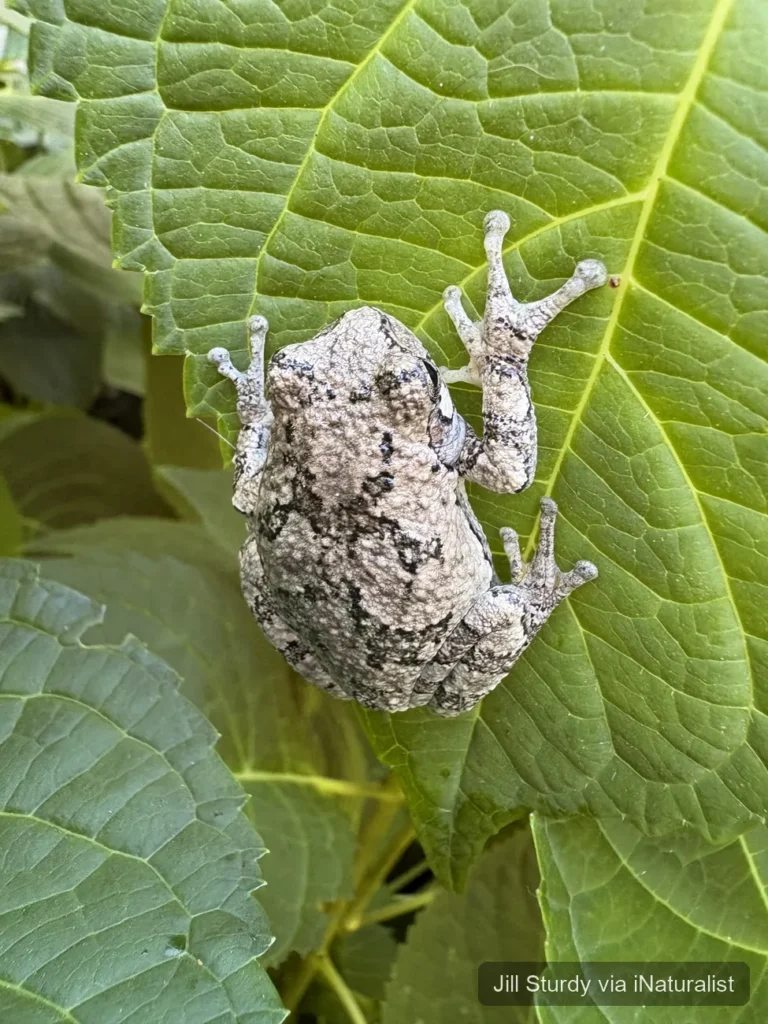
- Scientific name: Dryophytes versicolor
- Rank: species
Mottled gray, green, or brown coloring helps the gray treefrog blend with bark and lichen. This small treefrog is about 1.25–2.25 in (3.2–5.7 cm) in body length, with a broad head, warty skin, and large rounded toe pads. A pale spot below each eye and bright yellow to orange on the hidden inner thighs are useful clues, though the thigh color is usually seen only when the frog jumps.
In Texas, the gray treefrog is most likely in wooded eastern areas, especially near ponds, swamps, bottomland forests, and damp yards. It often rests on tree trunks, shrubs, walls, or windows at night.
This species is extremely similar to the cope’s gray treefrog; the male’s slower, musical trill is the best field mark.
Great Plains Narrow-Mouthed Toad / Western Narrow-Mouthed Toad
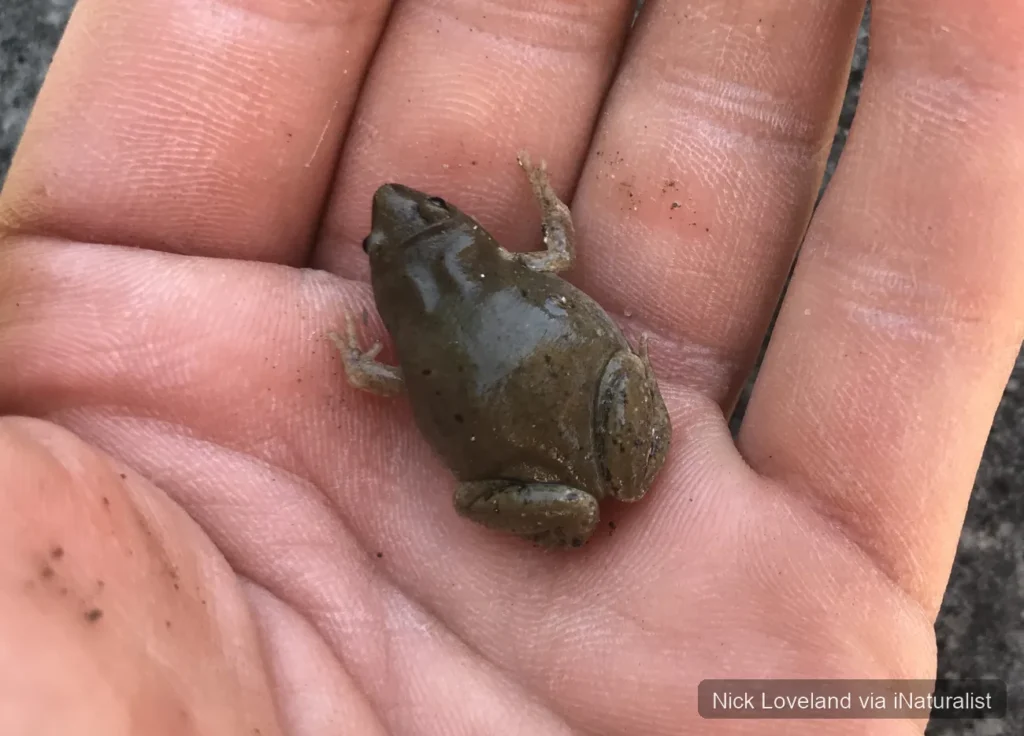
- Scientific name: Gastrophryne olivacea
- Family: Microhylidae
- Rank: species
In Texas, the Great Plains narrow-mouthed toad is most often encountered in grasslands, open scrub, mesquite savanna, fields, and roadside ditches, especially after warm rains. It spends much of its time hidden under rocks, logs, debris, or in shallow burrows, then breeds in temporary rain pools.
This is a very small, plump, oval-bodied frog, about 0.75–1.5 in (1.9–3.8 cm) in body length. It has smooth skin, a pointed snout, a tiny head, short legs, and no large parotoid glands. Color is usually olive, gray, tan, or brown with darker mottling and sometimes a pale mid-back stripe.
The toad’s narrow pointed face, flattened body, and skin fold across the back of the head help identify it. Males may show a dark throat when calling.
Great Plains Toad
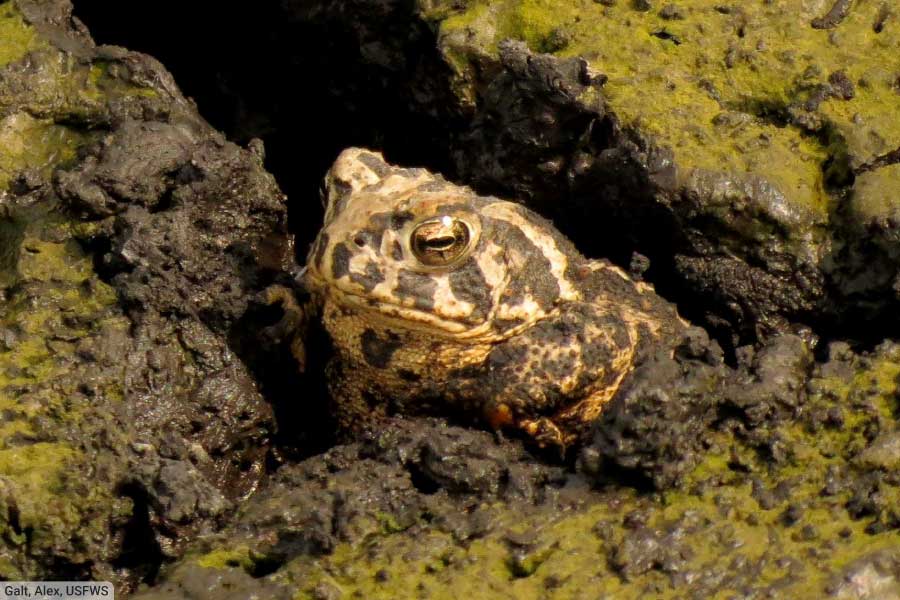
- Scientific name: Anaxyrus cognatus
- Family: Bufonidae
- Rank: species
Large dark blotches with pale borders are the most useful identification clue for the great plains toad.
This stout amphibian is about 2–4.5 in (5–11 cm) in body length, with dry warty skin colored gray, tan, olive, or brown. The back blotches usually contain several warts, and a pale midline may run down the back. It has large oval parotoid glands behind the eyes and raised cranial crests that form a noticeable bump between the eyes.
In Texas, the great plains toad is most often found in open grasslands, prairies, mesquite flats, cropland, and roadside ditches, especially in central and western parts of the state. It is commonly seen after heavy rains, when it emerges from burrows to breed in temporary pools.
Green Toad / North American Green Toad / Chihuahuan Green Toad
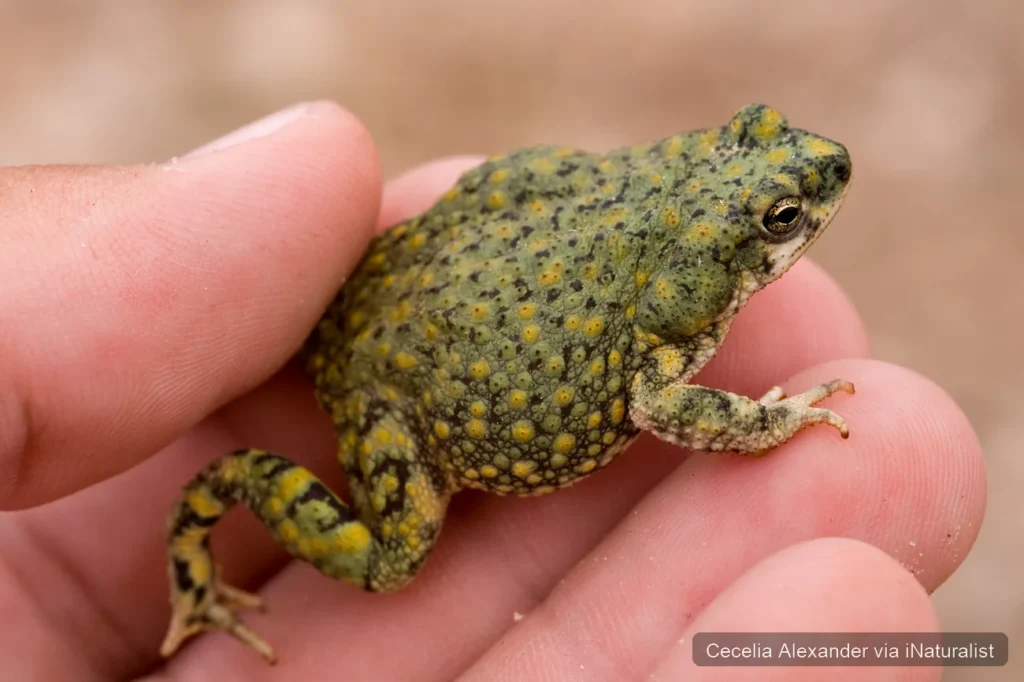
- Scientific name: Anaxyrus debilis
- Family: Bufonidae
- Rank: species
A small, compact toad, the green toad (also known as the North American Green Toad / Chihuahuan Green Toad) is about 1.25–2.1 in (3.2–5.3 cm) in body length. It has dry, warty skin, a short rounded snout, relatively small parotoid glands behind the eyes, and little or no raised cranial crest.
The species’ back is usually pale green, yellow-green, or olive with scattered dark spots or blotches, often edged in black. The belly is whitish, and the legs may show dark bars. Calling males often have a dark throat.
In Texas, the green toad is most often encountered in arid and semi-arid grasslands, desert scrub, mesquite flats, and sandy open areas, especially after summer rains. It breeds in temporary pools, roadside ditches, playas, and flooded low spots. Its small size and bright green ground color help separate it from most other Texas toads.
Green Treefrog
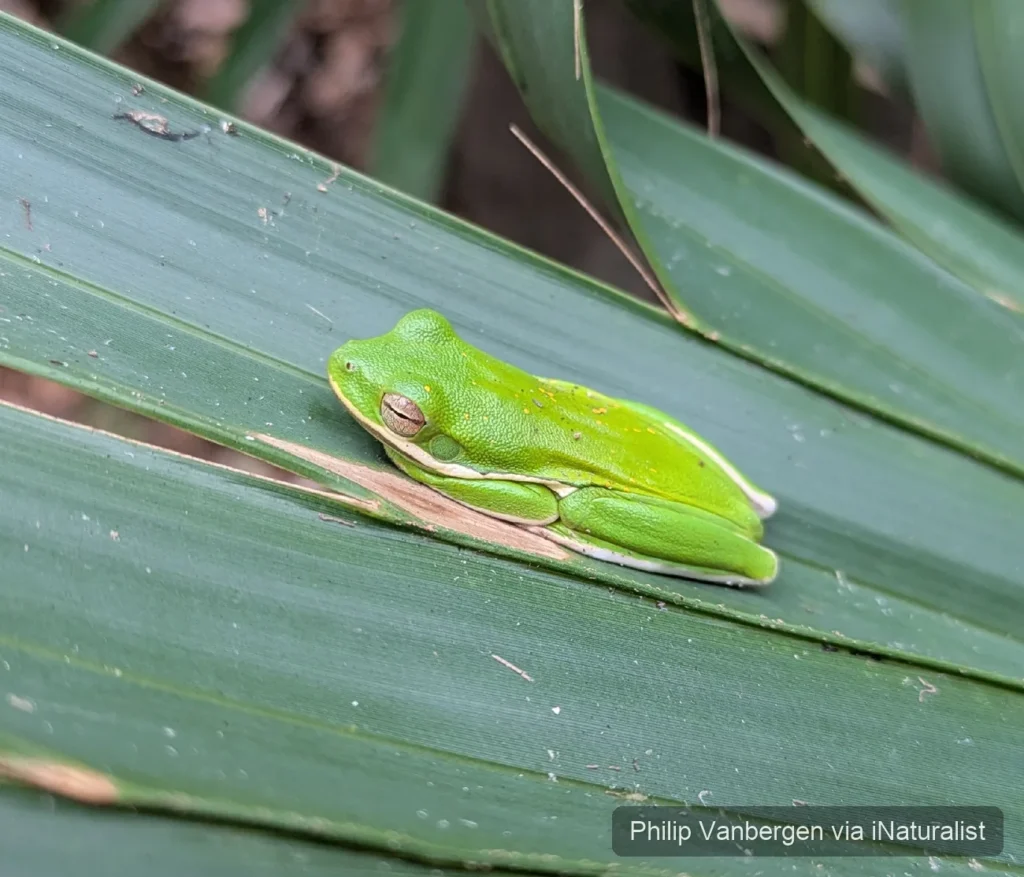
- Scientific name: Dryophytes cinereus
- Family: Hylidae
- Rank: species
Bright green to yellow-green coloring and a clean pale side stripe help identify the green treefrog. This smooth-skinned treefrog is about 1.25–2.5 in (3.2–6.4 cm) in body length, with a slender body, long legs, large toe pads, and a whitish belly. The stripe usually runs from the upper lip along the side, sometimes bordered below by darker color. Small pale or golden flecks may be present on the back.
In Texas, the green treefrog is most often found in the eastern and coastal parts of the state around marshes, swamps, ponds, ditches, wet woods, and vegetated yards. It often sits on reeds, shrubs, windows, or walls after rain.
The pale side stripe and bright green body of the green treefrog separate it from most other Texas treefrogs.
Gulf Coast Toad
- Scientific name: Incilius nebulifer
- Family: Bufonidae
- Rank: species
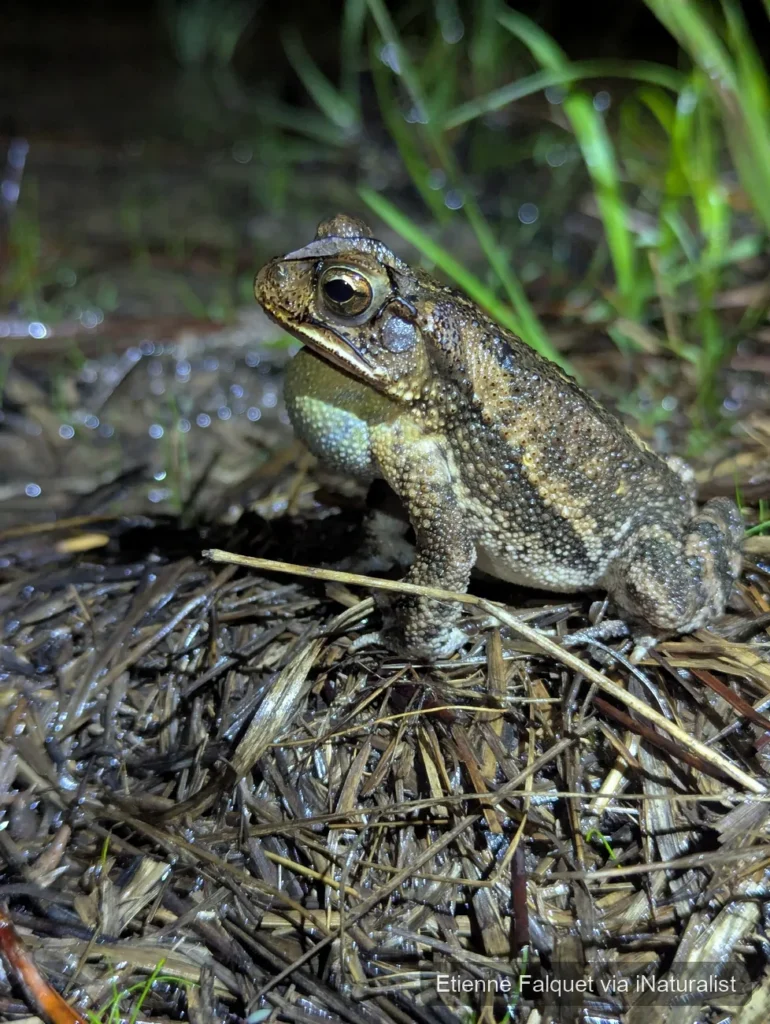
In Texas, the gulf coast toad is common in the coastal plain and much of the eastern and southern parts of the state. It is often found in yards, gardens, city parks, roadside ditches, wet fields, and around ponds, especially after rain or near outdoor lights at night.
This medium to large toad is about 2–4 in (5–10 cm) in body length. It has dry, warty skin, usually gray, tan, brown, or olive, often with darker blotches and a pale stripe down the back.
Key identification marks are the strong, raised cranial crests on the head and the long parotoid glands behind the eyes. The belly is pale and usually unmarked or lightly speckled. Breeding males may have a darker throat.
Houston Toad
- Scientific name: Anaxyrus houstonensis
- Family: Bufonidae
- Rank: species
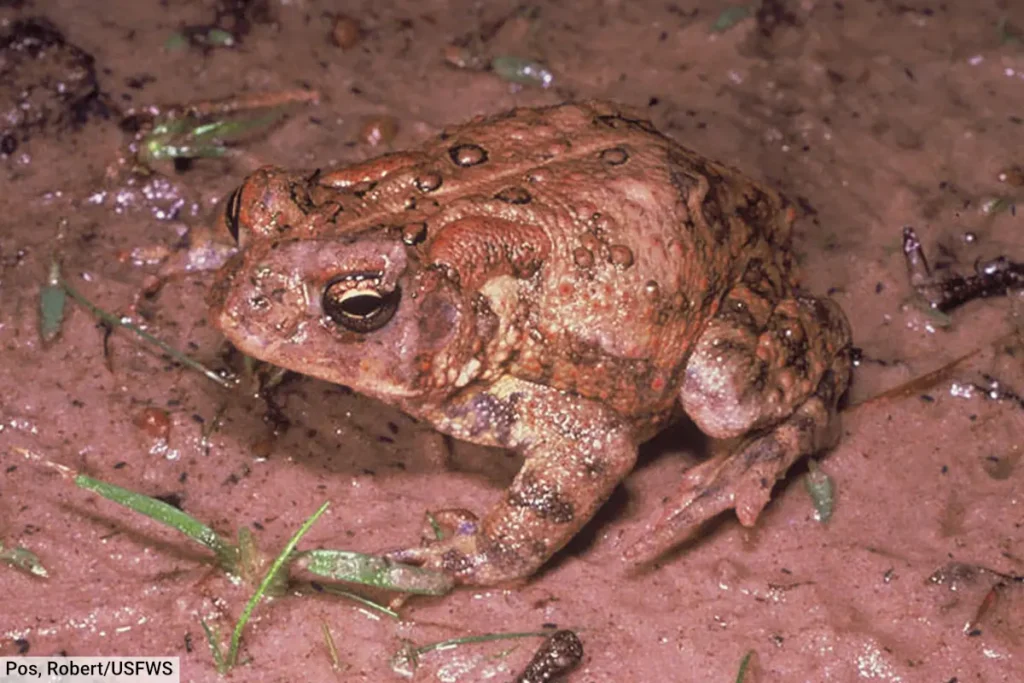
A small gray, tan, or brown toad with dark blotches and oval parotoid glands behind the eyes is the typical look of the houston toad. Adults are about 2–3.5 in (5–9 cm) in body length. The skin is dry and warty, the belly is pale and often lightly spotted, and a thin pale back stripe may be present. Breeding males often have a darker throat.
In Texas, this rare toad is associated with deep sandy soils in post oak or pine-oak woodlands, savannas, and nearby grass openings. It is most likely encountered on rainy nights near temporary or fishless breeding ponds. Identification should consider range and habitat; its clear, high, musical trill is often the best clue.
Hurter’s Spadefoot
- Scientific name: Scaphiopus hurterii
- Family: Scaphiopodidae
- Rank: species
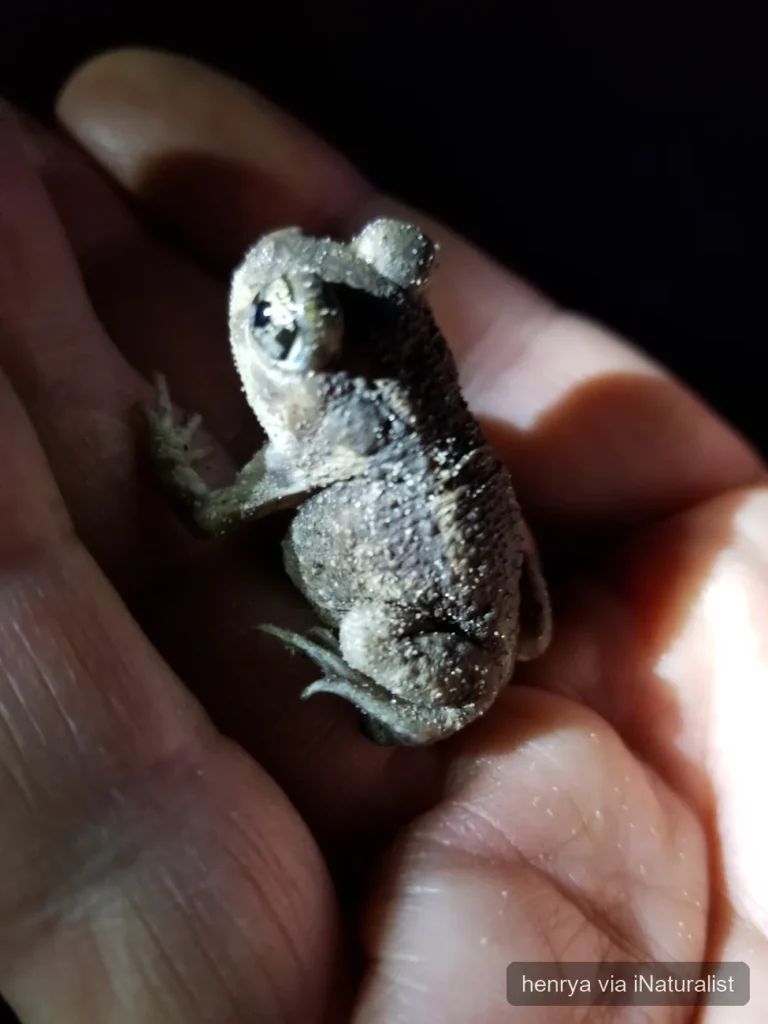
A small, squat, round-bodied spadefoot, the hurter’s spadefoot is about 1.5–2.5 in (4–6.5 cm) in body length. It has relatively smooth gray, tan, or brown skin with darker mottling, a pale belly, and often two light lines or a pale hourglass-like mark on the back. The eyes have vertical pupils, and each hind foot bears a hard, black, sickle-shaped “spade” used for digging.
In Texas, this species is most often found in areas with loose or sandy soil, including prairies, open woodlands, pastures, and roadside ditches. It spends much time underground and is usually encountered on warm rainy nights, especially near temporary rain pools and flooded fields.
Lack of large parotoid glands helps separate it from true toads.
Plains Leopard Frog
- Scientific name: Lithobates blairi
- Family: Ranidae
- Rank: species
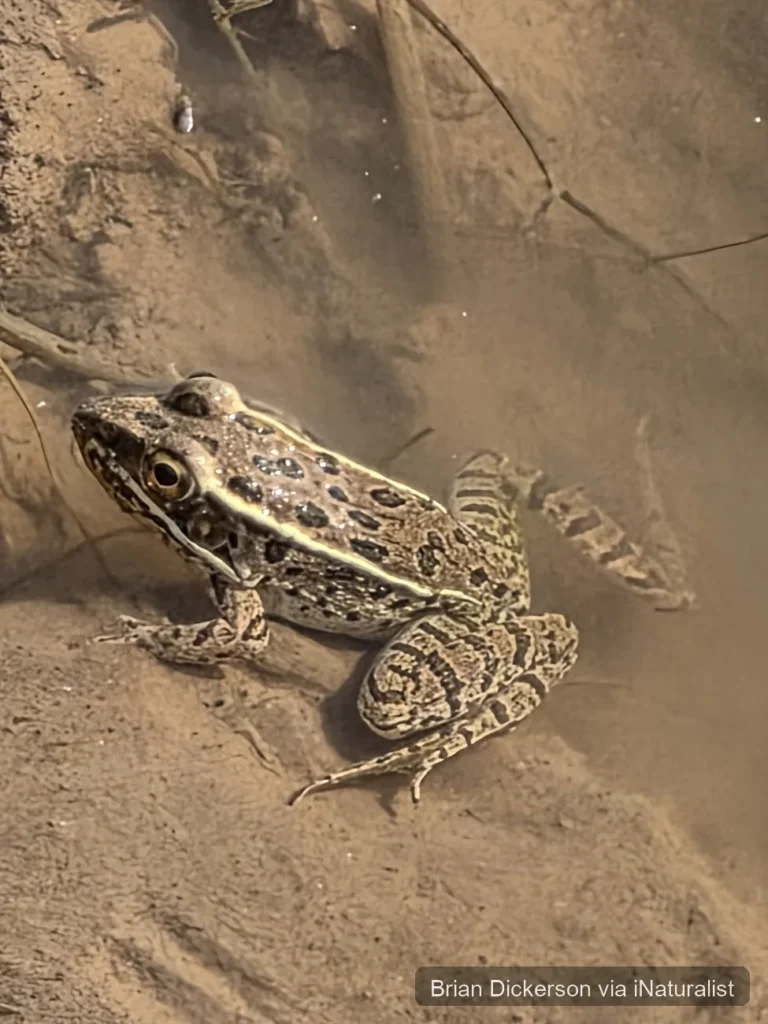
A tan, brown, or greenish frog with dark, pale-edged spots, the plains leopard frog has a slim body, long hind legs, and a pointed snout. Adults are usually about 2–3.5 in (5–9 cm) in body length. The belly is white, and two raised pale dorsolateral folds (raised skin ridges running along each side of a frog’s back) are typically broken or shifted inward near the hips, a useful identification clue.
In Texas, the plains leopard frog is found around ponds, marshes, slow streams, stock tanks, wet prairies, ditches, and grassy edges of water, especially in the northern and western parts of the state. It often jumps from shore into shallow water when approached.
Compared with similar leopard frogs, its rounded spots, pale jaw stripe, and interrupted rear back folds help confirm identification.
Red-Spotted Toad
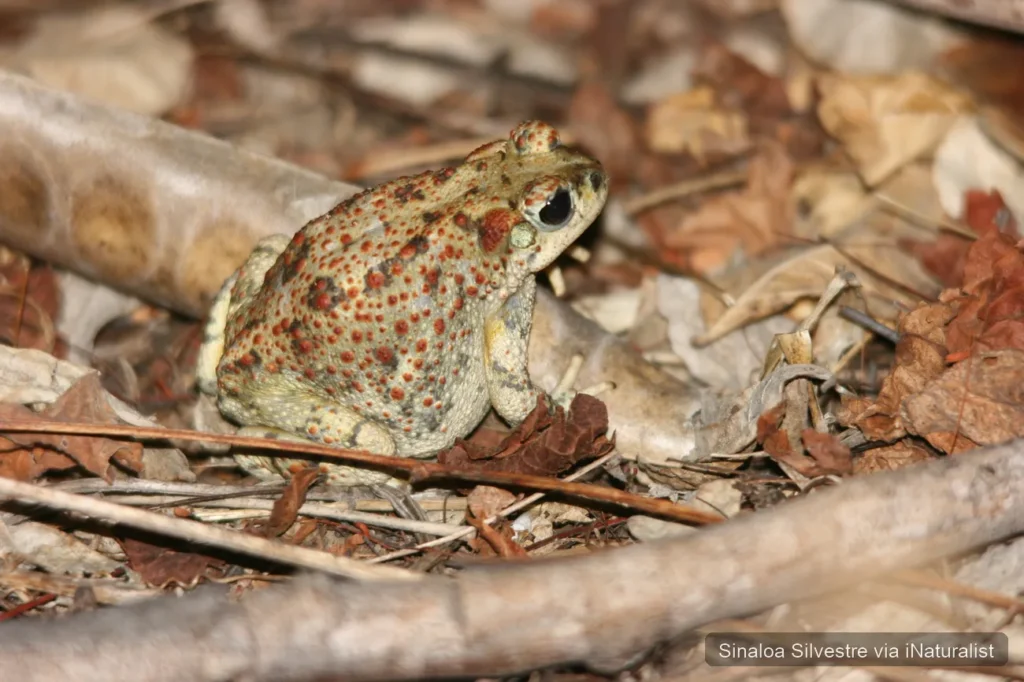
- Scientific name: Anaxyrus punctatus
- Family: Bufonidae
- Rank: species
Rocky desert washes, canyon pools, springs, and rain-filled basins in western and central Texas are typical places to find the red-spotted toad. It is often seen on warm, wet nights on rocks, sandy streambeds, or roads near temporary water.
This small toad is usually about 1.5–3 in (4–7.5 cm) in body length. It has a flattened body, pointed snout, and gray, tan, or olive skin marked with small red or orange warts, often set in dark spots. The belly is pale and usually plain.
Identification clues include its relatively smooth skin, small round parotoid glands behind the eyes, and lack of prominent cranial crests. Its bright reddish warts and preference for rocky arid habitats help separate it from many other Texas toads.
Rio Grande Chirping Frog
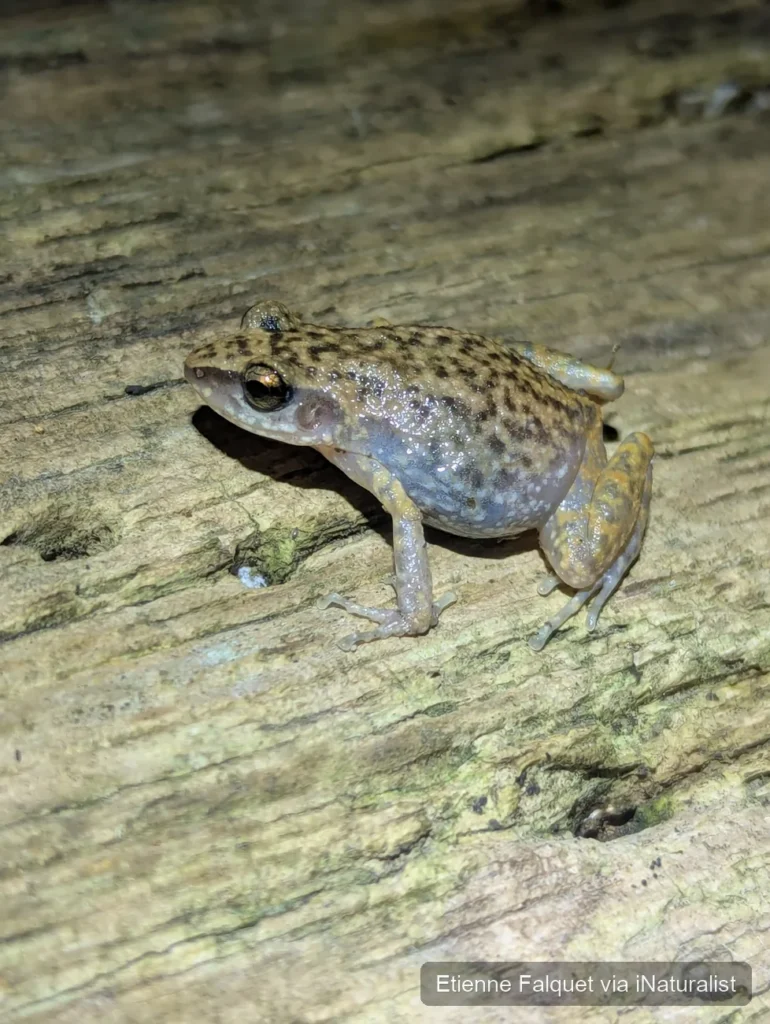
- Scientific name: Eleutherodactylus campi
- Rank: species
A tiny tan, gray, or brown frog with a pointed snout and a dark stripe through the eye, the Rio Grande chirping frog is usually about 0.6–1 in (1.5–2.5 cm) in body length. It often has a dark bar between the eyes, irregular back markings, banded legs, a pale belly, and slightly enlarged toe tips with little or no webbing.
In Texas, this species is most often encountered in the Lower Rio Grande Valley and other warm, sheltered sites, including gardens, leaf litter, potted plants, debris, and moist ground around buildings. It is nocturnal and may be noticed after rain or during humid nights.
Its very small size, pointed face, dry-looking skin, and sharp insectlike chirp help separate it from young true frogs and cricket frogs.
Rio Grande Leopard Frog
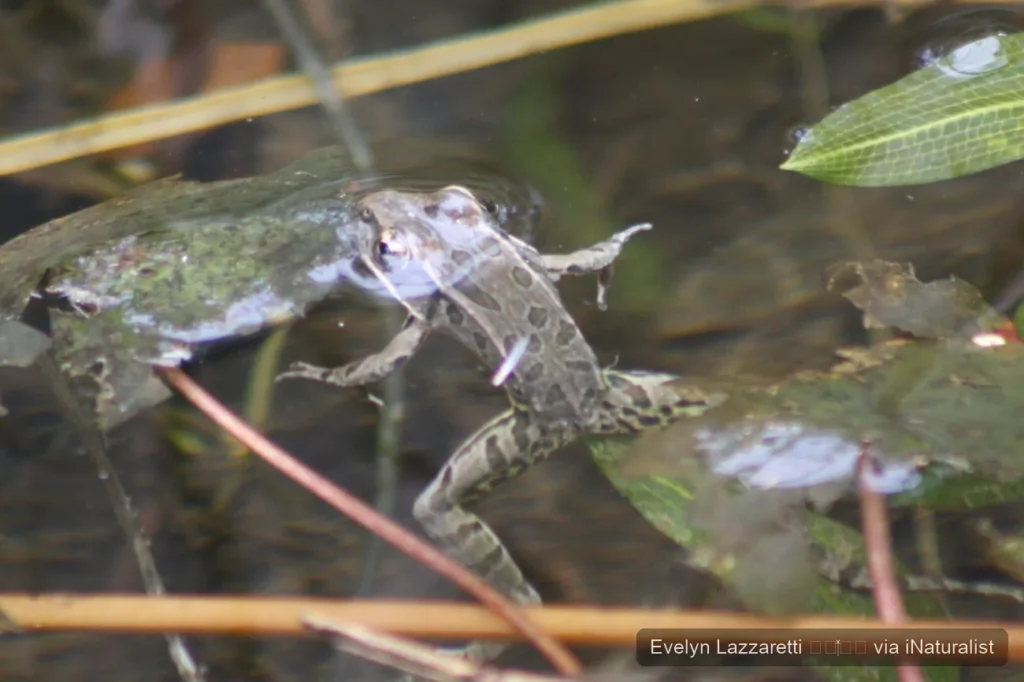
- Scientific name: Lithobates berlandieri
- Family: Ranidae
- Rank: species
A medium to large, slim, long-legged frog, the Rio Grande leopard frog is usually about 2.25–4.5 in (5.7–11.4 cm) in body length. It is green, olive, tan, or brown above, with rounded dark spots that often have pale borders. The legs are barred, the belly is pale, and a light stripe commonly runs along the upper jaw.
In Texas, it is most often found in or near water, including rivers, streams, ponds, stock tanks, canals, irrigation ditches, and marshy edges, especially in central, southern, and western parts of the state.
Identification clues include its true-frog shape, strong jumping legs, distinct dorsolateral folds running down the back, and leopard-like spotting. It is typically seen at the water’s edge and quickly jumps into water when disturbed.
Southern Leopard Frog
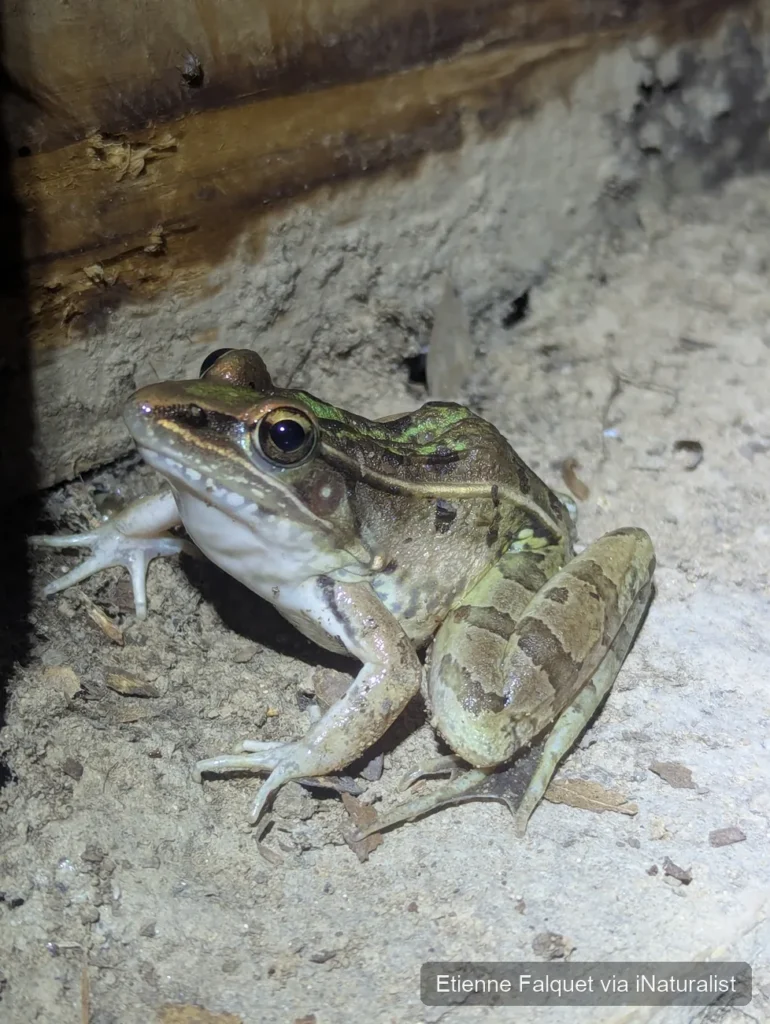
- Scientific name: Lithobates sphenocephalus
- Family: Ranidae
- Rank: species
Green, olive, tan, or brown with dark, pale-edged spots, the southern leopard frog is a slim, long-legged true frog with a pointed snout. Adults are usually about 2–3.5 in (5–9 cm) in body length. It has a pale belly, barred hind legs, a light line along the upper jaw, and distinct pale dorsolateral folds running from behind the eyes down the back.
In Texas, this frog is most likely in eastern and southeastern areas, especially near ponds, marshes, swamps, ditches, slow streams, wet fields, and grassy edges of shallow water. It often sits at the margin and leaps into water when approached. Its pointed face, smooth skin, leopard-like spotting, and continuous back folds help identify it.
Squirrel Tree Frog
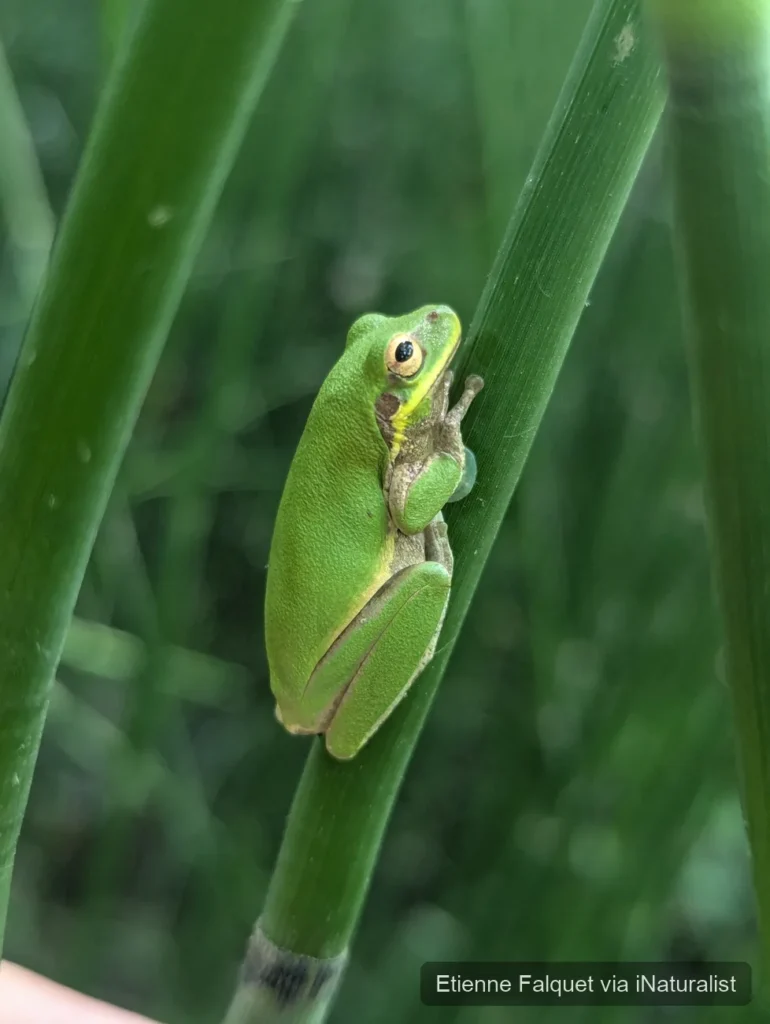
- Scientific name: Dryophytes squirellus
- Rank: species
In Texas, the squirrel treefrog is most often encountered in humid eastern and southeastern areas, especially around wooded wetlands, marsh edges, temporary rain pools, gardens, porch lights, and buildings after warm rains. It is a small climbing frog, usually about 0.9–1.5 in (2.2–3.8 cm) in body length.
Color is highly variable: individuals may be green, gray, tan, brown, or mottled, and they can change shade. The skin is smooth, the toe pads are rounded and sticky, and the belly is pale. Many have a dark line through the eye, scattered dark spots, or a pale stripe along the upper jaw.
Identification clues include its small size, variable color, treefrog toe pads, and lack of the bold, continuous white side stripe typical of the green treefrog.
Strecker’s Chorus Frog
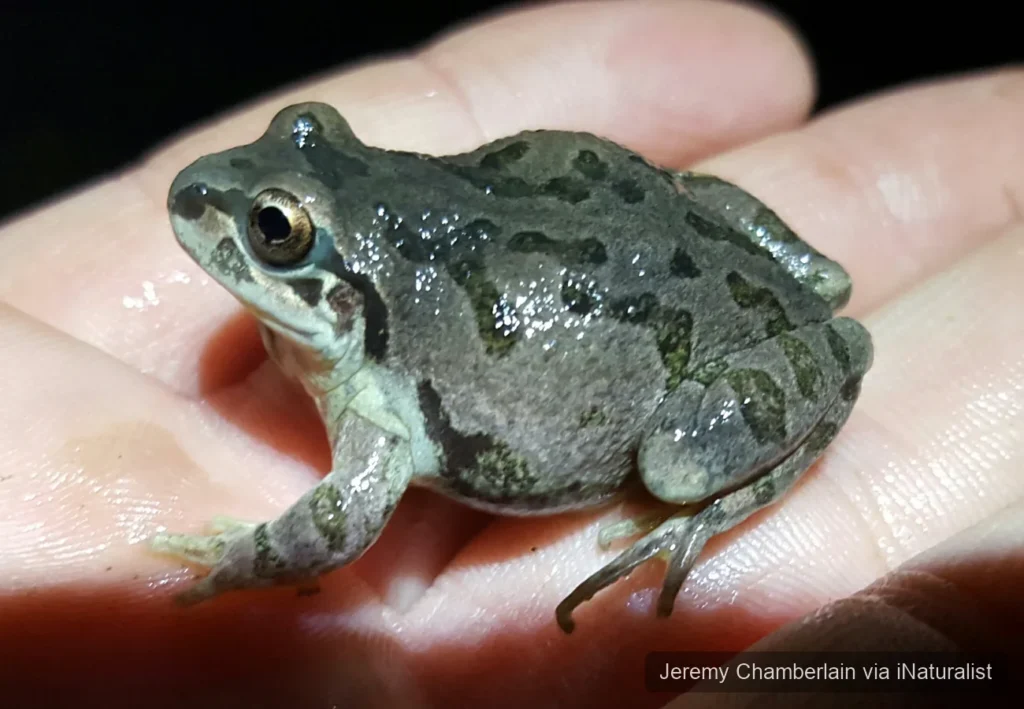
- Scientific name: Pseudacris streckeri
- Family: Hylidae
- Rank: species
A broad dark stripe through each eye and a chunky, short-legged body help identify strecker’s chorus frog. Adults are about 1.25–1.9 in (3.2–4.8 cm) in body length, fairly large for a chorus frog. The back is gray, tan, brown, or olive with darker blotches or broken lengthwise stripes. The belly is pale, the skin is smooth to slightly rough, and the toes have only small pads.
This frog is most often found in sandy or loose-soil areas, including prairies, open woodlands, pastures, fields, and roadside ditches.
Strecker’s chorus frog spends much time underground and is most often noticed after rains, especially near temporary pools and flooded low spots. Its stout shape, eye stripe, subdued pattern, and burrowing habits help separate it from slimmer chorus frogs.
Texas Toad
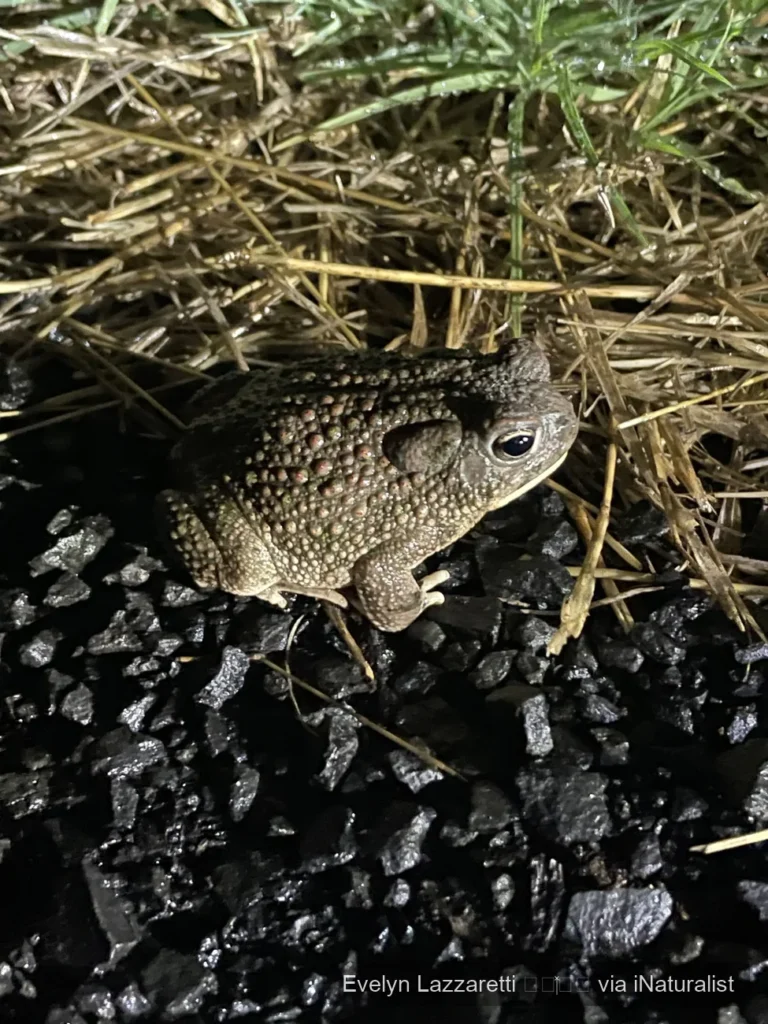
- Scientific name: Anaxyrus speciosus
- Family: Bufonidae
- Rank: species
A medium, squat toad with short legs and dry, warty skin, the texas toad is usually about 2–3.5 in (5–9 cm) in body length. Its back is gray, tan, brown, or olive, often with paired dark blotches that contain raised warts. A pale stripe may run down the middle of the back, but it can be faint or absent.
Identification clues include prominent raised ridges on the head, oval parotoid glands behind the eyes, and a pale, mostly unspotted belly. It is common in much of Texas in grasslands, open woodland, brushy areas, fields, and sandy or loose soils.
This toad is often encountered at night after rain, especially near temporary pools, roadside ditches, stock tanks, and other shallow breeding sites.
Woodhouse’s Toad
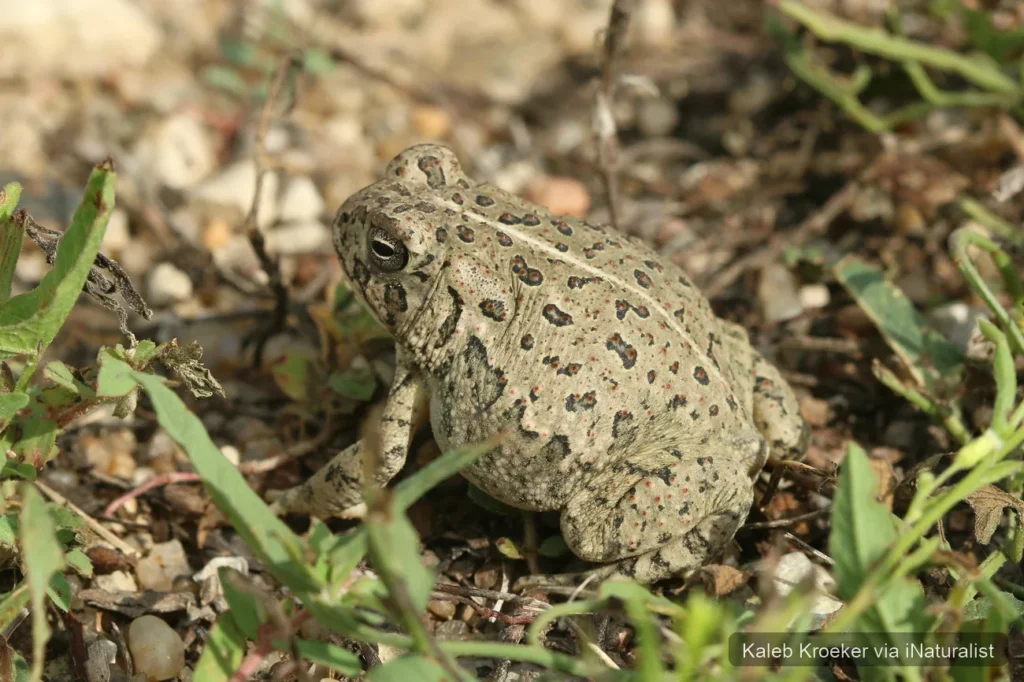
- Scientific name: Anaxyrus woodhousii
- Family: Bufonidae
- Rank: species
Gray, tan, or olive coloring with dark, paired blotches and a pale stripe down the back is typical of the woodhouse’s toad. It is a large, sturdy toad, usually about 2.5–4 in (6.4–10 cm) in body length, with dry warty skin, short legs, and a broad head.
The parotoid glands behind the eyes are long and oval, and raised cranial ridges are visible between and behind the eyes.
In Texas, this toad is often found in prairies, river bottoms, open woodland, fields, yards, and irrigated areas. It is commonly encountered at night, especially after rain, near ditches, ponds, stock tanks, and temporary pools. Its large size, pale back stripe, elongate parotoid glands, and blotched pattern help identify it.
Further Reading
You can find out more about Texas wildlife on the following pages:
You can find out more about amphibians on the following pages:
- You can find out more about amphibians on this page: Amphibians – The Ultimate Guide
- You can discover more amphibians on this page: Amphibians Examples
- Discover more North American amphibians on this page: North American Amphibians