
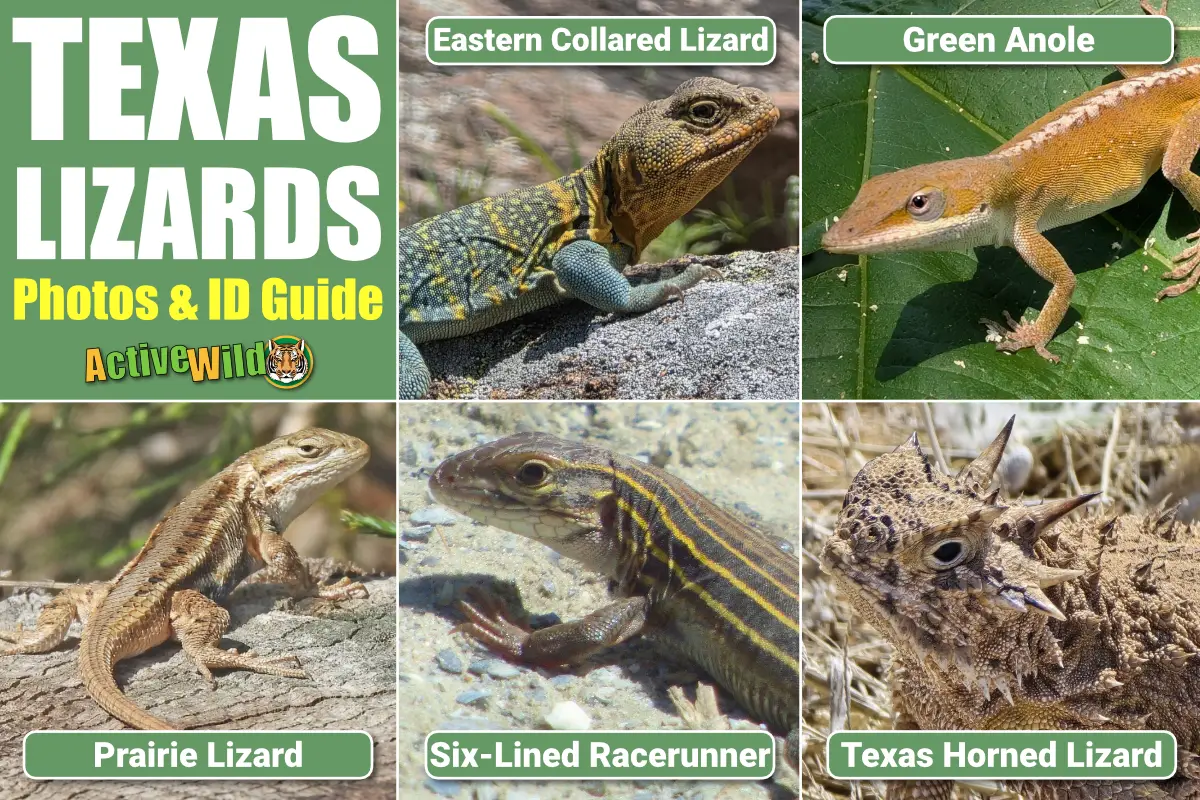
Texas lizards: identification guide with pictures and facts to help you identify lizards in Texas.
Introduction
Texas is home to a diverse array of lizard species, many of which are notable for their distinctive appearances and behaviors.
On this page, you’ll find a selection of especially characteristic and regionally significant lizards found across the state, including species such as the Texas Horned Lizard, Eastern Collared Lizard, and Texas Spiny Lizard.
Page Index
Banded Rock Lizard
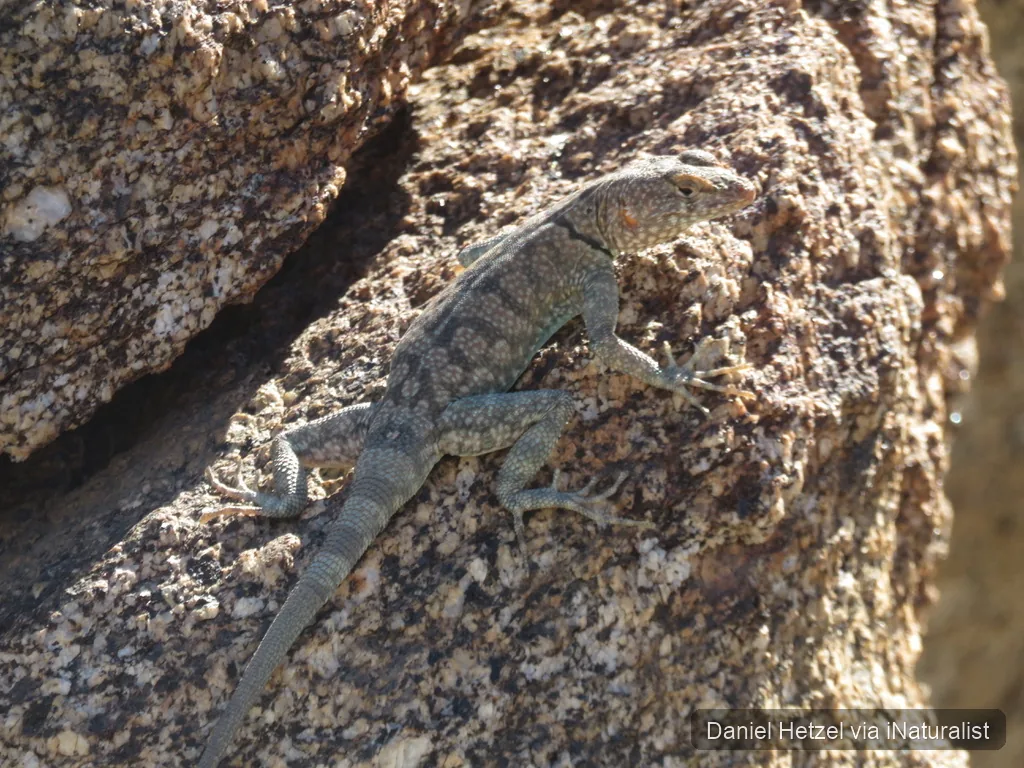
- Scientific name: Petrosaurus mearnsi
- Family: Phrynosomatidae
- iNaturalist rank: species
The banded rock lizard can be recognized by its distinct dark and light bands running across a flattened body and tail. It typically measures 4 to 7 inches in total length. Its rough, spiny scales and broad head give it a rugged appearance. Coloration ranges from gray to brown, helping it blend into rocky environments.
This species is most often found on rocky hillsides and canyons in western Texas, where it basks on sunlit boulders. It is well adapted to its rugged habitat, using crevices for shelter. The banded rock lizard is notable in Texas for its specialized rock-dwelling behavior, making it a key species in rocky desert ecosystems. Males and females look similar, but males sometimes show brighter markings during the breeding season.
Big Bend Canyon Lizard
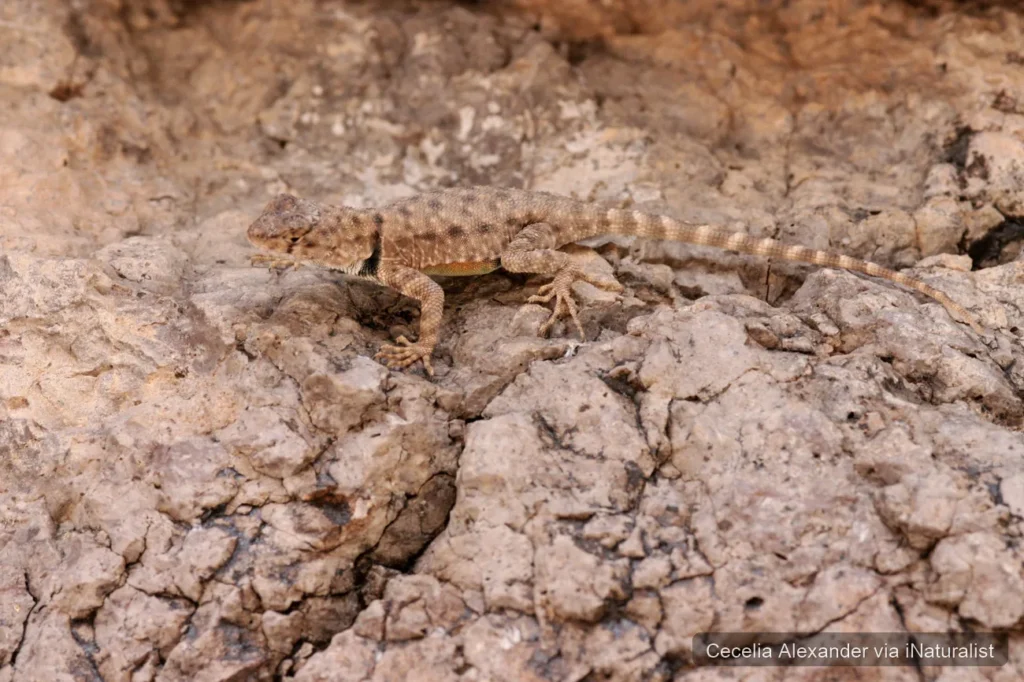
(Photo shows unidentified canyon lizard subspecies)
- Scientific name: Sceloporus merriami annulatus
- Family: Phrynosomatidae
- iNaturalist rank: subspecies
The Big Bend canyon lizard is a medium-sized lizard, measuring about 5 to 7 inches in length, with a relatively slender body and a long tail. It has rough, keeled scales and a somewhat flattened appearance. Its coloration is typically gray to brown, marked with distinct dark bands or crossbars across its back and tail, which provide effective camouflage among rocks.
This canyon lizard subspecies is commonly found in the rocky hills and canyons of Big Bend National Park and surrounding areas in western Texas. It favors sunlit rocky outcrops where it basks and seeks shelter in crevices.
Males and females look similar, although males may show blue patches on the throat and belly during the breeding season. The Big Bend Slider is regionally notable for its adaptation to the rugged, arid terrain of the Big Bend region, making it an important part of the local desert lizard community.
Eastern Collared Lizard
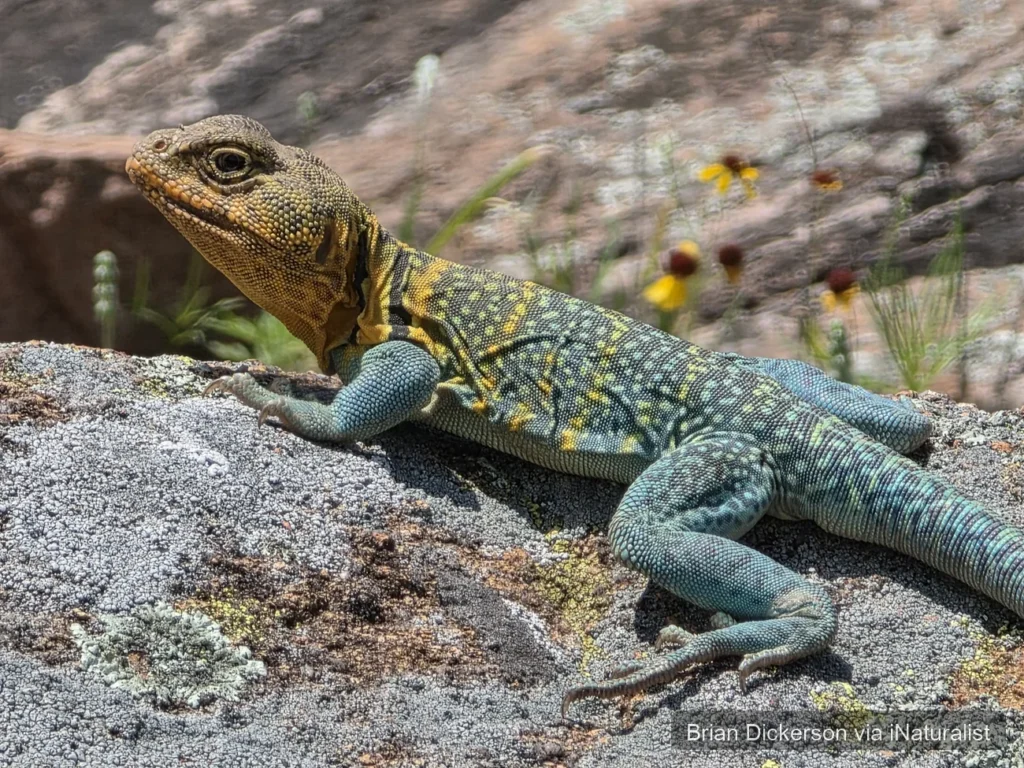
- Scientific name: Crotaphytus collaris
- Family: Crotaphytidae
- iNaturalist rank: species
The Eastern Collared Lizard is easily identified by its bright green or yellowish body marked with two distinct black bands encircling its neck, resembling a collar. It has a broad, triangular head and a robust body that can reach up to 12 inches in total length.
Males typically display more vivid coloration, including bright blue or green on the belly and throat, while females are generally duller.
This species is commonly found in open, rocky areas with scattered vegetation, such as limestone outcrops and desert scrublands in Texas. It is often seen basking on sun-exposed rocks during the day. The Eastern Collared Lizard is regionally notable as one of the largest and most colorful lizards in Texas, making it a distinctive and recognizable part of the state’s reptile fauna.
Green Anole
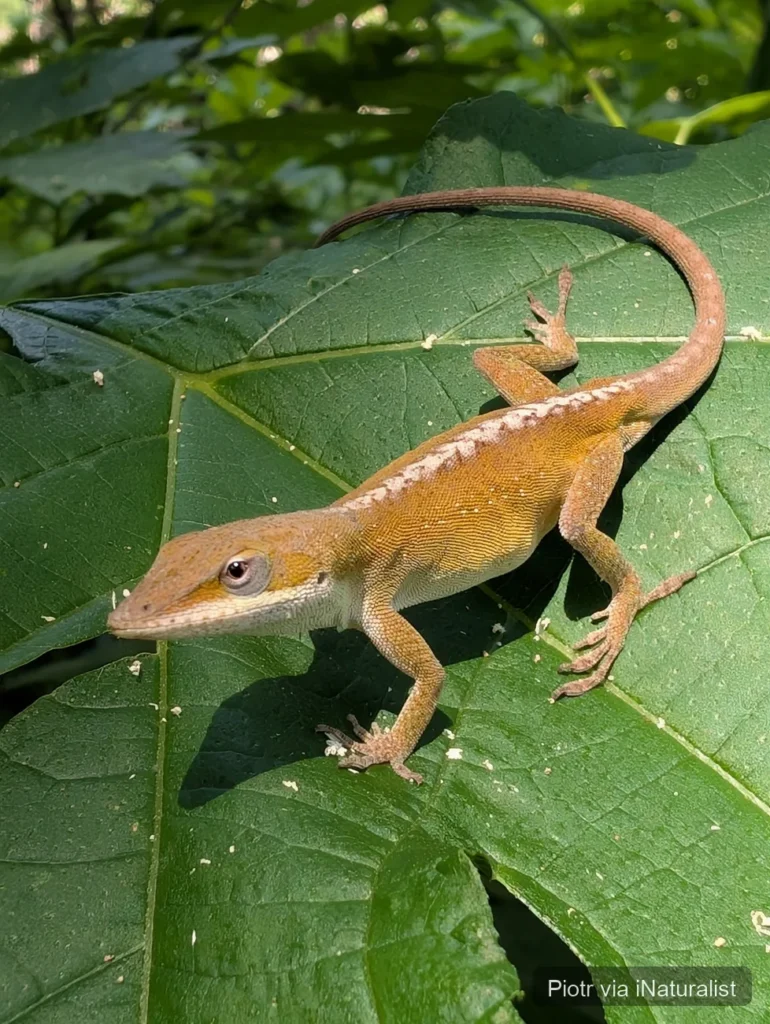
- Scientific name: Anolis carolinensis
- Family: Dactyloidae
- iNaturalist rank: species
Green anoles are small, slender lizards commonly found in trees, shrubs, and other vegetation across Texas, especially in warm, humid environments like gardens, parks, and wooded areas. They typically measure about 5 to 8 inches from head to tail. Their color ranges from bright green to brown, allowing them to blend with leaves and branches, and they can change color based on temperature and mood.
Identification is aided by their pointed snout and long tail, along with a distinctive throat fan, or dewlap, which males display in bright pink or reddish hues during territorial or mating behaviors. Females usually have smaller, less colorful dewlaps.
This species is notable in Texas as one of the few native lizards that can change color and is often seen in urban and suburban habitats, highlighting its adaptability.
Prairie Lizard
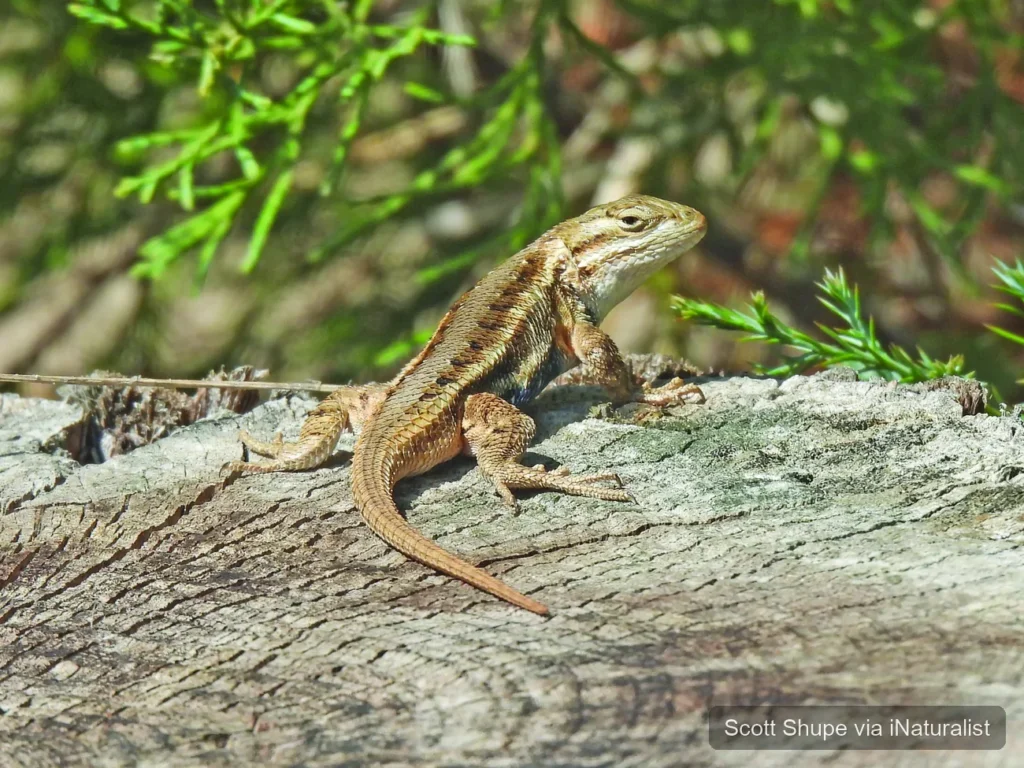
- Scientific name: Sceloporus consobrinus
- Family: Phrynosomatidae
- iNaturalist rank: species
The Prairie Lizard is recognized by its rough, keeled scales and a series of dark, irregular blotches running down its back, often bordered by lighter edges. It typically measures 5 to 8 inches in total length. Males can be distinguished by bright blue patches on the throat and belly, which are absent or less vivid in females. The body color ranges from gray to brown, helping it blend with dry grasslands and rocky soils.
This species is commonly encountered in open prairie habitats, fields, and along fence rows throughout Texas. It is often seen basking on rocks, logs, or fence posts during the day. The Prairie Lizard is regionally notable as a widespread and adaptable species that plays a role in controlling insect populations in Texas grasslands.
Six-lined Racerunner
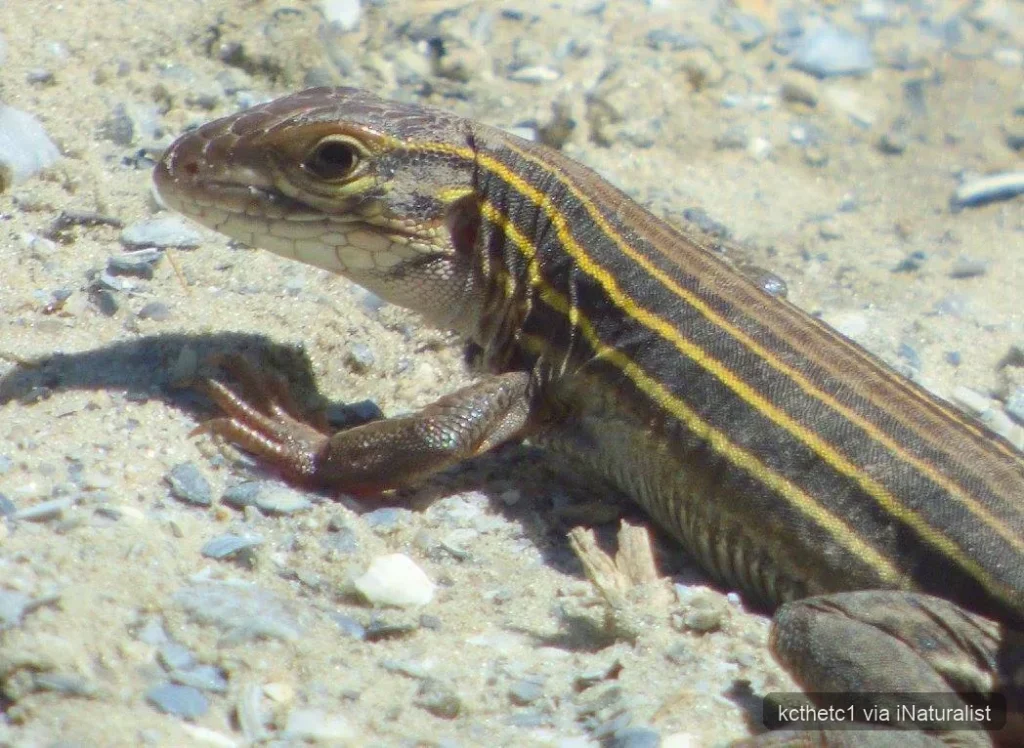
- Scientific name: Aspidoscelis sexlineata
- Family: Teiidae
- iNaturalist rank: species
The Six-lined Racerunner is a slender, fast-moving lizard measuring about 6 to 9 inches in total length, including its long tail. Its body is marked by six distinctive light stripes running lengthwise from head to tail, set against a darker background that varies from brown to olive. The scales are smooth, and the head is slightly pointed.
Males often have brighter blue coloration on their sides and under the throat, especially during the breeding season, while females tend to be more muted.
This species is commonly found in open, sunny habitats such as sandy or rocky areas, grasslands, and woodland edges across Texas. It is often seen darting quickly across bare ground or low vegetation.
The Six-lined Racerunner is one of the fastest lizards in Texas, frequently using its speed to both escape predators and catch its insect prey.
Texas Banded Gecko
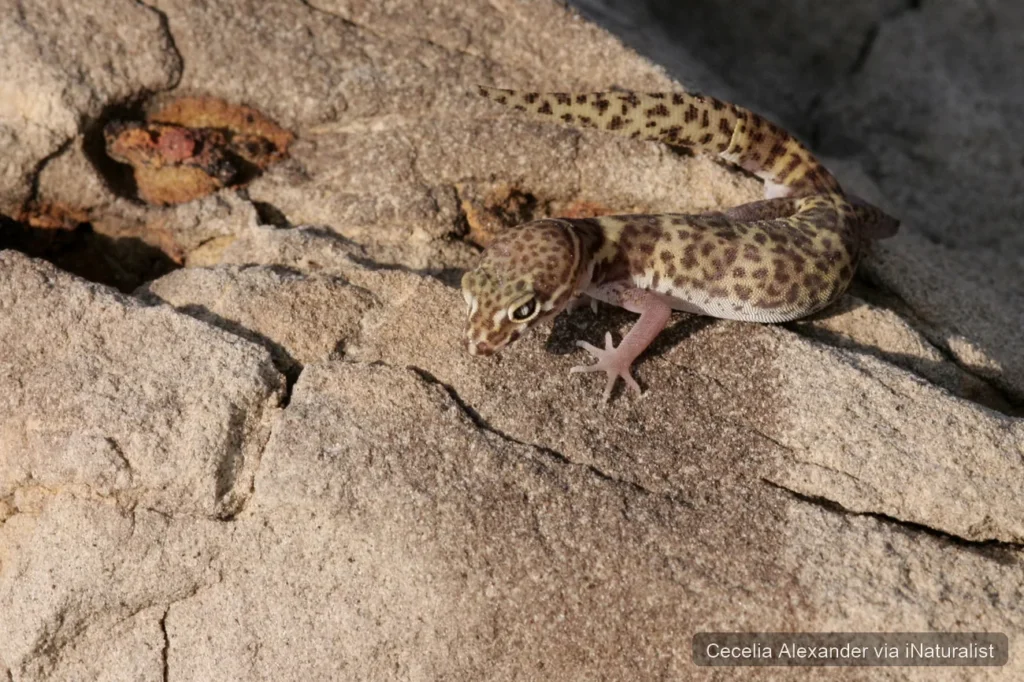
- Scientific name: Coleonyx brevis
- Family: Eublepharidae
- iNaturalist rank: species
The Texas Banded Gecko has a light tan to pale yellow body marked with dark brown or black bands across its back and tail. It is a small, slender lizard, typically measuring about 4 to 6 inches in total length. Its skin has a smooth appearance, and it has movable eyelids, a feature distinguishing it from many other geckos. The toes are clawed, not adhesive, aiding in ground movement rather than climbing smooth surfaces.
This gecko is usually found in arid, rocky habitats and desert scrub areas in southern Texas. It is primarily nocturnal and can often be spotted under rocks or debris at night.
Texas Horned Lizard
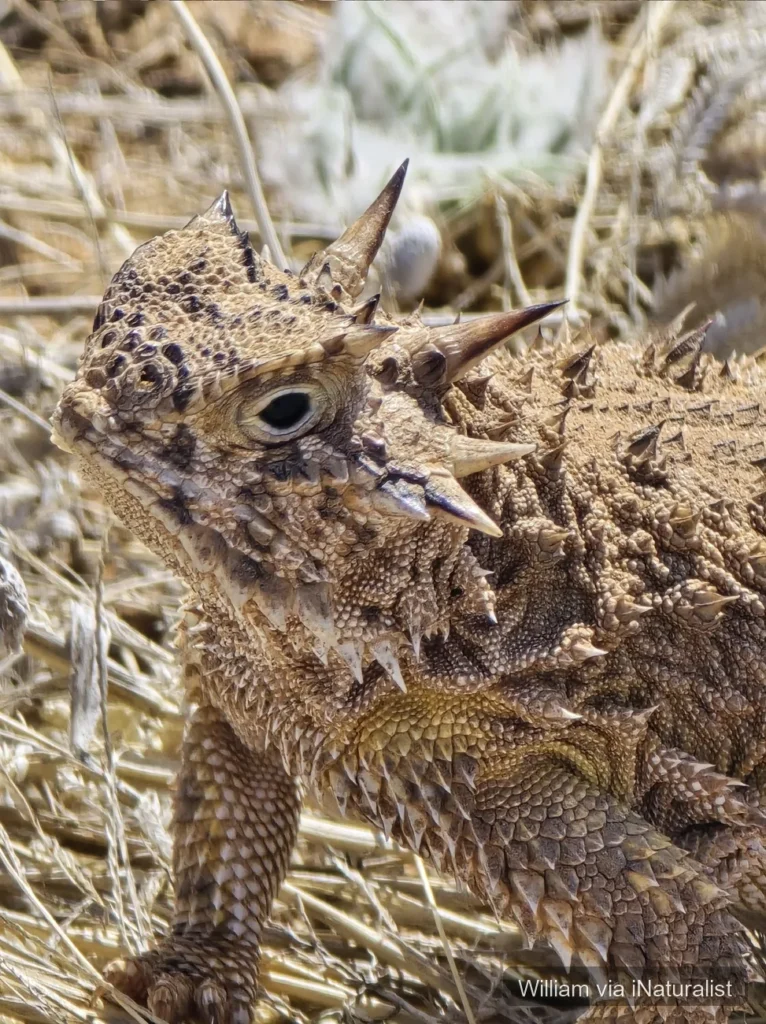
- Scientific name: Phrynosoma cornutum
- Family: Phrynosomatidae
- iNaturalist rank: species
The Texas Horned Lizard inhabits arid and semi-arid regions such as deserts, grasslands, and scrublands across Texas. It is often encountered on sandy or rocky ground where it blends with the soil and sparse vegetation. This lizard typically measures 4 to 6 inches in length, including a short tail.
Its body is broad and flattened, covered with spiny scales and prominent horn-like projections on the head and back. The coloration ranges from tan to reddish-brown with darker blotches, providing camouflage. The wide, spiky appearance and short limbs are key identification features. Males and females look similar, although males may have slightly larger horns.
The Texas Horned Lizard relies on camouflage, remaining motionless to blend into dry, sandy habitats to avoid predation. However, when this fails, it can also puff up its body and display its sharp spines to make itself harder for predators to swallow.
In extreme situations, it is famous for squirting a stream of blood from the corners of its eyes, a defense that can startle predators and deter canids such as coyotes and foxes.
The Texas Horned Lizard’s diet consists mainly of ants.
Texas Spiny Lizard
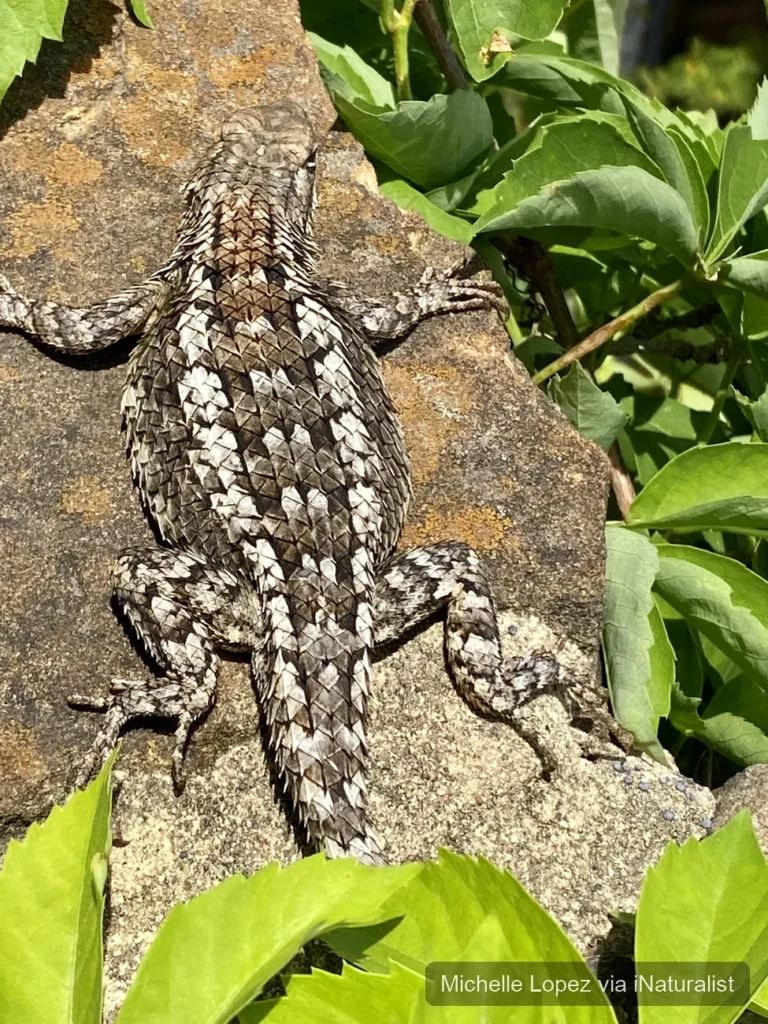
- Scientific name: Sceloporus olivaceus
- Family: Phrynosomatidae
- iNaturalist rank: species
The Texas Spiny Lizard can be identified by its rough, keeled scales covering the body, giving it a spiny texture. It typically shows a gray to olive-brown coloration with darker crossbands on the back and sides. Adult lizards measure around 5 to 8 inches in total length, including the tail. Males often have bright blue patches on the throat and belly, which are less pronounced or absent in females.
This species is commonly found in wooded areas, rocky outcrops, and brushy hillsides across central and southern Texas. It is frequently seen basking on tree trunks, fence posts, or rocks during the day.
Texas Spotted Whiptail
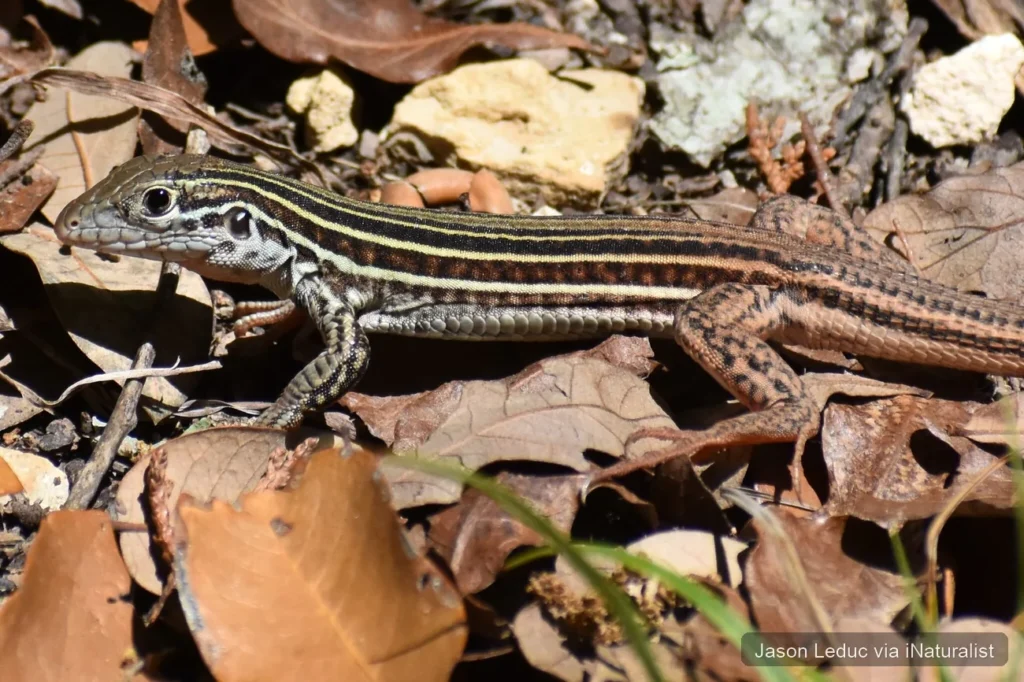
- Scientific name: Aspidoscelis gularis
- Family: Teiidae
- iNaturalist rank: species
The Texas Spotted Whiptail is a slender, fast-moving lizard that typically measures 6 to 9 inches in total length, with a long, whip-like tail making up most of its size. Its body is covered in small, smooth scales and displays a distinctive pattern of dark spots and stripes on a light brown or tan background. The head is narrow with large eyes, and the legs are relatively long and thin.
This species is commonly found in dry, open habitats such as grasslands, scrublands, and rocky areas across Texas. It is often seen darting quickly on the ground or under sparse vegetation. Identification is aided by its spotted pattern and long tail, which contrasts with the more solid or banded patterns of other whiptails.
Further Reading
Discover more about Texas reptiles:
Discover more about lizards and other reptiles: