
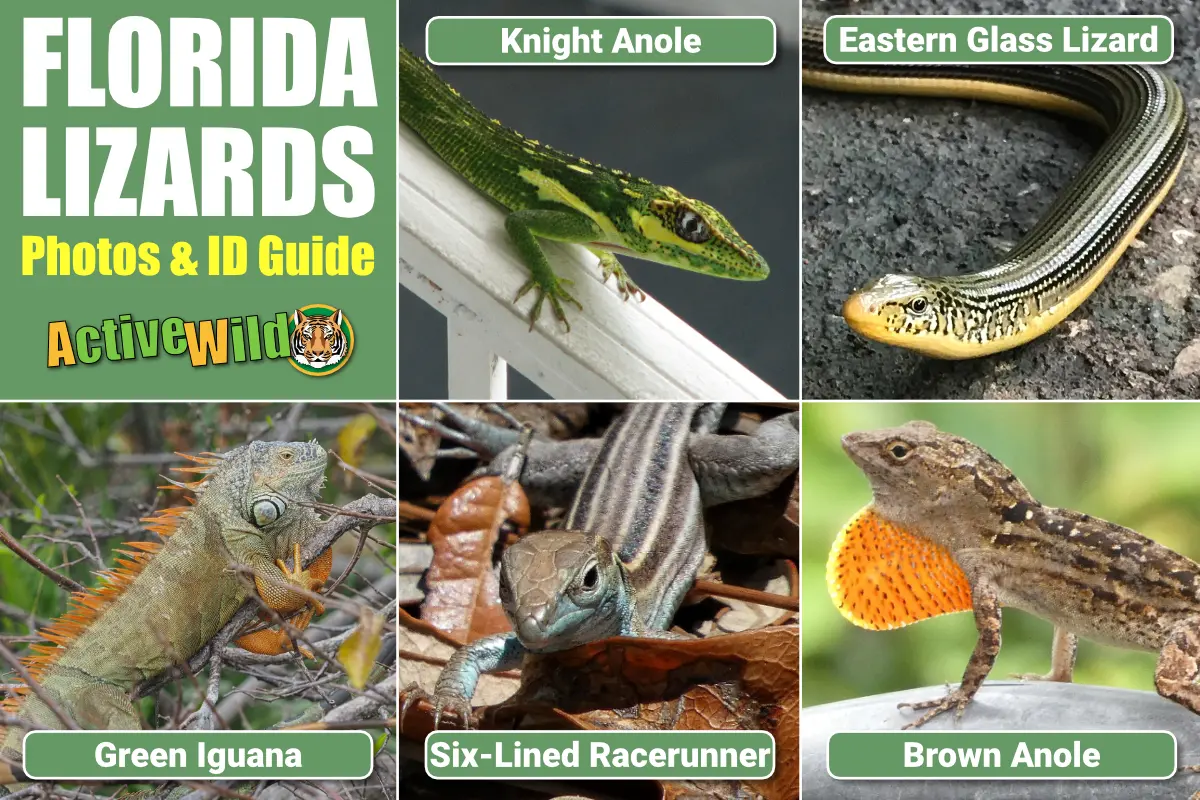
A guide to Florida lizards, with pictures and ID tips.
Index
Introduction
Florida’s diverse habitats provide a home to a wide variety of lizard species, each with unique characteristics and behaviors. This article offers a representative guide to some of the more commonly encountered lizards in the state, including species such as the Broad-headed Skink, Green Anole, and Knight Anole.
Readers interested in identification and natural history will find descriptions and key features to help distinguish these reptiles in the wild.
While not an exhaustive list, this overview aims to highlight the diversity and ecological roles of lizards found across Florida’s landscapes.
Have you seen any of these lizard species in Florida? Help bring this page alive with your own observations, thoughts and questions in the comments section at the bottom of the page – we’d love to hear from you!
The Active Wild Team
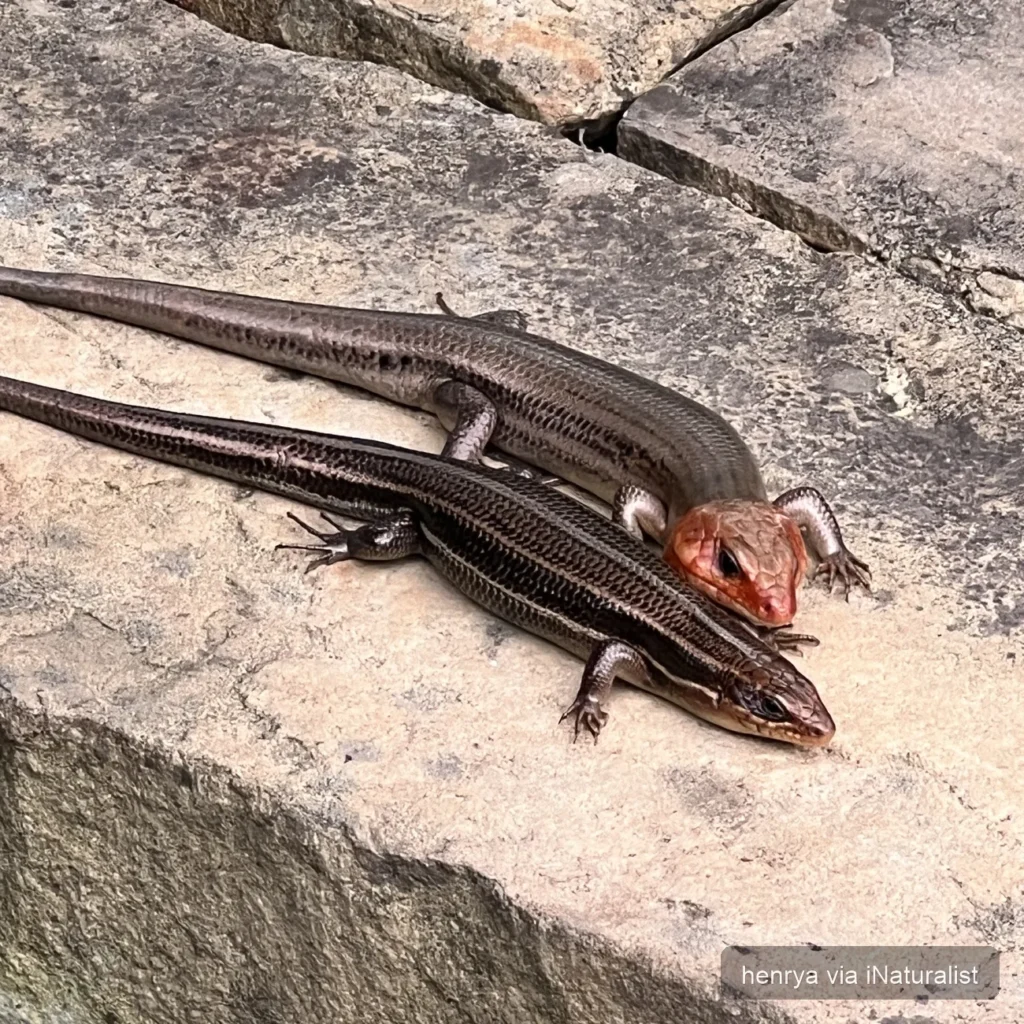
Broad-headed Skink
- Scientific name: Plestiodon laticeps
- Family: Scincidae
This skink has a broad, triangular head that is noticeably wider than its neck, giving it a distinctive profile. Its body is smooth and shiny, with scales that reflect light, often showing a pattern of dark brown or black with lighter stripes or spots along the sides. Adult males develop bright orange or red coloring on the head during the breeding season, while females and juveniles usually display more subdued tones.
Measuring up to about 33 centimeters (13 inches) in total length, this is the largest skink commonly seen in Florida. It is often found in wooded areas, especially near logs, stumps, or leaf litter where it seeks shelter and hunts for insects. Its agile movements and preference for ground cover make it easier to spot in forested or suburban environments with plenty of natural debris.
Brown Anole
- Scientific name: Anolis sagrei
- Family: Dactyloidae
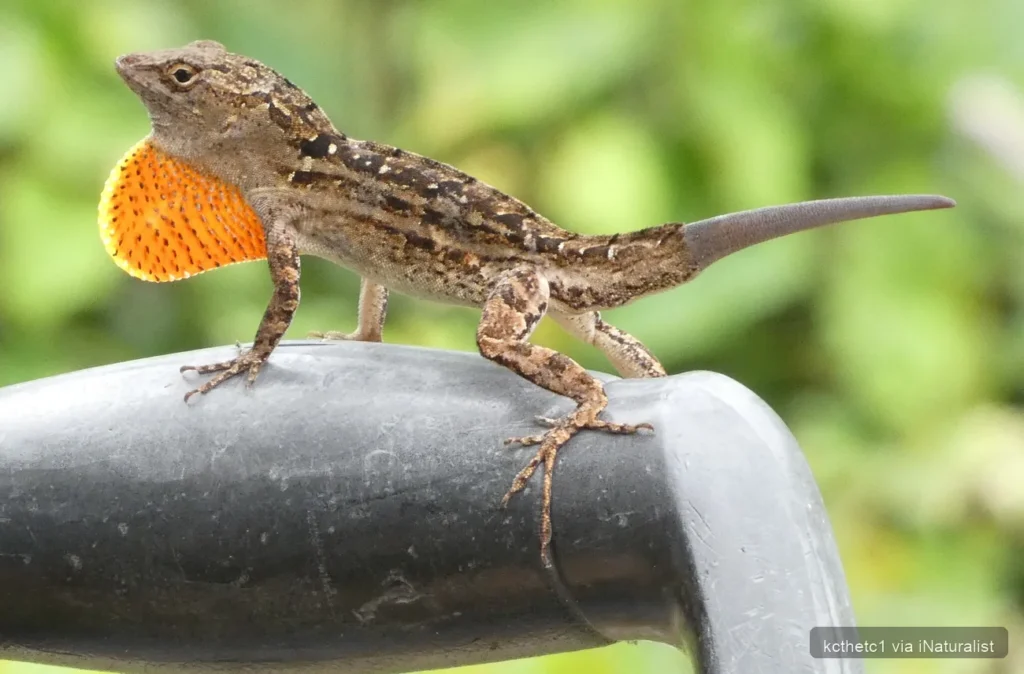
This lizard reaches about 12 to 20 centimeters (5 to 8 inches) in total length, including its tail, with a slender body and long limbs. Its coloration ranges from light brown to grayish, often marked with darker brown or reddish blotches and stripes along the back and sides. Like most other anoles, the brown anole can change color depending on mood, temperature, and background.
Males usually have a larger head and display a bright orange to red throat fan, called a dewlap, which is used during territorial and mating displays, while females and juveniles show a smaller, paler dewlap.
The brown anole is commonly seen in urban and suburban areas, especially around gardens, parks, and fences, as well as in natural settings like scrublands and coastal hammocks. This species is highly adaptable and often perches on walls, tree trunks, or low vegetation, where it actively hunts small insects and other invertebrates. Its ability to thrive in a variety of environments has contributed to its widespread presence in Florida.
Brown Basilisk
- Scientific name: Basiliscus vittatus
- Family: Corytophanidae
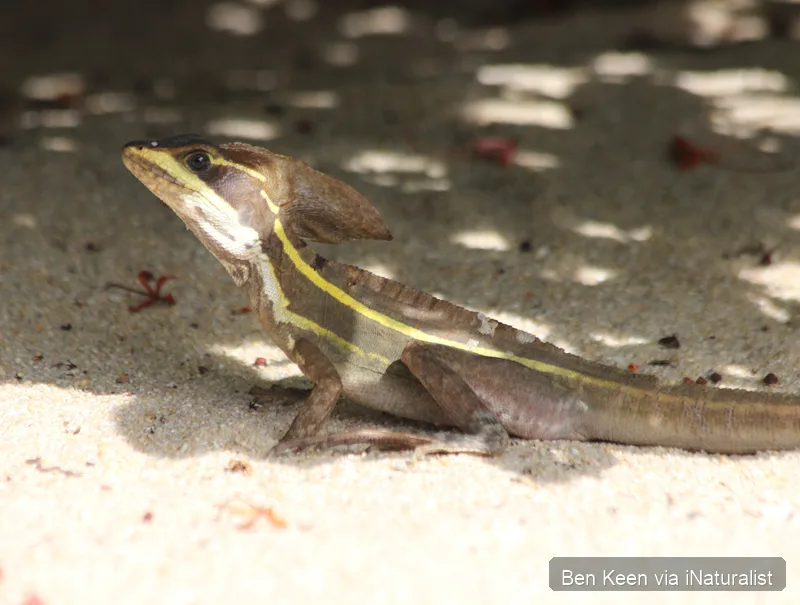
This lizard has a slender body with a brown or olive coloration and several lighter stripes running lengthwise along its back and sides. A prominent crest extends from the head down the neck and back in males, which is less pronounced or absent in females. Adults typically measure between 20 and 30 centimeters (8 to 12 inches) from snout to tail tip.
Often found near freshwater sources such as streams, ponds, or canals, it is most likely to be seen on low vegetation or the ground close to water.
This species is capable of running across the surface of water using its long toes and specialized scales on its hind feet, which allow it to briefly escape predators or move quickly between areas.
The brown basilisk lizard is an introduced species in Florida, where it occupies warm, humid environments.
Coal Skink
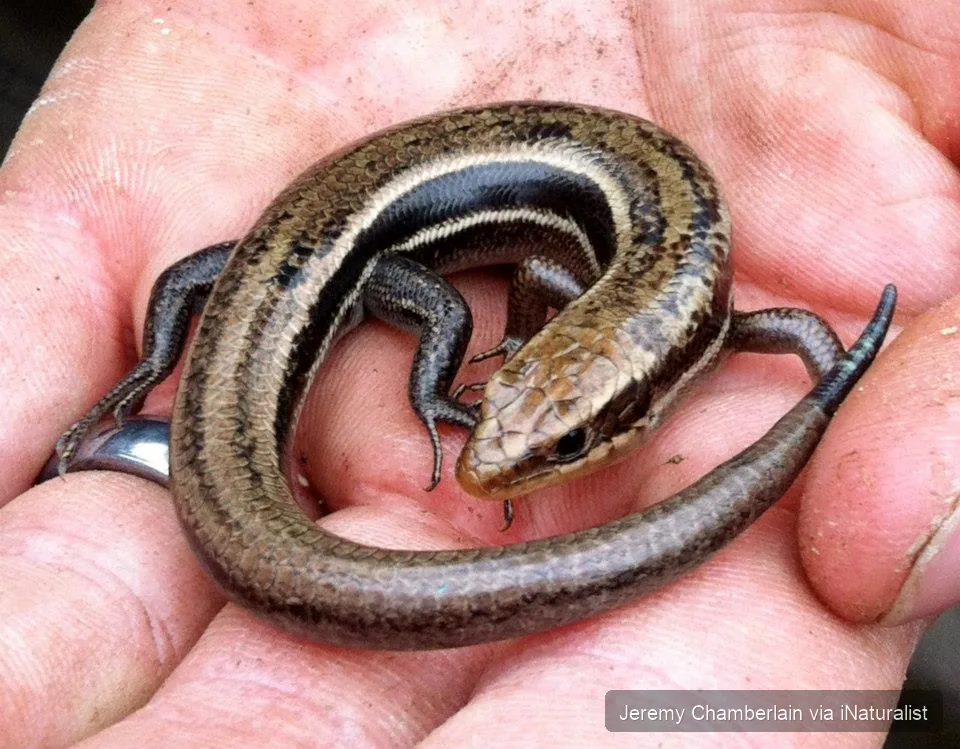
- Scientific name: Plestiodon anthracinus
- Family: Scincidae
In northern Florida, this small lizard is often spotted near moist woodlands, rocky outcrops, and along the edges of streams where it seeks shelter under stones or leaf litter. It has a slender body measuring about 10 to 15 centimeters (4 to 6 inches) from snout to tail tip. The tail is relatively long and accounts for more than half of the total length.
The coal skink’s coloration is dark brown to black with two light stripes running lengthwise down each side of the body, beginning at the snout and continuing along the flanks. Juveniles display bright blue tails, which fade as they mature.
This species is known for its smooth, shiny scales and quick movements. It primarily feeds on insects and small invertebrates and is most active during warm, humid conditions.
Eastern Glass Lizard
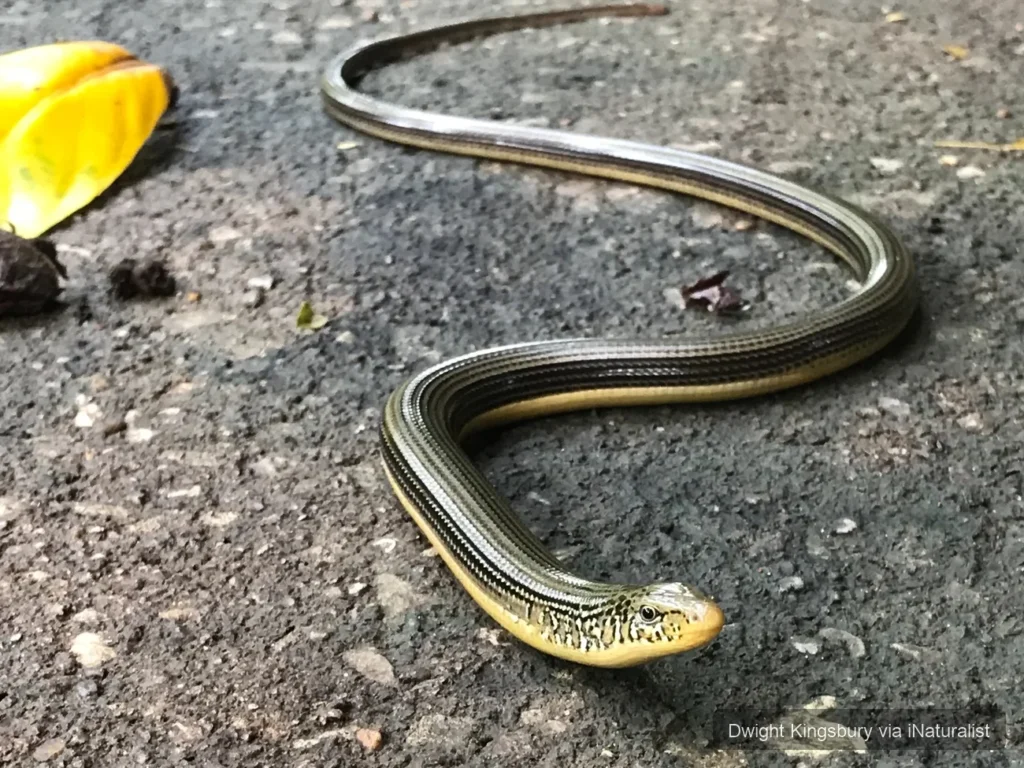
- Scientific name: Ophisaurus ventralis
- Family: Anguidae
This slender, legless lizard grows to about 50 to 70 centimeters (20 to 28 inches) in total length, with the tail making up most of the body length. Its smooth, shiny scales are usually light brown to tan, with darker blotches or stripes along the back and sides. Unlike snakes, it has visible ear openings and eyelids, and its body is more rigid, which can help distinguish it from similar-looking snakes.
The eastern glass lizard is often found in dry, sandy habitats such as pine flatwoods, scrub, and open woodlands, where it moves through leaf litter or grassy areas. It may also be seen along roadsides or in disturbed areas with loose soil. This species primarily feeds on insects, spiders, and other small invertebrates.
A notable characteristic is its ability to shed its tail when threatened—a process called autotomy. The detached tail continues to wriggle, distracting predators and allowing the lizard to escape. Over time, the tail regrows but usually appears shorter and less colorful than the original.
Five-lined Skink
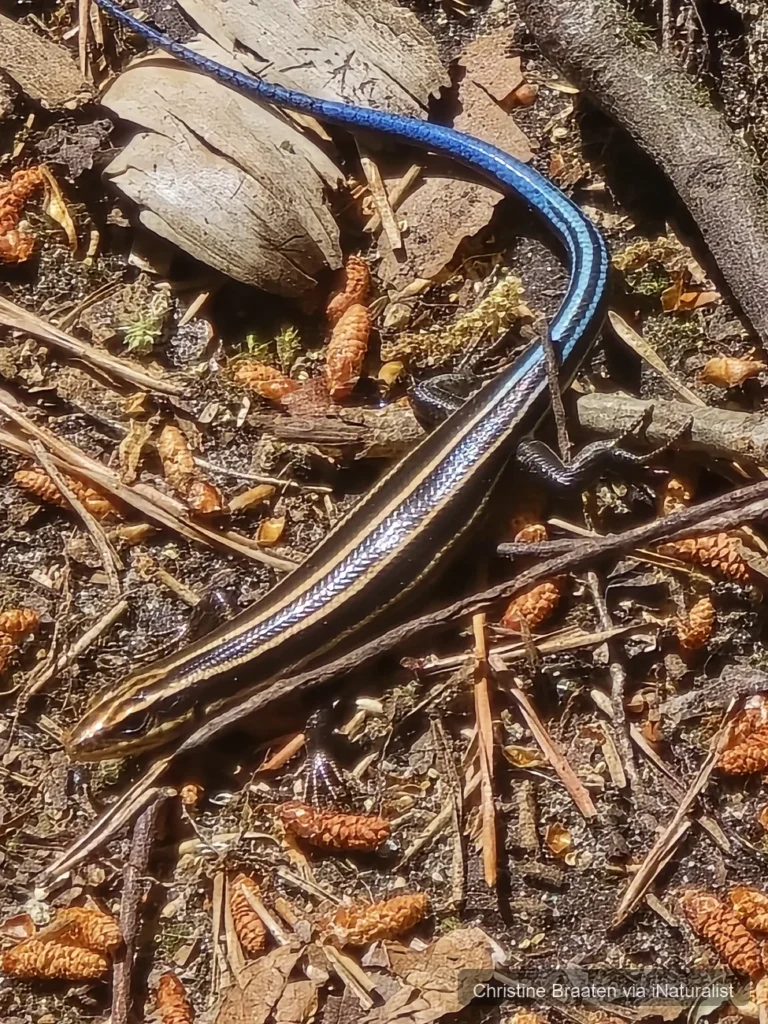
- Scientific name: Plestiodon fasciatus
- Family: Scincidae
This lizard has a smooth, shiny body marked by five distinct light stripes running lengthwise from its head down to the tail, set against a dark brown or black background. Juveniles display bright blue tails, which fade to a more muted brown or gray in adults. Adults generally measure between 12 and 20 centimeters (about 5 to 8 inches) in total length, with males often being slightly larger than females.
It is most often seen in moist, wooded areas with plenty of leaf litter or fallen logs, such as hardwood forests and riparian zones in Florida. This species is active during the day and is frequently spotted basking on rocks or logs or darting quickly to catch small insects and other invertebrates. Its distinctive juvenile coloration and five parallel stripes make it easier to identify compared to other skinks in the region.
One notable feature is the bright blue tail of young individuals, which serves to distract predators and increase their chance of escape. As the skink matures, the tail coloration fades, but the striped pattern remains a key identification trait throughout its life.
Florida Scrub Lizard
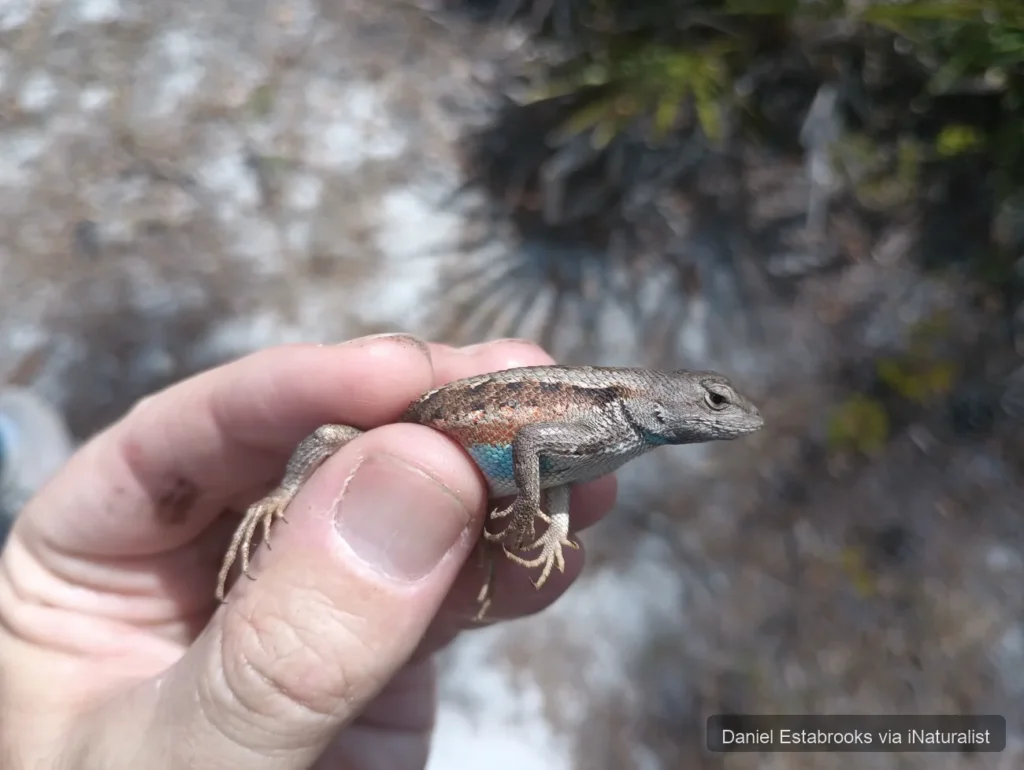
- Scientific name: Sceloporus woodi
- Family: Phrynosomatidae
This small lizard is often seen in Florida’s sandy scrub habitats, where it moves among low shrubs, sand pines, and patches of bare ground. It grows to about 12 to 15 centimeters (4.7 to 5.9 inches) in total length, with a relatively short tail compared to its body. The body scales are rough and keeled, giving it a somewhat spiny appearance.
Males usually show a bluish patch on the belly and throat, which can help distinguish them from females, whose coloration is generally more muted. The back typically has a pattern of gray, brown, and tan with darker markings, aiding camouflage against the scrub environment. This species is active during the day and often basks in the sun on open sandy areas or low vegetation.
Unlike many other lizards in Florida, this species is restricted to specific scrub environments in the central and southern parts of the state. Its limited range and specialized habitat preference make it a useful indicator of healthy scrub ecosystems.
Florida Worm Lizard
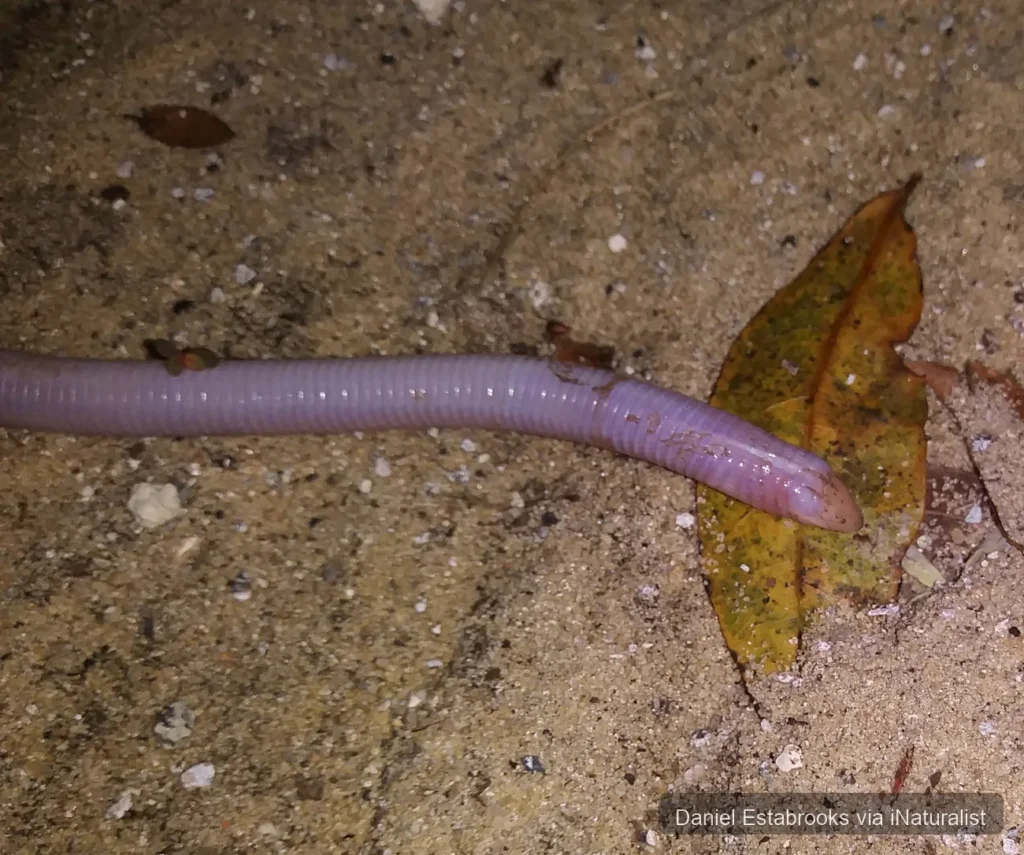
- Scientific name: Rhineura floridana
- Family: Rhineuridae
This limbless reptile has a long, slender body resembling an earthworm, with smooth, shiny scales that are pale pink to light brown. Its head is blunt and wedge-shaped, equipped with small eyes and a pointed snout adapted for burrowing. Adults usually measure between 18 and 30 centimeters (7 to 12 inches) in length.
This species is most often encountered underground or beneath moist leaf litter, preferring loose, sandy soils where it burrows to hunt for insects and small invertebrates. It rarely emerges on the surface, so sightings are uncommon outside of digging or soil disturbance. Both males and females look similar, making sex-based identification difficult without close examination.
A notable feature is its unique status as the only worm lizard species found in Florida, making it easy to distinguish from snakes or legless lizards in the area. Its burrowing lifestyle and reduced eyes reflect adaptations to a subterranean existence.
Green Anole
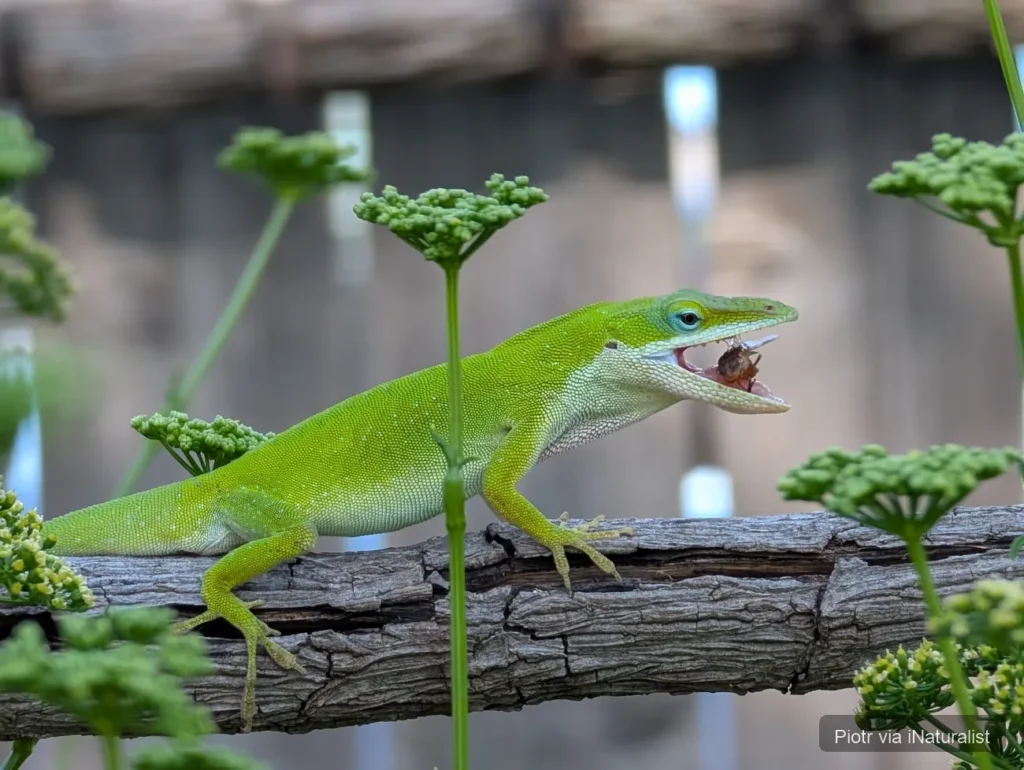
- Scientific name: Anolis carolinensis
- Family: Dactyloidae
Measuring about 12 to 20 centimeters (4.7 to 7.9 inches) from snout to tail tip, this slender lizard has a pointed head and smooth, overlapping scales. Its body color ranges from bright green to brown, with the green phase often helping it blend into leafy surroundings.
Males display a pink to reddish throat fan, called a dewlap, which they extend during territorial or mating displays, while females and juveniles usually have smaller or less colorful dewlaps.
Males use their dewlap as a visual signal to communicate with rivals and potential mates. This behavior is a distinctive aspect of their social interactions and helps identify the green anole (and other anole species) in the field.
This species is commonly observed climbing trees, shrubs, and walls in urban gardens, parks, and forests throughout Florida. It is active during the day and frequently changes color depending on temperature and mood, shifting between green, brown, or grayish tones. Its long tail, often twice the length of the body, aids in balance while maneuvering through vegetation.
Green Iguana
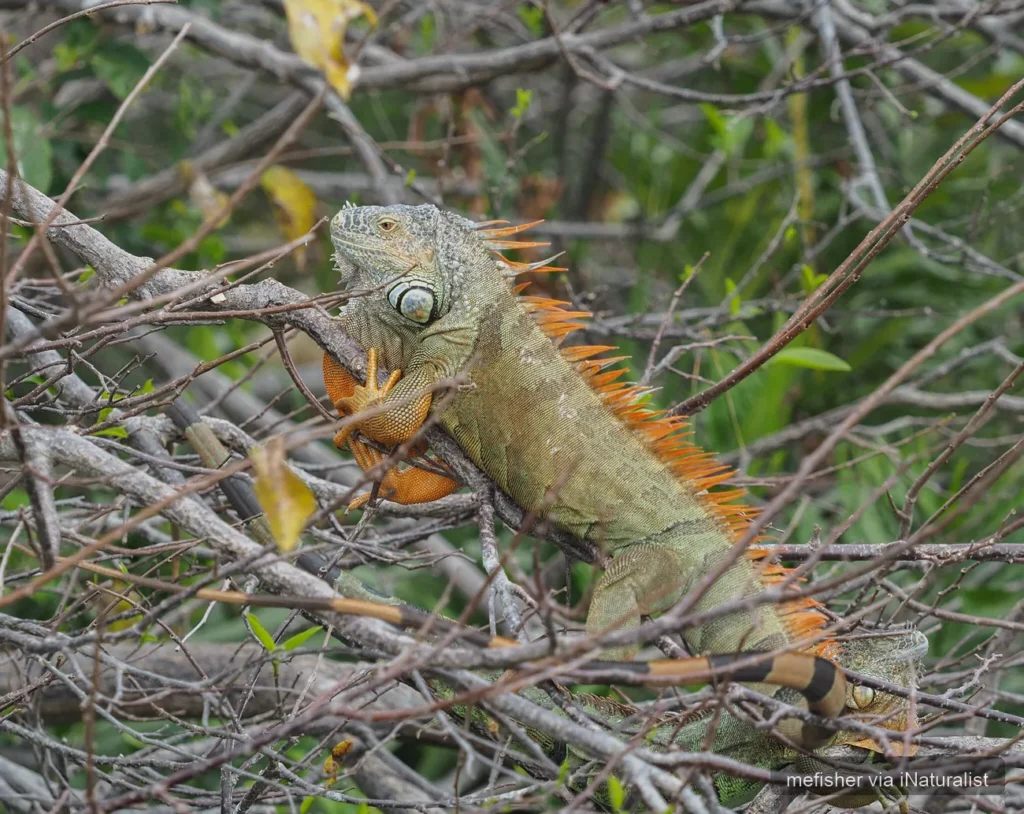
- Scientific name: Iguana iguana
- Family: Iguanidae
This lizard displays a bright to dull green body with a row of spines running from the neck down the back to the tail. Its skin is rough and scaly, and a large, round dewlap hangs beneath its chin, which is more prominent in males. Adults typically measure between 1 to 1.5 meters (3 to 5 feet) in total length, including a long, whip-like tail that accounts for more than half of that length.
In southern Florida, this species is often seen in trees or near water in suburban and natural areas, including parks and canals. It is primarily arboreal but may descend to the ground to bask or forage. Males are generally larger than females and have more pronounced dorsal spines and larger dewlaps, which they use during territorial displays.
A significant aspect of this species is its ability to swim and dive underwater to escape predators, a behavior that contributes to its survival in Florida’s varied environments. Its size and vivid coloration make it a distinctive part of the local reptile fauna.
Knight Anole
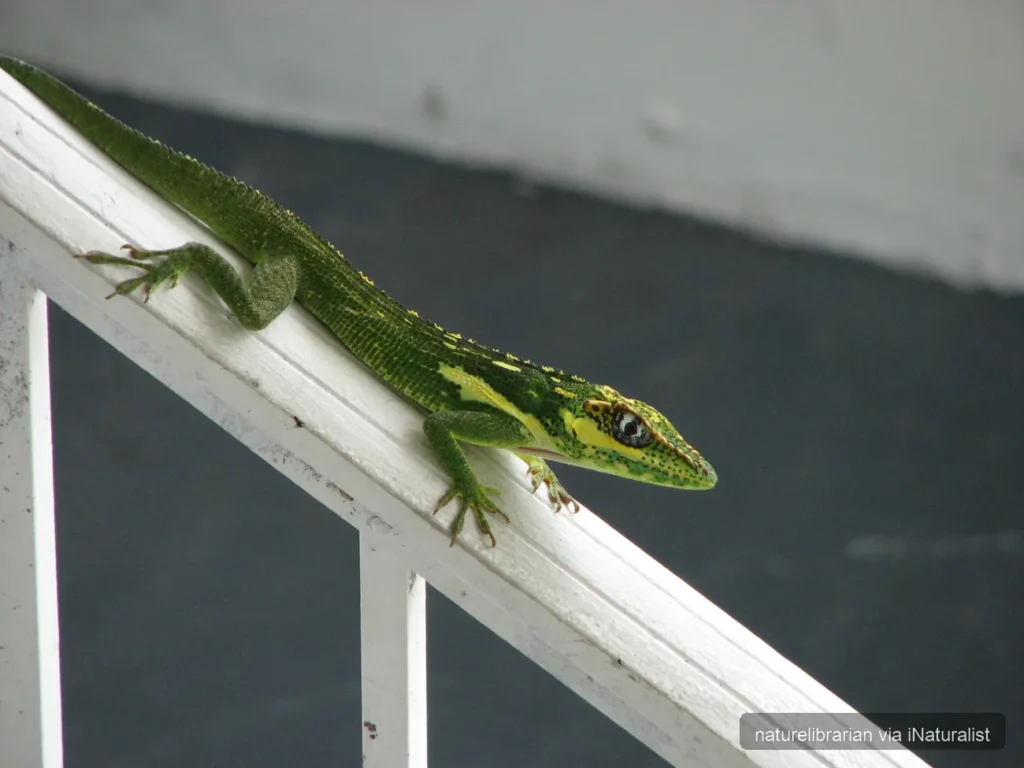
- Scientific name: Anolis equestris
- Family: Dactyloidae
This lizard is notable for its large size (it is the largest type of anole) and bright green color, with adult lengths reaching up to 50 centimeters (about 20 inches) from snout to tail tip. It has a long, slender body and limbs, with a row of small, pointed scales running down the middle of its back. Males often have a prominent, pale yellow or orange dewlap under the throat, which is used in territorial and mating displays.
In Florida, this species is most commonly observed in urban and suburban areas, especially in trees, shrubs, and on fences. It is primarily arboreal (tree-living), spending much of its time above ground level but occasionally descending to forage or bask. Its size and vivid coloration help distinguish it from smaller, native species.
This species is considered an invasive reptile in Florida, where it has established populations outside of its native Cuba. It can compete with native lizards for resources and habitat, influencing local ecosystems. Its adaptability to a variety of environments, including residential neighborhoods and parks, has contributed to its spread.
Mediterranean Gecko
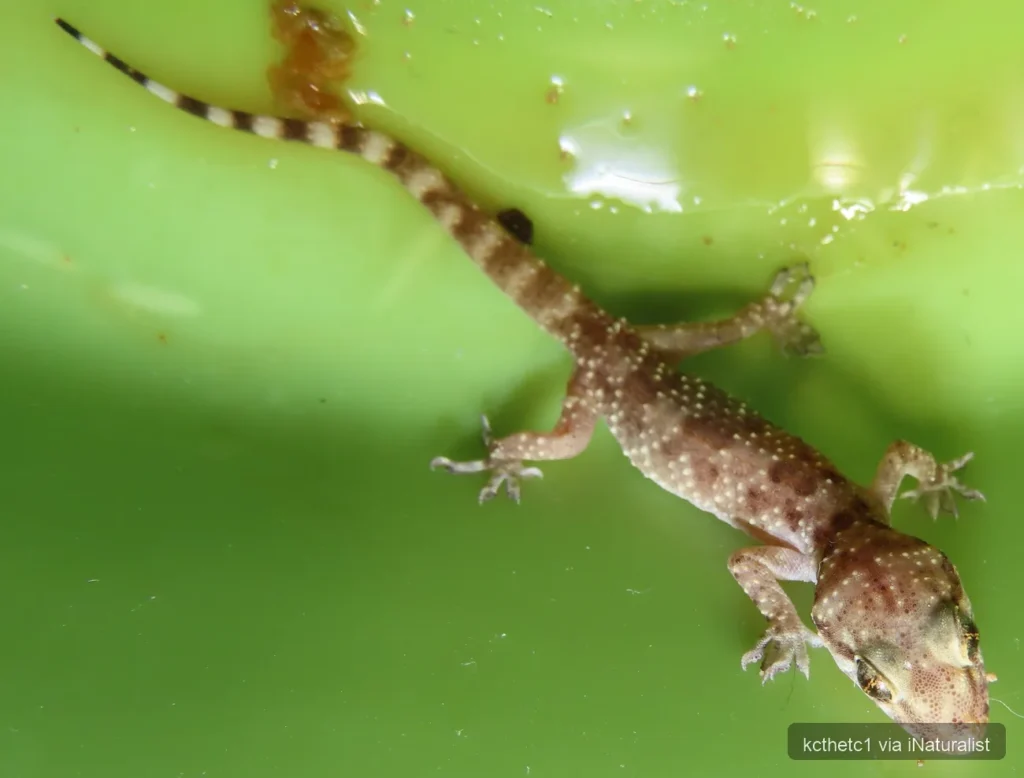
- Scientific name: Hemidactylus turcicus
- Family: Gekkonidae
This gecko is small and slender, measuring about 7 to 10 centimeters (approximately 3 to 4 inches) in total length, including the tail. Its skin is covered in small, granular scales with a pattern of pale gray or tan coloration, often marked with darker spots or bands across the back and tail. The toes have expanded pads with tiny hairs that allow it to climb smooth surfaces, a key feature for identification.
In Florida, this species is often seen on the exterior walls and windows of buildings, especially in urban and suburban areas where artificial light attracts insects. It is primarily nocturnal, becoming active at dusk to hunt for small insects and spiders. Its vocalizations include a series of soft chirps or clicks, which may be heard during the evening.
Males and females are similar in size and appearance, though males sometimes have slightly broader heads during the breeding season. This gecko’s ability to cling to vertical surfaces and its tolerance for human environments make it a frequent sight near homes and commercial buildings in warmer parts of the state.
Six-lined Racerunner
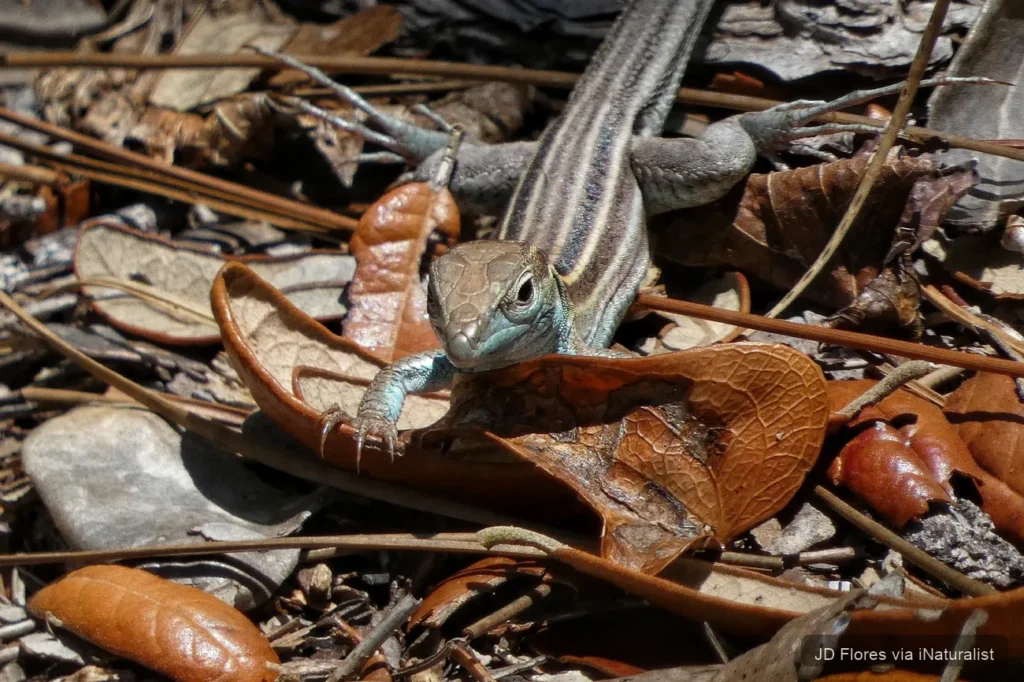
- Scientific name: Aspidoscelis sexlineata
- Family: Teiidae
This slender lizard has a light brown to gray body marked with six distinct dark longitudinal stripes running from its head to the base of the tail, which is a key feature for recognizing it. Its scales are smooth, and the underbelly is pale. Adults typically measure between 15 and 20 centimeters (6 to 8 inches) in total length, including the tail, which is often longer than the body.
This species is commonly encountered in sandy, open areas such as scrublands, pine flatwoods, and along roadsides in Florida. It is fast-moving and active during the day, frequently seen sprinting across bare ground or low vegetation. Both males and females have similar coloration, though males may display slightly brighter or more vivid stripes during the breeding season.
The lizard’s speed is notable, as it relies on quick bursts of movement to escape predators. Its preference for dry, sandy soils and open spaces makes it one of the more visible native lizards in these habitats.
Slender Glass Lizard
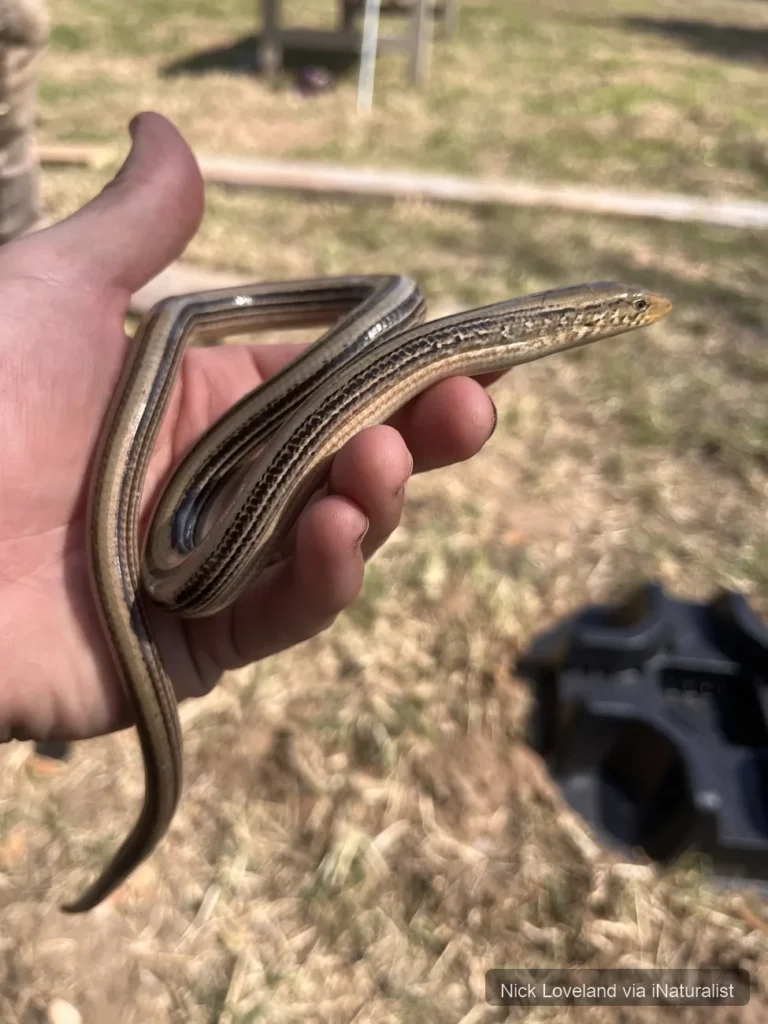
- Scientific name: Ophisaurus attenuatus
- Family: Anguidae
This slender, legless lizard is often found in dry, sandy environments such as pine flatwoods, open woodlands, and scrubby areas in Florida. It has a long, narrow body that can reach lengths of 30 to 45 centimeters (about 12 to 18 inches), with a tail that is usually longer than its body. The scales are smooth and shiny, giving the lizard a glassy appearance, and its coloration ranges from light brown to gray, sometimes with faint stripes or spots along the back.
Unlike snakes, this species has visible ear openings and movable eyelids, which can help distinguish it from other legless reptiles. It moves by undulating its body and is often seen basking on logs or in open spaces during warm weather. Although it looks like a snake, it lacks the typical snake’s forked tongue and instead has a blunt, rounded head.
This lizard is primarily terrestrial and uses its slender form to navigate through leaf litter and underbrush. It feeds on insects, spiders, and other small invertebrates. Notably, it can detach its tail to escape predators, a common defense among many lizards, which allows it to survive encounters with threats in its habitat.
Further Reading
- See our complete guide to the wildlife of Florida on this page: Florida Nature
- Discover Florida’s snake species: Florida Snakes
- Discover Florida’s birds: Florida Birds
- Discover Florida’s scorpions: Florida Scorpions