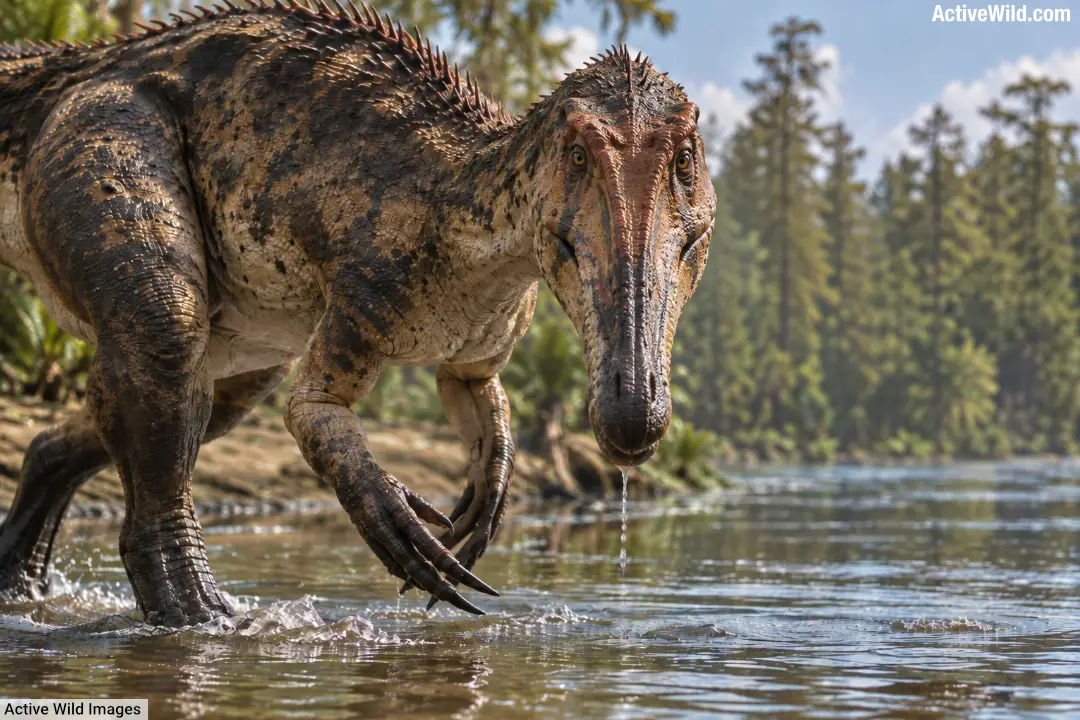
Baryonyx was a theropod dinosaur in the same family as Spinosaurus. Find out all you need to know about this Early-Cretaceous meat-eater in this fact-filled article…
Baryonyx – Introduction
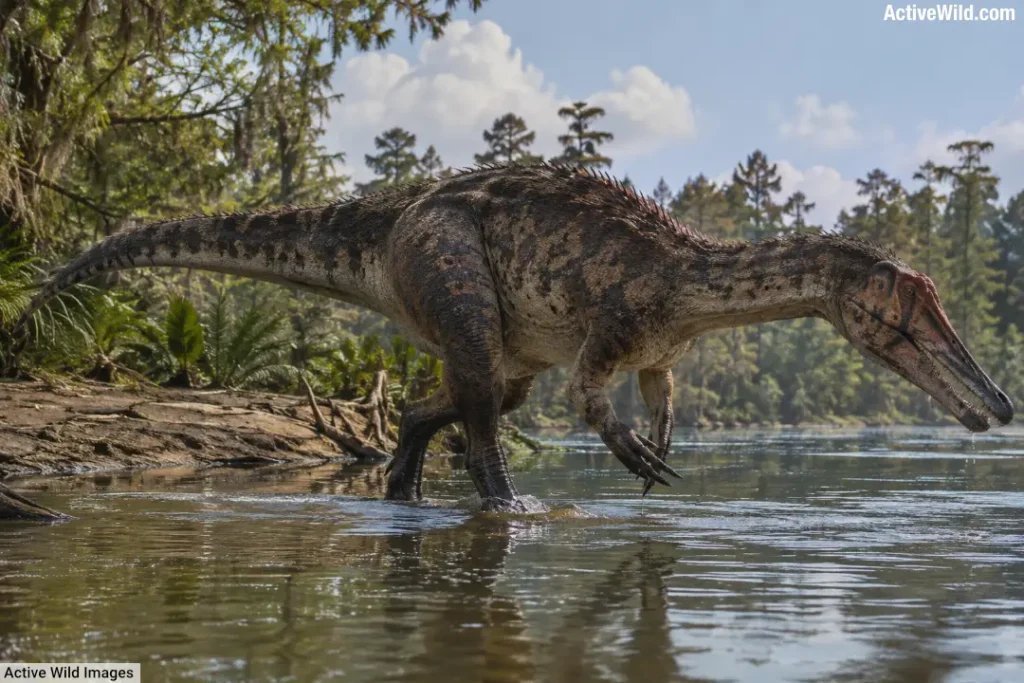
Baryonyx was a large, meat-eating dinosaur that lived around 125 million years ago, during the Early Cretaceous Period. It grew to approximately 10 metres (33 ft) in length and weighed around 2 tonnes (4,400 lb).
Spinosaurids
Baryonyx was a spinosaurid – a member of the Spinosauridae family.
Spinosauridae was a family of large, carnivorous theropod dinosaurs known for their long, crocodile-like snouts, conical teeth, and adaptations for catching fish.
The spinosaurids lived during the Cretaceous Period and included dinosaurs such as Spinosaurus, Suchomimus and Irritator, many of which inhabited riverside and coastal environments.
Although Baryonyx belonged to the same family as Spinosaurus, it was considerably smaller and lacked the enormous sail-like structure on its back. However, Baryonyx did have somewhat elongated spines on its vertebrae, which may have formed a low ridge along its back.
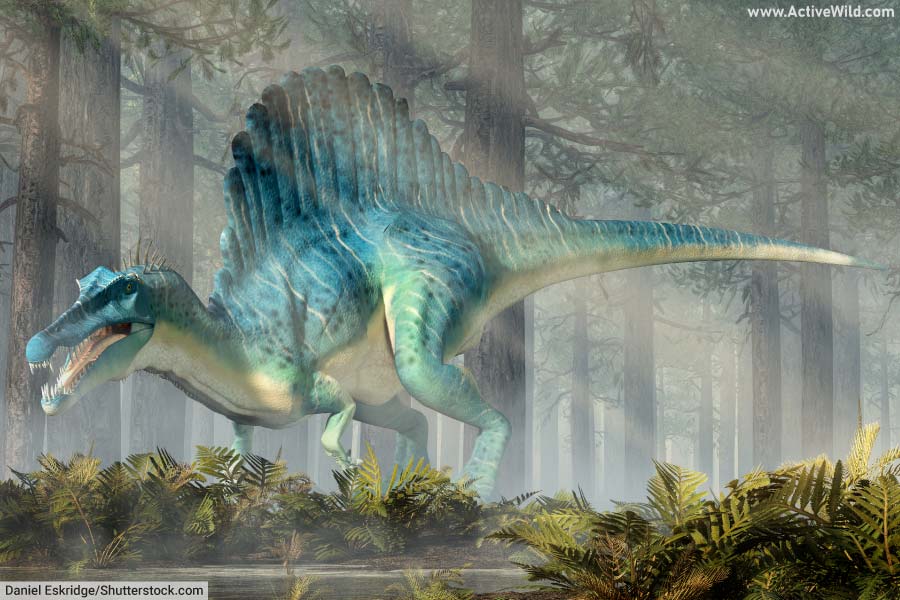
Physical Description
Like other spinosaurids, Baryonyx had a long, narrow skull with jaws resembling those of a modern crocodile. Its jaws contained numerous sharp, cone-shaped teeth with finely serrated edges. These teeth were well suited to gripping slippery prey such as fish.
The tip of Baryonyx’s snout was slightly expanded, forming a distinctive shape known as a terminal rosette. This feature, also found in crocodiles and some other fish-eating animals, probably helped the dinosaur catch and hold fish.
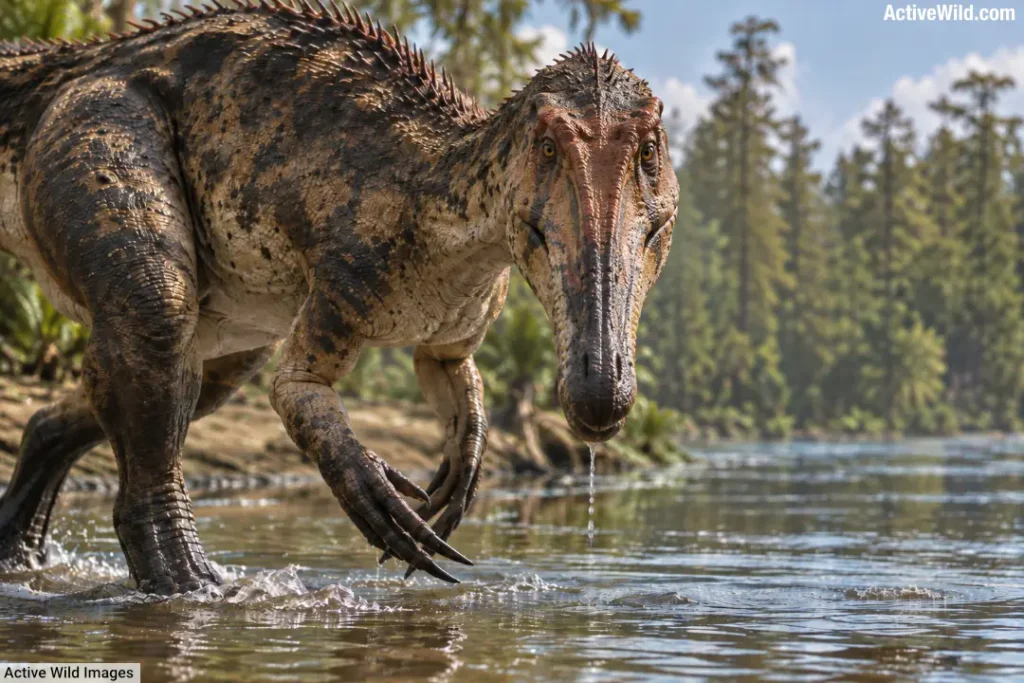
Baryonyx had powerful arms and large, curved claws, which may have been used to catch and subdue prey. The enormous claw on each thumb measured around 31 cm (12 in) along its outer curve, making it one of the dinosaur’s most distinctive features. In life, a covering of keratin would have made the claws even larger.
Baryonyx probably spent much of its time hunting near rivers, lakes and other bodies of water. It may have waded into shallow water or crouched along riverbanks, using its long jaws and powerful claws to catch fish.
Could Baryonyx Swim?
Some scientists have suggested that Baryonyx was capable of submerging itself to hunt underwater. However, the extent of its swimming abilities remains uncertain, and it is generally thought to have walked on two legs when moving on land.
What Did Baryonyx Eat?
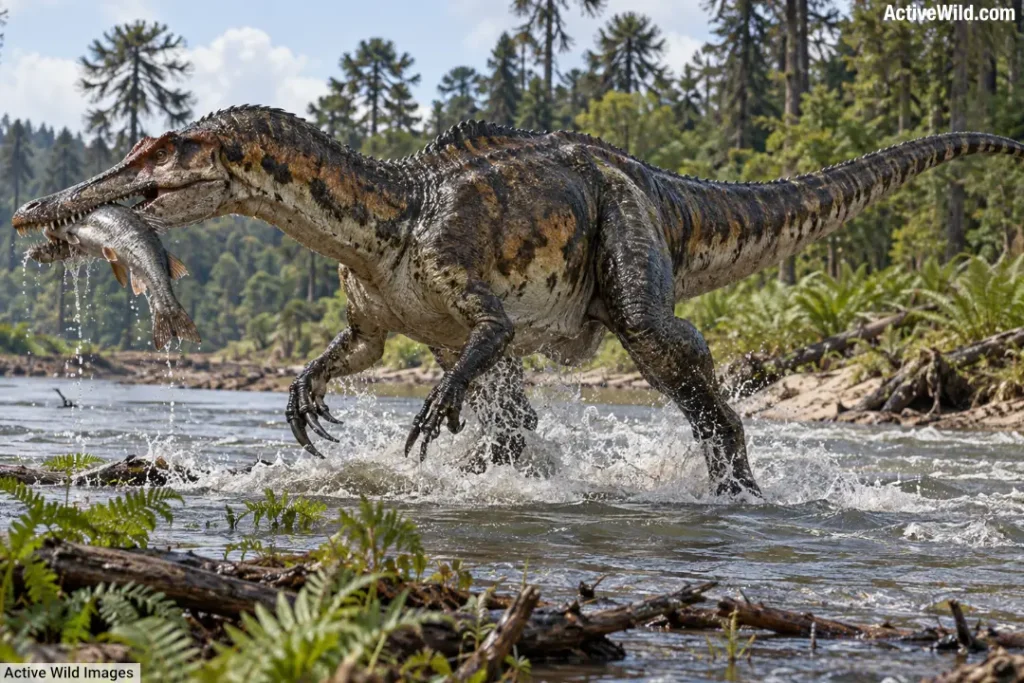
Fossil evidence confirms that Baryonyx ate fish. Remains of fish scales and teeth were discovered in the stomach region of its skeleton, together with bones from a young Iguanodon. This shows that Baryonyx was not exclusively a fish-eater and also consumed other dinosaurs, although it is unclear whether it hunted or scavenged them.
What Does The Name “Baryonyx” Mean?
The name Baryonyx means “heavy claw”, referring to its unusually large thumb claws. The dinosaur was named Baryonyx walkeri in honour of fossil collector William Walker, who discovered its first fossilised remains in Surrey, England, in 1983.
Baryonyx Discovery
Baryonyx was discovered in January 1983 by amateur fossil collector William Walker, who found an enormous fossilised claw in a clay pit near Ockley, Surrey, England. The discovery prompted an excavation by palaeontologists from London’s Natural History Museum, who uncovered one of the most complete large carnivorous dinosaur skeletons ever found in Britain.
In 1986, palaeontologists Alan Charig and Angela Milner formally described the dinosaur, naming it Baryonyx walkeri in honour of its discoverer. The discovery was particularly important because it provided scientists with new insights into the anatomy and lifestyle of the poorly understood spinosaurid dinosaurs.
Discover More About Dinosaurs with Active Wild
You can find out more about dinosaurs and prehistoric life on the following pages: