
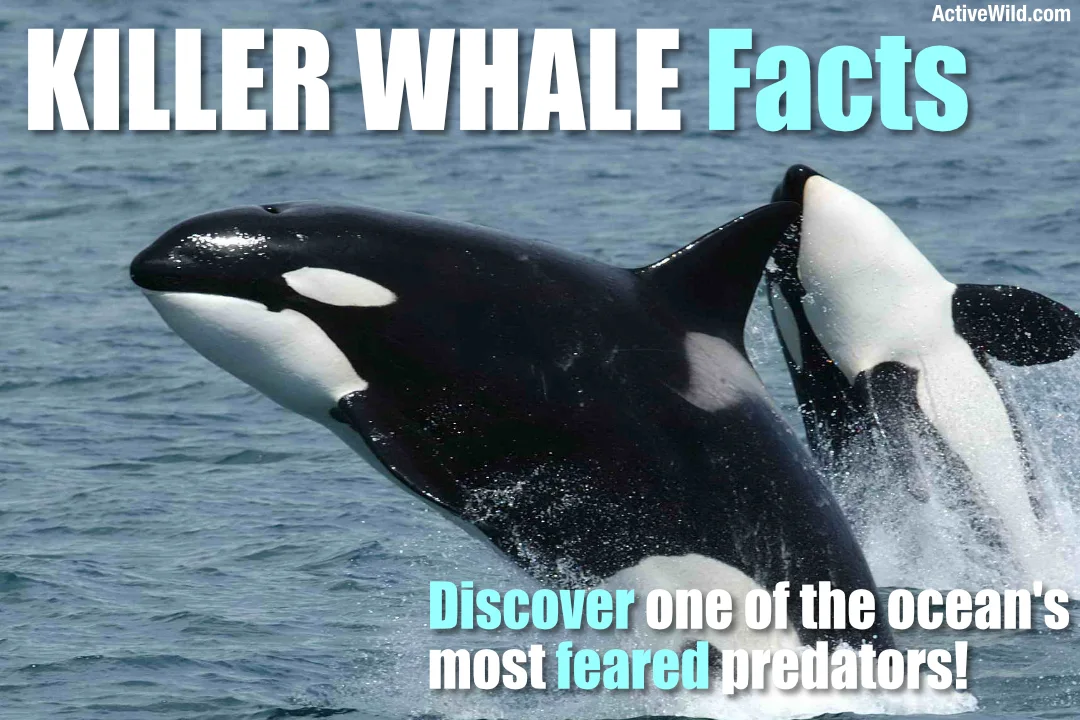
The killer whale, also known as the orca, is one of the ocean’s most recognizable predators. This fearsome marine mammal is the largest member of the oceanic dolphin family (Delphinidae) – and therefore closely related to familiar ocean animals such as the bottlenose dolphin.
The killer whale has the scientific name Orcinus orca and belongs to the mammalian infraorder Cetacea, which contains all of the world’s whales, dolphins and porpoises.
With its bold black-and-white pattern, complex social life, and flexible hunting strategies, the orca has captivated people around the world for centuries.
On this page is a complete guide to this intelligent apex predator.
Page Index
Quick Facts
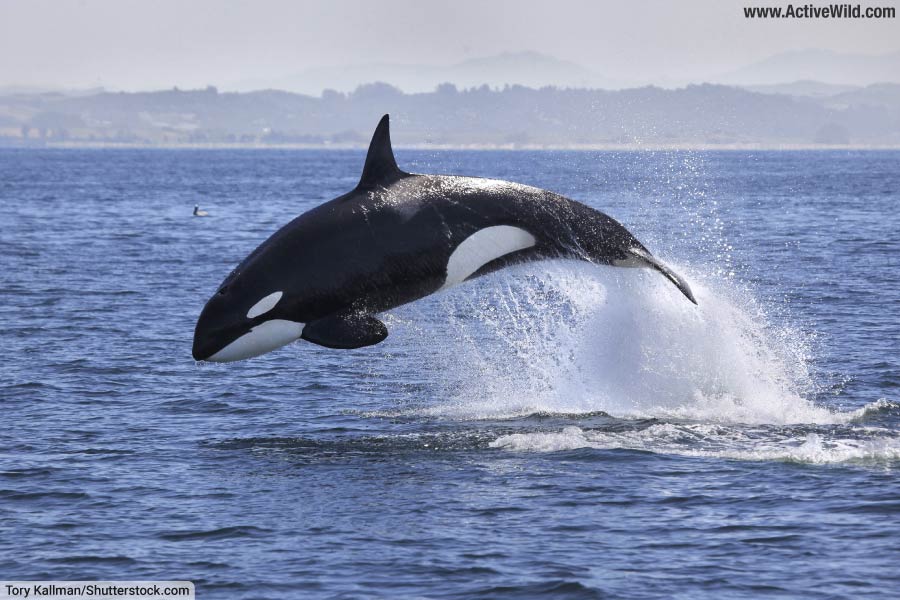
- Common names: Killer whale, orca
- Scientific name: Orcinus orca (Linnaeus, 1758)
- Class: Mammalia (Mammal)
- Order: Cetacea (whales, dolphins and porpoises)
- Parvorder: Odontoceti (toothed whales)
- Family: Delphinidae (oceanic dolphins)
- Range: Found in every ocean and across multiple regions, including North America, Europe, and Antarctica
Size
- Length (adult male): 6–8 m (20–26 ft)
- Weight (adult male): 4,500–6,000 kg (9,900–13,200 lb)
- Length (adult female): 5–7 m (16–23 ft)
- Weight (adult female): 3,000–4,000 kg (6,600–8,800 lb)
There are bigger killer whales out there: specimens almost 32 feet (10 meters) long and weighing 7,500kg (16,500 pounds) have been recorded!
Orca Identification Tips
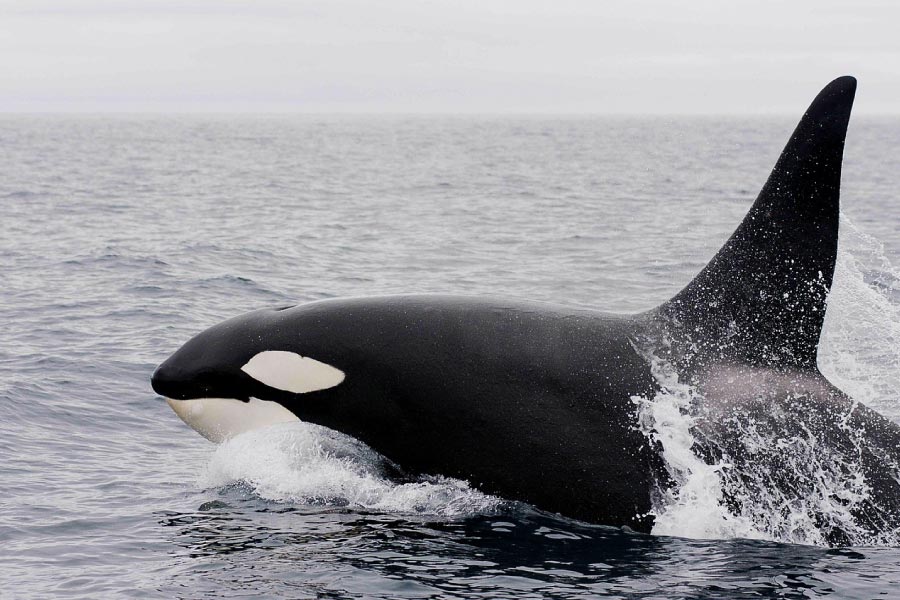
- Color pattern: Striking black-and-white “tuxedo” look with a bright white oval patch in front of each eye and a pale gray “saddle” just behind the dorsal fin.
- Body shape: Robust, torpedo-shaped body with a rounded head and no beak. Broad, paddle-like pectoral fins.
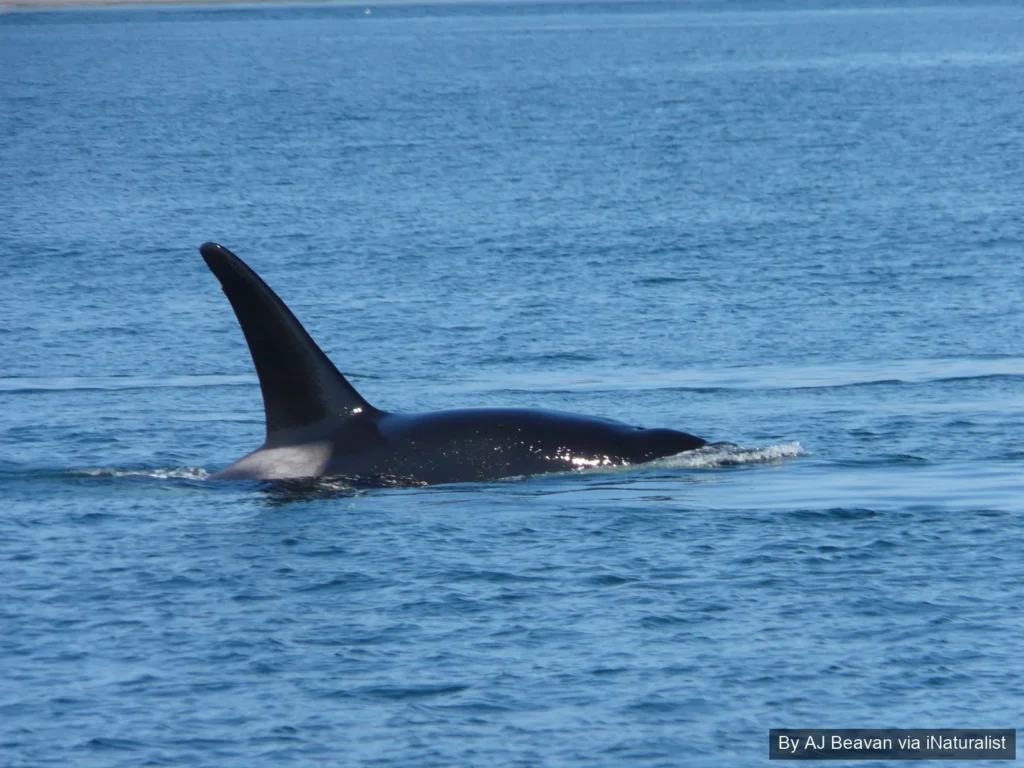
- Dorsal fin: Tall and prominent. Adult males have especially tall, triangular fins; females and juveniles show shorter, more curved fins.
- Surfacing behavior: Often travels in cohesive groups (pods), with several animals surfacing in quick succession. The tall dorsal fin and bold contrast stand out even in rough water.
- What it’s not: Dark dolphins such as false killer whales or pilot whales lack the crisp white eye patch and saddle marks; beaked whales have long beaks and subtler coloration.
How Big is a Killer Whale?
Orcinus orca is the largest member of the oceanic dolphin family, with adult males typically reaching 6–8 meters (20–26 feet) in length and weighing up to 6,000 kg (13,200 lb), while females are slightly smaller at around 5–7 meters (16–23 feet) and up to 4,000 kg (8,800 lb).
Newborn calves are already sizable at about 2–2.5 meters (6.5–8 feet) long and weighing roughly 150–200 kg (330–440 lb).
Male killer whales can be easily recognized by their towering dorsal fins, which can grow as tall as 1.8 meters (6 feet).
Where Is The Killer Whale Found?
The killer whale is one of the most widely-distributed of all mammals, being found in all of the world’s oceans. It is most abundant in colder, productive waters, such as:
- Around Antarctica
- The North Pacific (e.g., Alaska)
- The North Atlantic (e.g., Norway, Iceland)
Thanks to its adaptable diet and ability to tolerate a wide range of temperatures, the orca is also found in tropical and subtropical waters, but usually in lower numbers. In these regions, it is often passing through rather than staying year-round.
Orcas use both coastal and offshore habitats and can appear from polar seas to more temperate zones, depending on local prey and seasonal movements.
What Does The Killer Whale Eat?
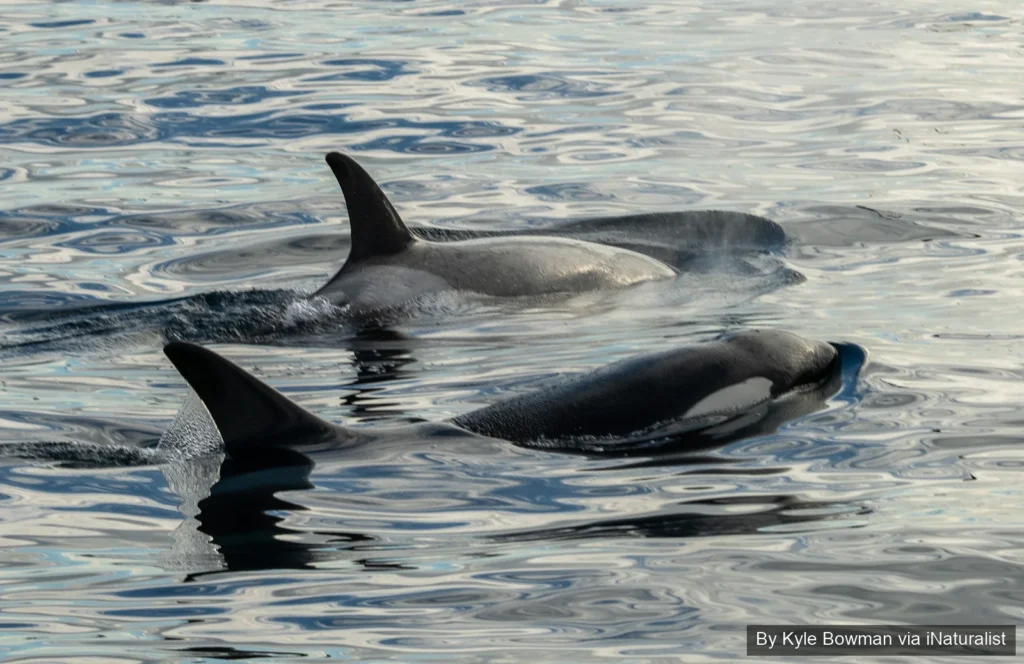
Orcas are adaptable hunters whose diets vary by region and even by family tradition.
Some populations specialize in fish, working together to corral schooling species before stunning them with tail slaps. Others focus on marine mammals, pursuing seals, sea lions, porpoises, and occasionally even larger whales. In different places, orcas may also take squid, sharks and rays, and sometimes seabirds.
Studies have shown that resident orca populations tend to feast on fish, whereas migratory populations prefer marine mammals.
Hunting is often a team effort. Pods use coordinated tactics—surrounding prey, driving fish toward the surface, or timing charges with waves.
In polar seas, orcas have been seen creating waves with their tails to wash seals from ice floes. In some coastal areas, individuals deliberately slide partway onto beaches to grab prey, a risky behavior refined within families.
Spy-Hopping
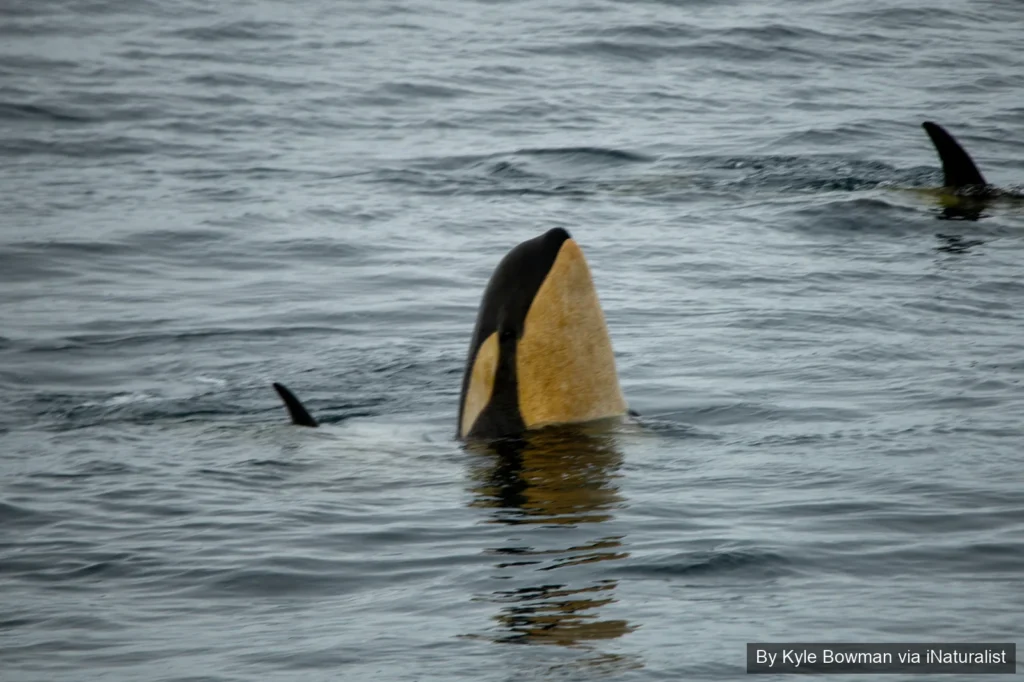
Spy-hopping is a behavior in which the whale rises vertically out of the water, often holding position, to look around above the surface.
Like other dolphin species, Killer whales use echolocation to hunt and to navigate, producing sound waves that bounce off their surroundings.
Killer Whale Behavior And Daily Life
Orcas live in close-knit family groups known as pods. These lifelong bonds underpin daily life: traveling, hunting, resting, and socializing. A pod may range across open water, coordinate hunts, then slow down to rest and interact with play behaviors such as breaching, tail slapping, and spyhopping (rising vertically to look around).
Communication is rich. Orcas use whistles and pulsed calls to stay connected and coordinate, alongside clicks for echolocation.
Many pods have distinctive call types—sometimes described as dialects—that members learn from one another. Rest is also communal.
Do Killer Whales Sleep?
Like other dolphins, orcas can let one half of the brain sleep at a time, and resting pods often move slowly together or float near the surface in a relaxed, synchronized state.
Life Cycle & Lifespan
As mammals, orcas give birth to live young and nurse them with energy-rich milk. A mother invests heavily in each calf, with pregnancy lasting well over a year and care that continues long after weaning.
Calves are born into a social world and learn hunting techniques, travel routes, and family calls by watching, listening, and practicing alongside older relatives. Helpers—often siblings or other close kin—may assist mothers with babysitting and protection.
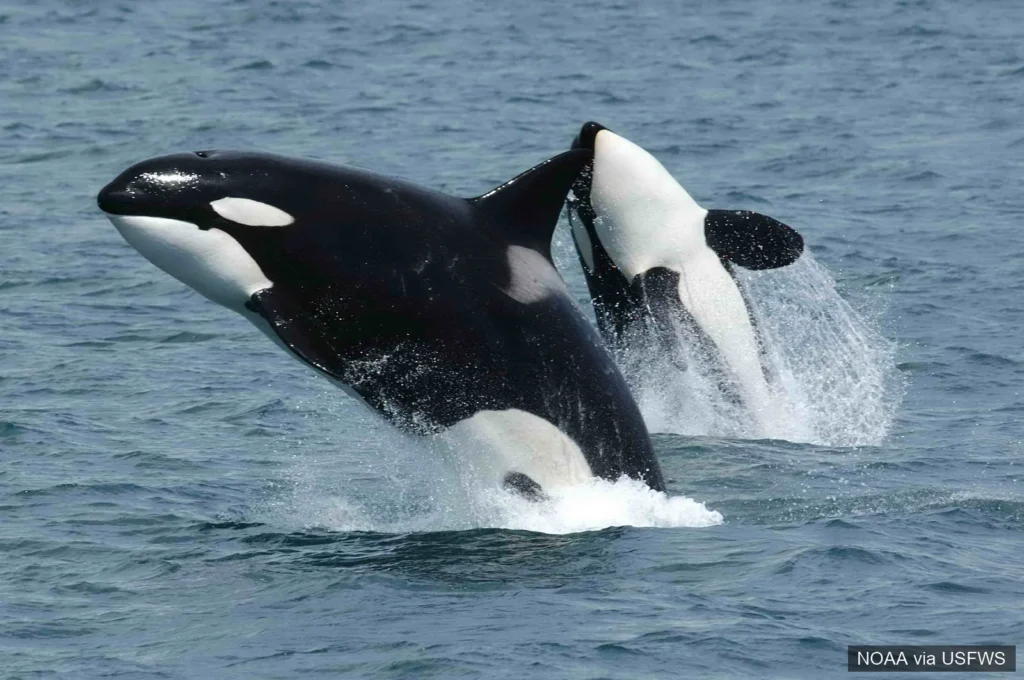
Orcas grow through a long juvenile period before reaching maturity, and family ties typically remain strong throughout life. In many populations, adult sons and daughters continue to travel with their mothers. Older females often act as repositories of knowledge, guiding groups to seasonal foraging areas and leading hunts with hard-earned experience.
In the wild, female Killer whales can live as long as 80 years, and males 50-60 years.
Family And Related Animals
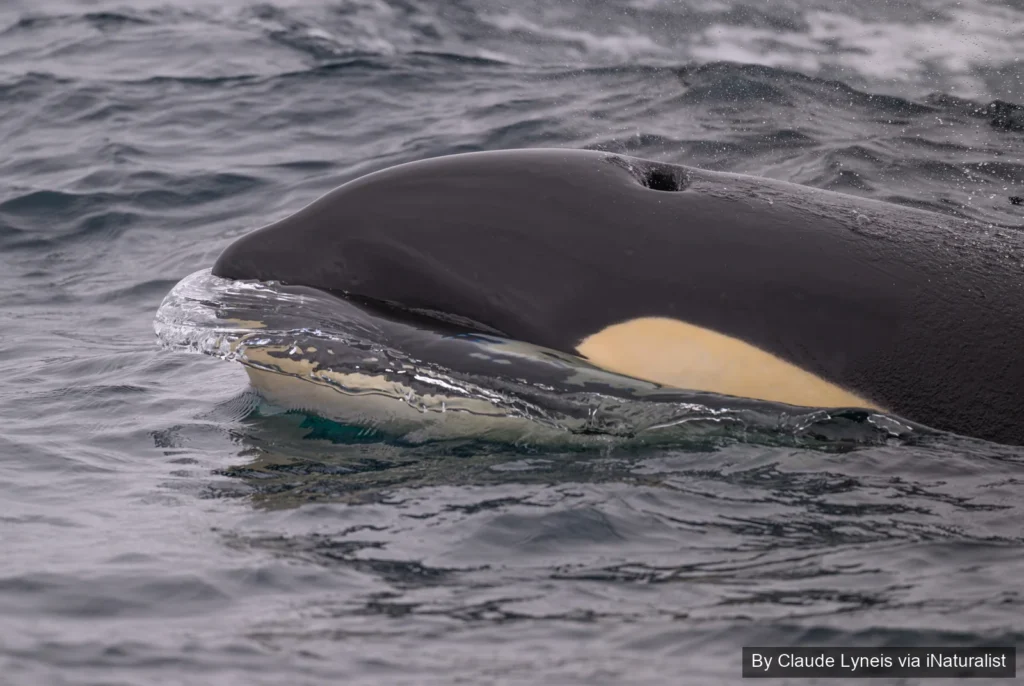
The killer whale belongs to the oceanic dolphin family, Delphinidae and has many classic dolphin traits: a streamlined body, conical teeth for grasping prey, and sophisticated echolocation. The orca is the sole species in the genus Orcinus.
Relatives of the orca include familiar dolphins such as the bottlenose dolphin and several so‑called “blackfish” within the dolphin family—pilot whales, the false killer whale, and the melon‑headed whale. Like orcas, many of these species are highly social, cooperative hunters with complex communication.
Interesting Features
- Bold black-and-white patterning helps break up the body’s outline in open water, aiding ambush. The pale eye patch and gray saddle-shaped mark behind the dorsal fin are trademark features.
- Orcas are cultural animals. Distinct populations—sometimes called ecotypes—use different hunting strategies, prey preferences, and call types that are passed down through learning.
- Social intelligence runs deep. Cooperative problem‑solving, role‑sharing during hunts, and prolonged care of young point to notable behavioral flexibility.
- Powerful yet agile swimmers, orcas can pivot from stealth to sudden acceleration in seconds, a combination that underlies many of their signature hunting tactics.
- The killer whale’s closet living relative on land is the hippopotamus!
Discover More with Active Wild
- You can discover more amazing ocean animals on this page: Ocean Animals List
- Find out more about whales here: Whales Explained
- Find out more about mammals on this page: Mammals – The Ultimate Guide
- See EVERY species of dolphin on this page: Types of Dolphins
- You can see more Arctic animals on this page: Arctic Animals
- You can see more apex predators on this page: Apex Predators