
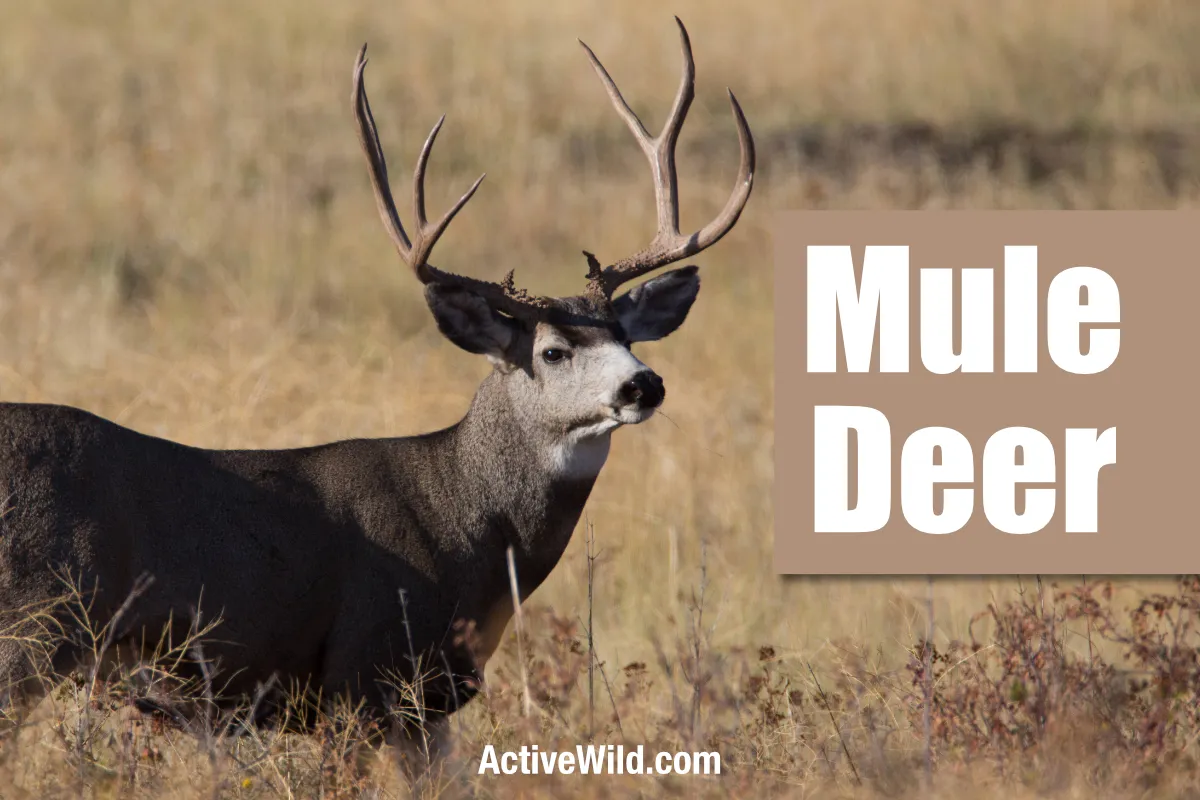
The mule deer, Odocoileus hemionus, is a North American member of the deer family (Cervidae) known for its large, mule‑like ears. In some regions and forms it’s also called the black‑tailed deer, reflecting a darker tail pattern, but all belong to the same species.
Have you seen a white-tailed deer? Want help with an identification? Let us know in the comments section at the bottom of the page!
Quick Facts
- Common name: Mule deer
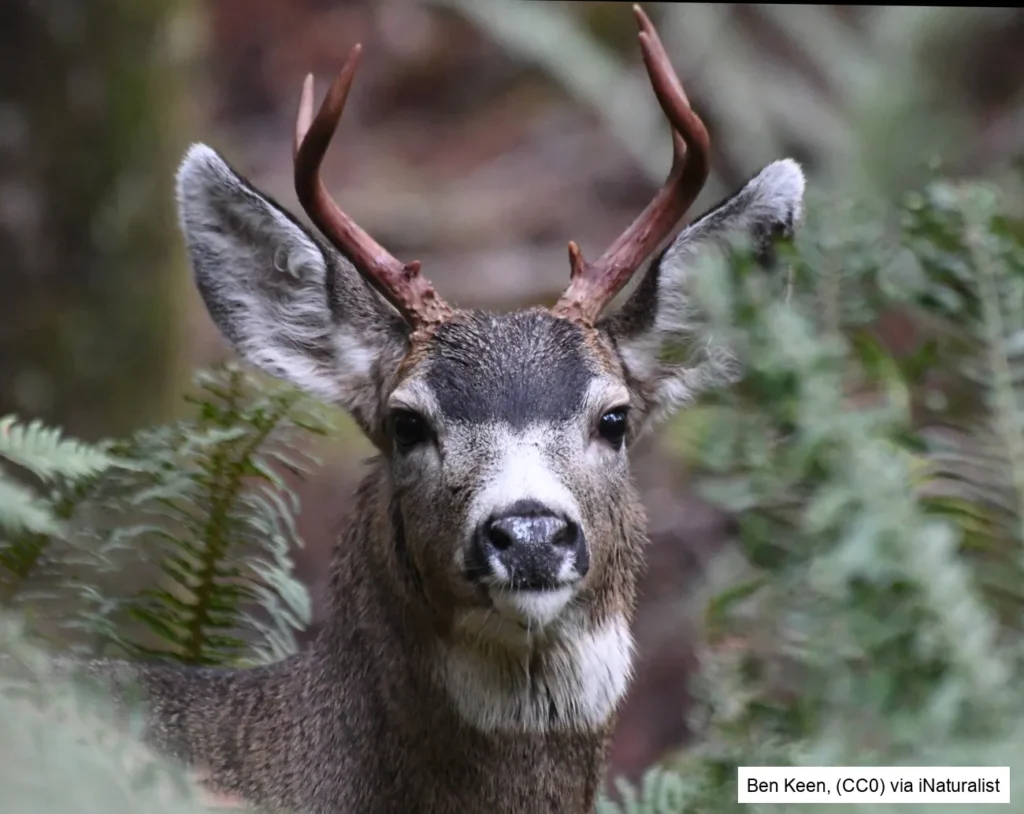
- Also known as: Black-tailed Deer (for two subspecies)
- Scientific name: Odocoileus hemionus (Rafinesque, 1817)
- Family: Cervidae (the deer family)
- Class: Mammalia
- Range: Western North America
- Diet: Herbivorous browser; typically feeds on leaves, twigs, and seasonal plants
- Activity: Often most active around dawn and dusk
- Hallmarks: Very large ears, forked antlers in males, and a distinctive bounding gait
Population
After the white-tailed deer, the mule deer is the second-most abundant deer species in the United States. (You can see a list of all United States and North American deer species on this page: Types of Deer in the United States.)
The mule deer population in the United States is generally estimated at ~3 to 4 million individuals. Most are found in the western states (e.g. Colorado, California, Wyoming, Utah), where mule deer are the dominant native deer species.
Across all of North America (including the U.S., Canada, and a small range in Mexico), the total population is approximately ~4 to 6 million individuals.
Mule Deer Identification Tips
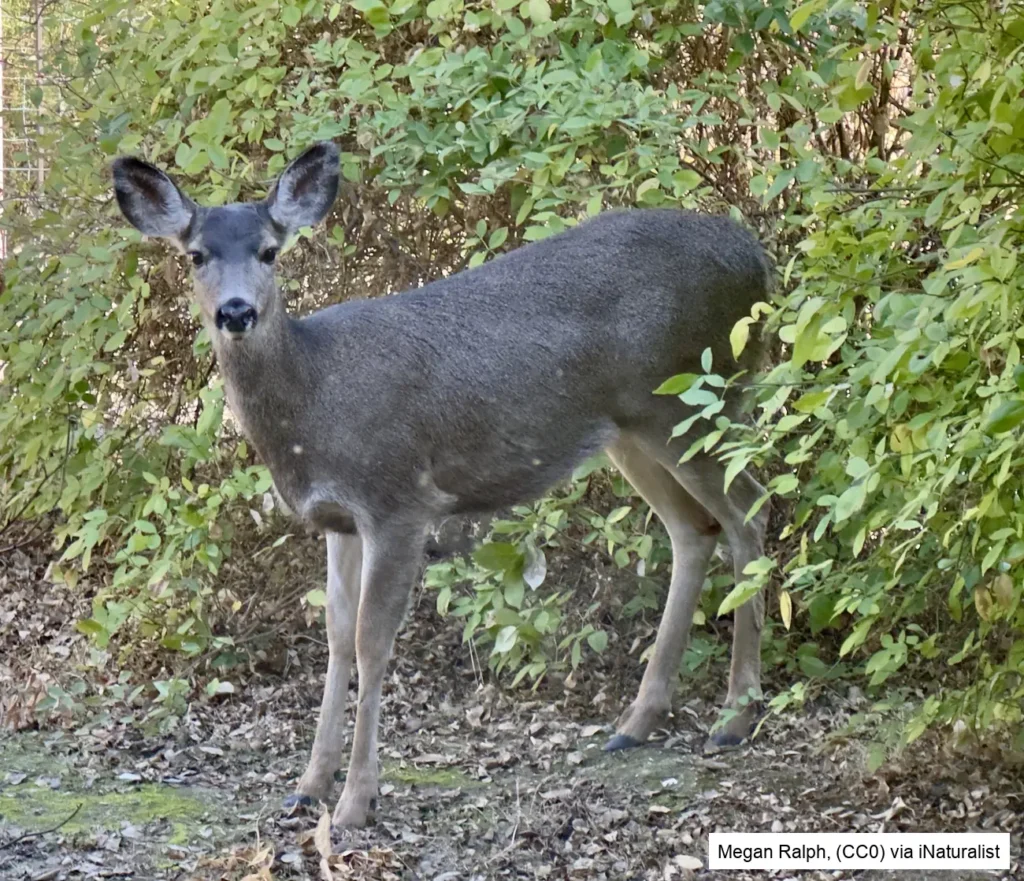
- Ears: Exceptionally large, broad, and mobile—an immediate giveaway compared with other North American deer.
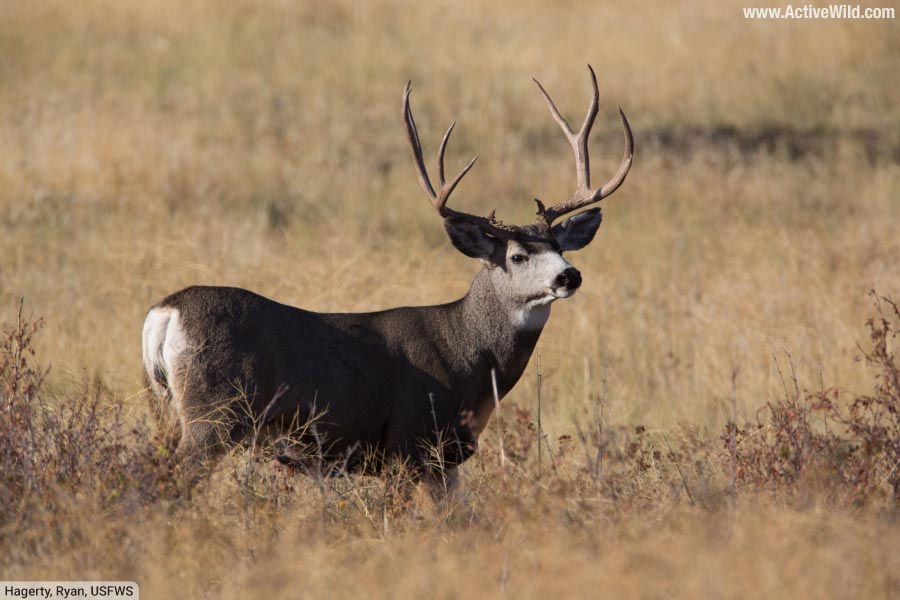
- Antlers (males): Typically fork and re-fork into paired tines, rather than sprouting most tines from a single main beam.
- Tail and rump: Many show a narrow, black-tipped tail with a contrasting light rump patch. In coastal and island populations often called black-tailed deer, the tail appears much darker overall with a thin pale fringe.
- Face pattern: Often a darker forehead with a lighter muzzle; some individuals show a pale eye ring.
- Body color: Generally grayish-brown to brown, with the coat shifting by season and region.
- Gait: When startled, mule deer frequently bound in high, springy leaps (“stotting”), landing with all four feet nearly together.
Tip: Where mule deer overlap with white-tailed deer, focus on ear size, antler shape, and tail pattern to make a confident ID.
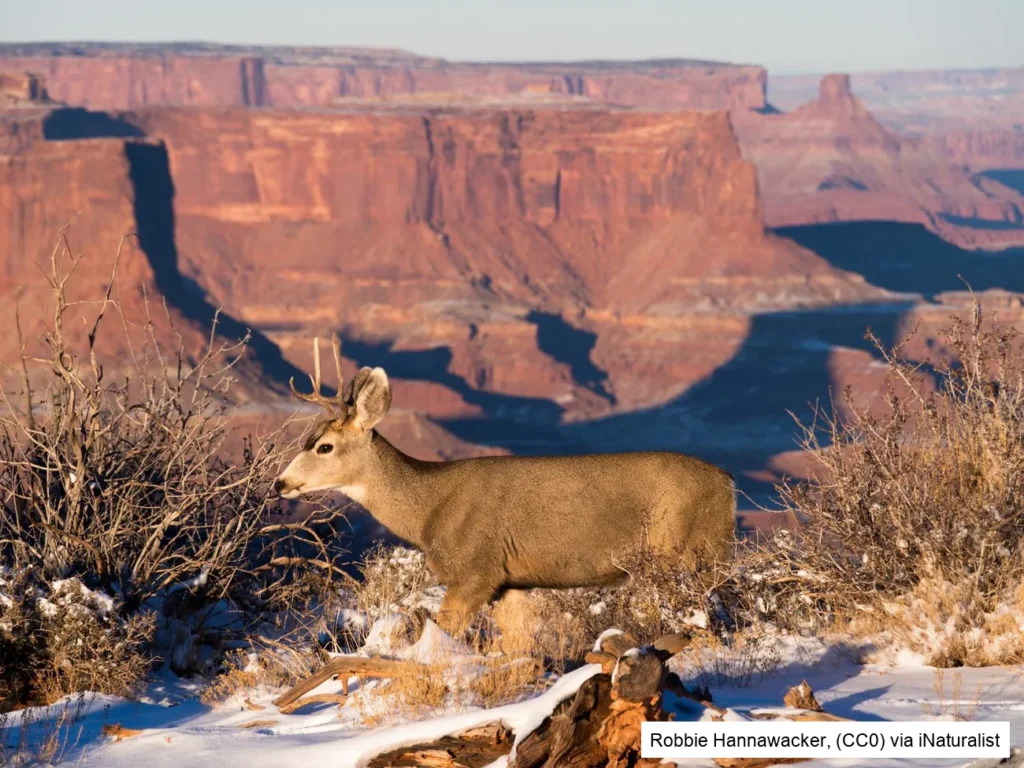
Size & Weight
The mule deer is a medium-to-large deer species, with noticeable variation between males (bucks) and females (does).
- Body length: ~1.2–2.1 m (4–7 ft)
- Shoulder height: ~0.9–1.1 m (3–3.5 ft)
- Tail length: ~13–23 cm (5–9 in)
Weight
- Bucks (males): ~55–150 kg (120–330 lb)
- Does (females): ~45–90 kg (100–200 lb)
Mule deer in northern and mountainous regions tend to be larger than those in desert environments.
Bucks are not only heavier but also carry large, forked antlers, which can add to their overall visual size.
Compared to the white-tailed deer, mule deer are often stockier with longer legs and larger ears.
Where Is The Mule Deer Found?
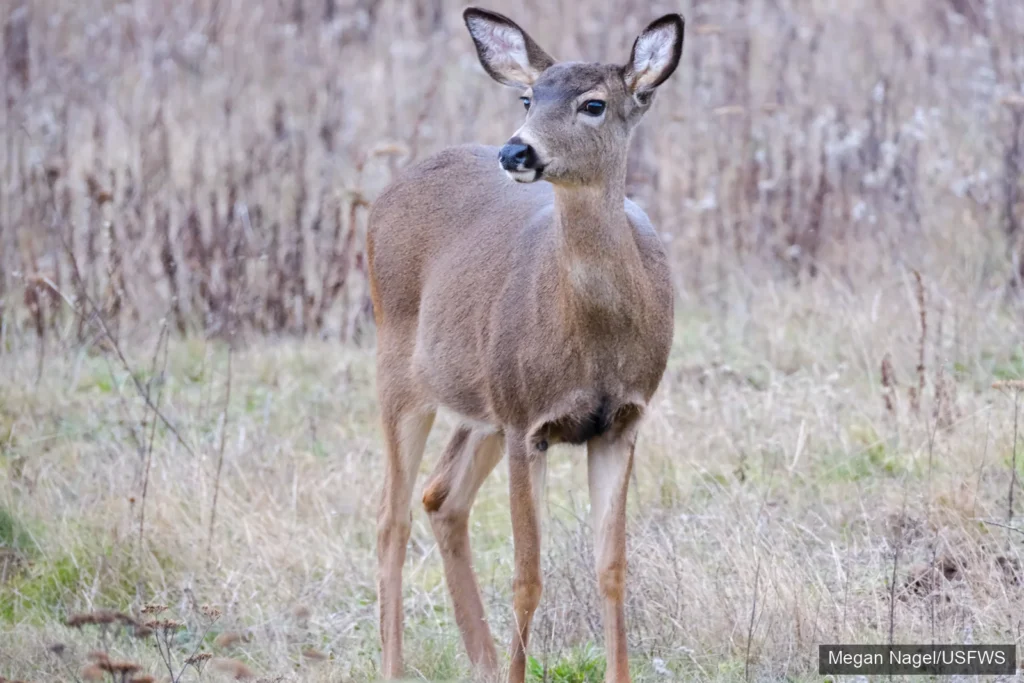
The majority of the mule deer’s population is found in western North America. Small, introduced populations may also be found in parts of Europe.
Habitat
Mule deer are adaptable and favor places where food and cover sit close together. They commonly use:
- Brushy slopes and open shrublands
- Forest edges, woodlands, and patchy montane habitats
- Grassland–meadow mosaics with nearby cover
- Semi-arid country dotted with shrubs and low trees
They often work habitat “edges,” slipping between open feeding areas and denser cover for safety. In many regions, they also use rural fringes and the wilder margins of towns where gardens, orchards, or greenbelts provide dependable forage alongside escape cover.
What Does The Mule Deer Eat?
Mule deer are primarily browsers. Rather than cropping large amounts of grass, they select leaves, young twigs, tender forbs, and a variety of shrubs. What’s on the menu shifts with season and local plant communities: they may rely more on woody browse in winter, take new greens early in the growing season, and use fruits, acorns or other mast, and occasional nutritious grasses when available.
Like other deer, mule deer are ruminants with a multi-chambered stomach. They take in plant material, retreat to a safe resting spot, and “chew their cud” to extract more energy from fibrous food. In dry country, moisture-rich vegetation helps meet water needs, though they drink when free water is available.
Mule Deer Behavior And Daily Life
Mule deer are often most active around dawn and dusk. Midday is typically for bedding in cover, digesting a previous meal, and conserving energy. They are keenly alert, with large ears that swivel to pinpoint sounds, a strong sense of smell, and wide-set eyes to watch for predators.
When alarmed on uneven or brushy ground, they often switch to stotting—high, springy jumps landing on all four feet—useful in rough terrain. Socially, does and their fawns tend to form small family groups, while adult males spend more time alone or in loose bachelor groups outside the breeding season. Group size and movements vary by habitat and season; some populations migrate between higher and lower elevations, while others remain resident year-round.
Communication includes posture, ear position, and scent. Like many deer, mule deer have scent glands on their legs and between their toes that leave chemical cues. Vocalizations are usually quiet and limited, with mothers and fawns keeping in touch at close range.
Life Cycle
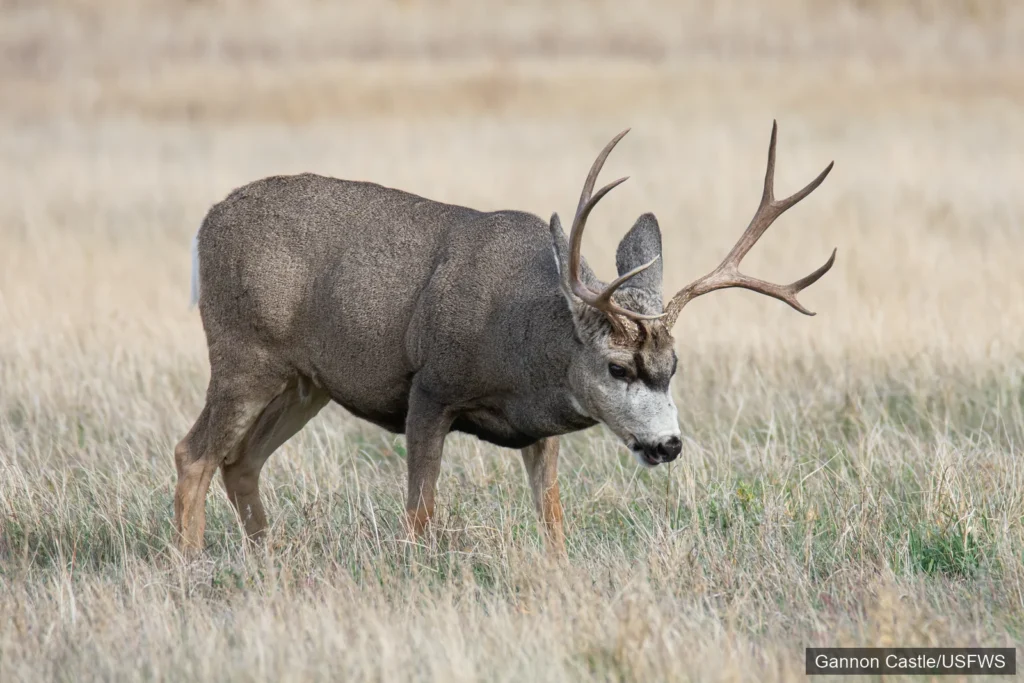
For males, antlers shape the year. New antlers grow under a soft “velvet” covering, harden before the breeding season, and are shed afterward. During the rut, which typically occurs in cooler months, males compete with displays and controlled sparring for access to receptive females.
After mating, does carry their young through a relatively long gestation and give birth in late spring or early summer. In good years, healthy adults often have twins, though single fawns are also seen. Newborns rely on camouflage and stillness while the mother forages nearby. Fawns begin sampling solid food as the season progresses and gradually become more independent. Females can breed when fairly young; males usually achieve breeding success later, once they have grown and can compete more effectively.
Mule Deer Lifespan
Mule deer have a typical lifespan of around 5–7 years in the wild, although many individuals die younger due to predation, hunting, disease, and harsh environmental conditions.
- Maximum lifespan (wild): About 10–15 years in rare cases
- Captivity: Can live 15–20 years or more
- Sex differences: Females (does) generally live longer than males (bucks), as males experience higher mortality linked to the stresses of the rut and greater exposure to risk
As with most wild deer populations, relatively few mule deer reach advanced ages, and individuals older than 8–10 years are uncommon.
Family And Related Animals
Mule deer belong to the deer family, Cervidae, within the even-toed hoofed mammals (Artiodactyla). They are in the genus Odocoileus, the same genus as the white-tailed deer, their closest well-known relative. The two are similar in many ways but differ in tail pattern, typical antler shape, and aspects of behavior. Where their ranges meet, hybridization has been reported.
Within Odocoileus hemionus, several named forms are recognized. Names and boundaries can vary among sources, but the following subspecies are recognized:
- Odocoileus hemionus californicus (California mule deer)
- Odocoileus hemionus cerrosensis (Cedros Island mule deer)
- Odocoileus hemionus columbianus (Black-tailed deer)
- Odocoileus hemionus eremicus (Desert mule deer)
- Odocoileus hemionus fuliginatus (Southern mule deer)
- Odocoileus hemionus hemionus (Rocky Mountain mule deer)
- Odocoileus hemionus inyoensis (Inyo mule deer)
- Odocoileus hemionus peninsulae (Baja mule deer)
- Odocoileus hemionus sheldoni (Tiburón Island mule deer)
- Odocoileus hemionus sitkensis (Sitka black-tailed deer)
Interesting Features
- The name “mule deer” nods to their oversized, mule-like ears, which aid sound detection and help shed heat.
- Mule deer antlers typically “fork,” with tines that branch again, rather than extending from a single main beam.
- Many forms have a black-tipped tail and a contrasting rump patch, features that help herd mates keep track of one another in cover.
- As ruminants, mule deer turn tough plant fibers into fuel through microbial fermentation in the foregut.
- Coat color shifts seasonally, often becoming thicker and duller in colder months and sleeker in warmer ones, providing insulation and camouflage.
Further Reading
- See every deer species found in the United States and North America on this page: Types Of Deer in the United States
- You can find out more about mammals on this page: Mammals, The Ultimate Guide
- Discover iconic North American species here: North American Animals