
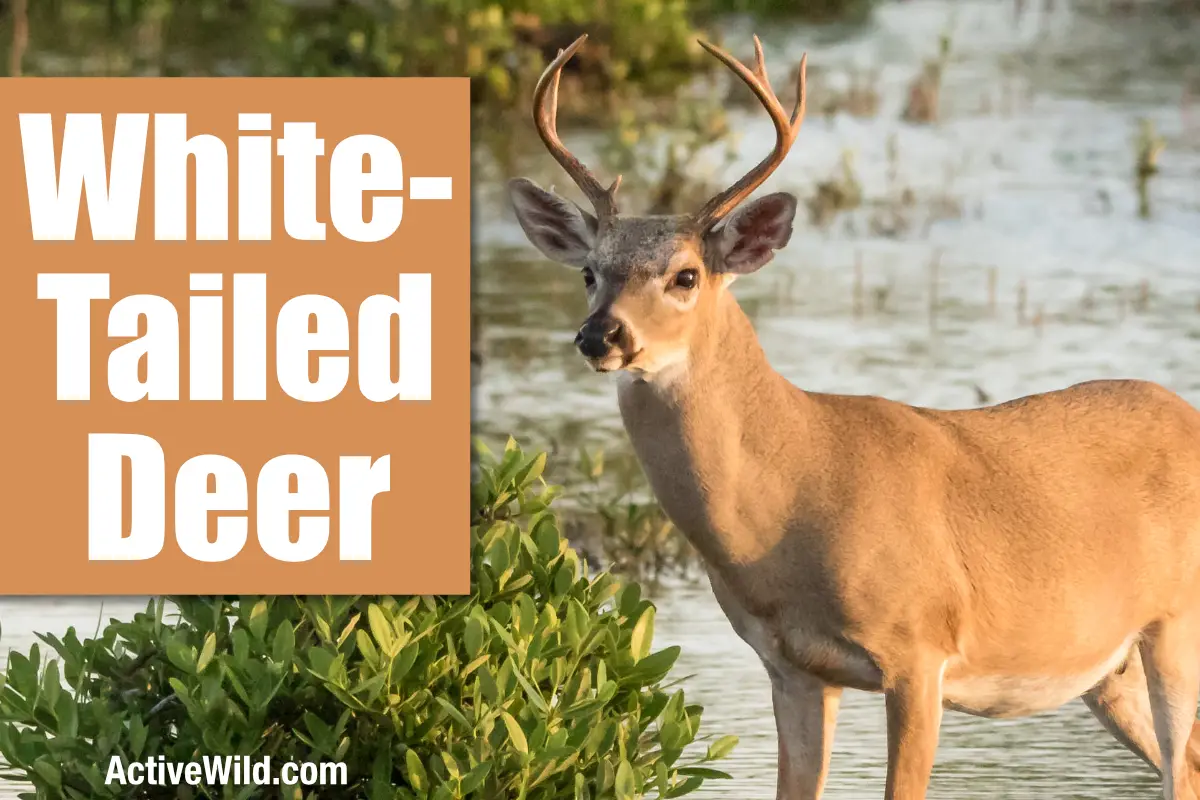
The white-tailed deer (Odocoileus virginianus) is the most abundant deer species in the United States and is widely distributed across much of the Americas. Highly adaptable, it occupies a range of habitats, particularly favoring edge environments where forests meet open areas such as fields, farmland, and suburban landscapes.
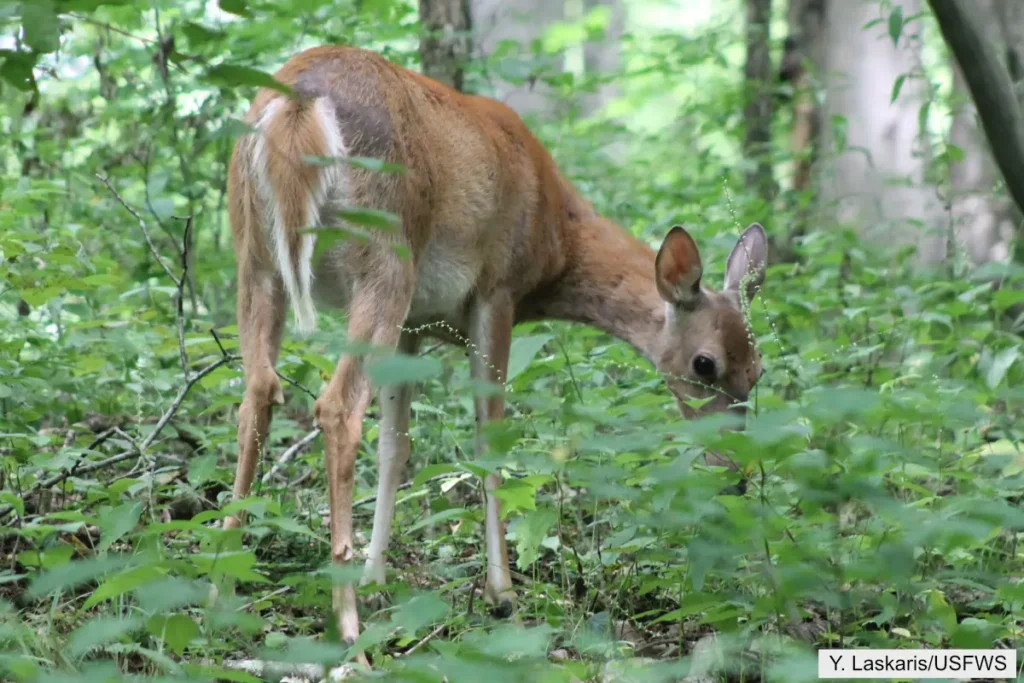
White-tailed deer are readily identified by the characteristic white underside of the tail, which is raised as a warning signal when alarmed.
Have you seen a white-tailed deer? Want help with an identification? Let us know in the comments section at the bottom of the page!
Quick Facts
- Common name: White-tailed deer
- Scientific name: Odocoileus virginianus (Zimmermann, 1780)
- Class: Mammalia (Mammal)
- Family: Cervidae (Deer family)
- Also known as (regional or population names): Cariacu, Cariacú, Cerf de Virginie, Ciervo, Ciervo de cola blanca, Clavium, Florida Key Deer
- Where found: Widespread in North America and South America, and present in parts of Europe
- Related species: Mule Deer
White-Tailed Deer Identification Tips

- Tail “flag”: The hallmark feature is the tail with a bright white underside. When startled, a white-tailed deer lifts and flashes this tail as it bounds away—an easy field clue even in low light.
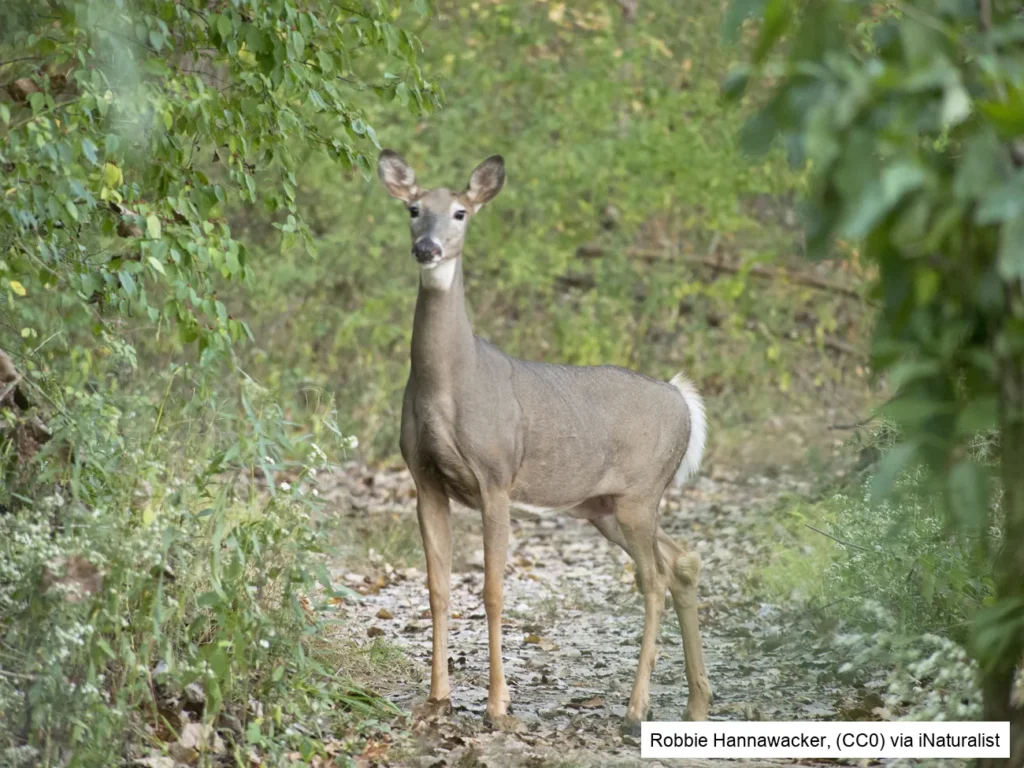
- Coat: Typically brown, shading from more reddish tones in warmer months to grayer hues in colder months. Fawns are born with white spots that fade as they grow.
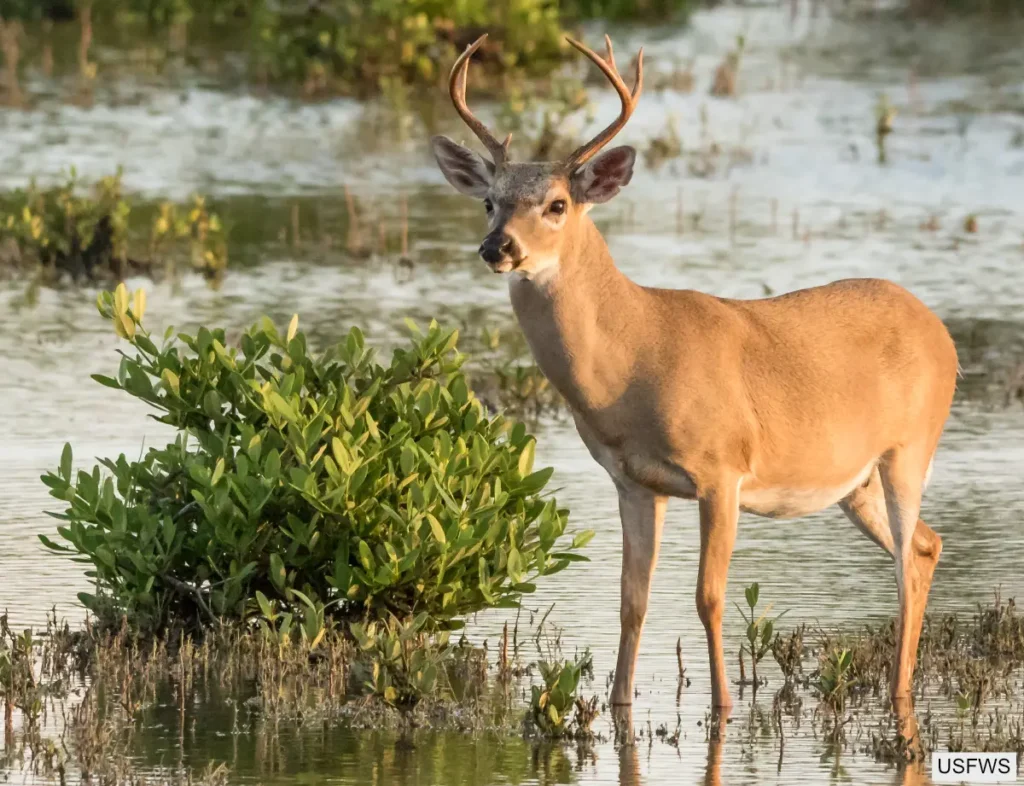
- Face and markings: Look for a white throat patch, pale eye rings, and a lighter muzzle contrasted by darker fur on the nose bridge. Ears are moderately large and alert.
- Antlers: Males grow antlers, shedding and regrowing them yearly. Antlers usually curve forward with multiple tines; exact shape varies with age and local conditions.
- Gait and behavior: When alarmed, deer make powerful, high bounds and quickly disappear into cover, tail held high. In calm moments, they move with a careful, head-up walk while browsing.
- Tracks and signs: Hoofprints show two pointed toes, forming a roughly heart-shaped print. Fresh browse on low branches and narrow, well-worn paths at forest edges are common clues to their presence.
Where Is The White-Tailed Deer Found?
White-tailed deer live across a broad sweep of the Americas, from much of North America into South America. Within this wide range, they use a variety of landscapes—forests, river valleys, plains with scattered cover, and green spaces shaped by people. Their flexibility explains why you can encounter them from quiet woodlots to the margins of towns.
You can see a list of every deer species found in the USA and North America on this page: Deer Species of the United States.
Habitat
White-tailed deer are habitat generalists. They favor places that offer both cover and food—mixed forests, brushy thickets, and the edges of fields or wetlands. River corridors and riparian woodlands provide travel routes, shelter, and diverse browse.
In many regions, the deer also use agricultural fields, orchards, and suburban greenbelts, keeping escape cover close to feeding areas. Exact habitat use can vary by season and local climate, but the theme is consistent: a mosaic of shelter and forage.
What Does The White-Tailed Deer Eat?
White-tailed deer are adaptable herbivores. They browse and graze depending on what’s available, taking leaves, tender shoots, herbs, grasses, and a variety of fruits and nuts in season. They also make use of fallen mast like acorns, along with buds and twigs during leaner months.
As ruminants, the deer rely on a multi-chambered stomach and resident microbes to break down fibrous plant material, allowing them to shift diets as conditions change.
White-Tailed Deer Behavior And Daily Life
White-tailed deer are most active around dawn and dusk, often resting at midday in cover to ruminate and groom. They move along well-used paths between shelter and feeding areas and are quick to freeze or slip away at the hint of trouble.
Social patterns shift through the year. Adult females commonly associate with their fawns and sometimes with related females, while males may be solitary or form small groups outside the breeding season.
As the rut approaches, bucks rub trees, make ground scrapes, and test each other with displays or sparring. Communication includes tail flagging, foot stomps, snorts, and scent from glands on the legs and head.
Life Cycle
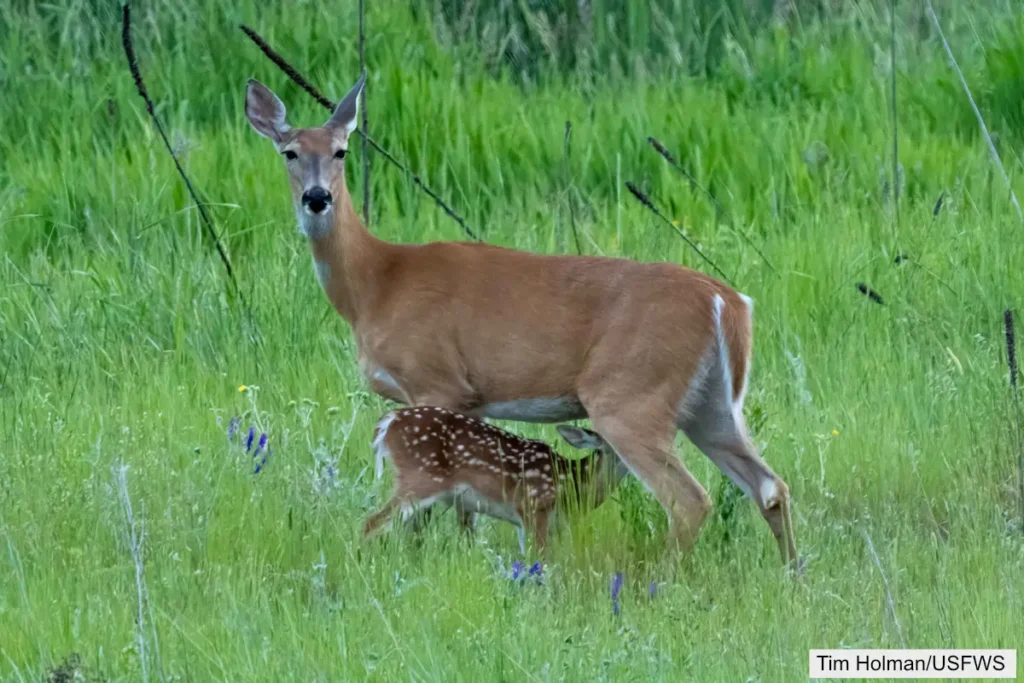
In many temperate areas, breeding takes place in fall, with fawns arriving in late spring or early summer; nearer the tropics, timing can vary. Newborns are camouflaged with white spots and spend much of their time lying quietly while their mother forages nearby and returns to nurse. As they grow, the spots fade and the young join their mother more openly.
Male white-tailed deer grow a new set of antlers each year. Antlers develop under a soft, blood-rich “velvet” that is shed when growth is complete; the hard antlers are later dropped and the cycle starts again.
Coats also change with the seasons, shifting between a sleeker warm-season coat and a thicker one for colder weather. As they mature, some young deer disperse from their birth area, while others stay closer, depending on local conditions and social dynamics.
White-Tailed Deer Lifespan
White-tailed deer (Odocoileus virginianus) typically live 4–5 years in the wild, although this average is heavily influenced by predation, hunting, disease, and environmental conditions.
- Maximum lifespan (wild): Around 10–14 years, though many individuals do not reach this age
- Captivity: Can live 15–20 years or more under protected conditions
- Sex differences: Females (does) generally live longer than males (bucks), as males face higher mortality due to rut-related stress and risk-taking behavior
Family And Related Animals
The white-tailed deer belongs to the deer family, Cervidae, within the even-toed ungulates (order Artiodactyla). Its genus, Odocoileus, also includes the mule deer, a close North American relative. More distantly, the family includes elk, moose, caribou/reindeer, and roe deer.
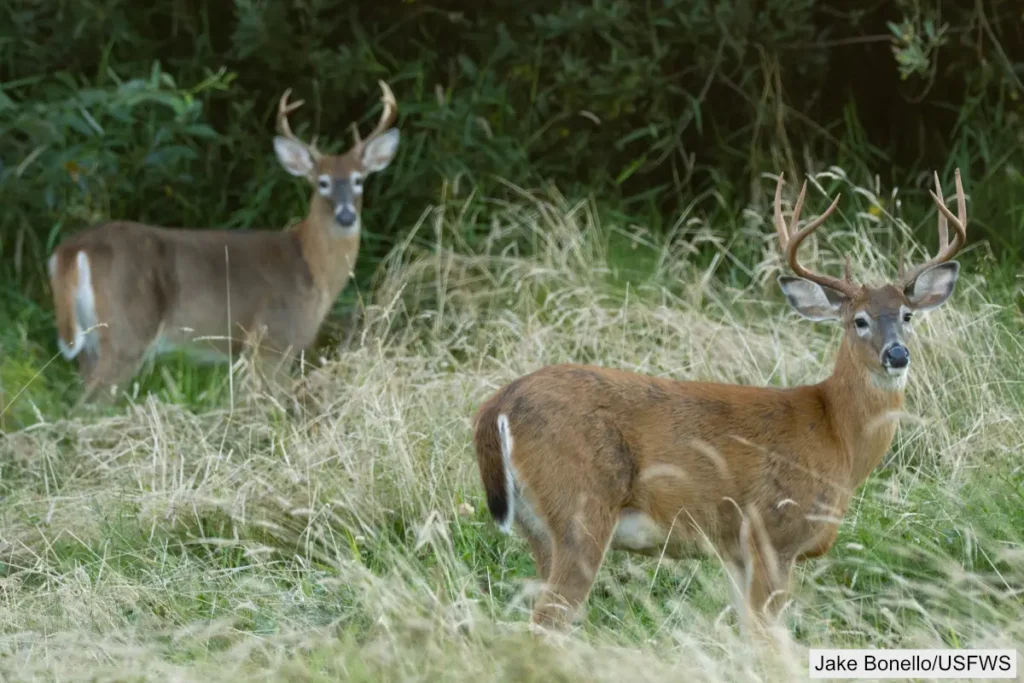
Within Odocoileus virginianus, many named subspecies have been described in different regions. Classifications vary, but examples include:
- Odocoileus virginianus clavium — Key deer
- Odocoileus virginianus borealis — Northern White-tailed Deer
- Odocoileus virginianus couesi — Coues’ White-tailed Deer
- Odocoileus virginianus leucurus — Columbian white-tailed deer
- Odocoileus virginianus hiltonensis — Hilton Head white-tailed deer
These names reflect local forms and histories; the exact number and boundaries of subspecies can differ between taxonomic treatments.
Interesting Features
- Signature tail signal: The namesake tail flashes bright white when raised, a clear alarm cue to other deer and a distraction to would-be predators as the animal bounds away.
- Antlers that regrow: Males regrow antlers annually under velvet; rubbing helps remove it once growth ends, and the polished antlers play a role in displays and contests.
- Scent-savvy communication: Glands on the legs and head add scent cues to trails, scrapes, and vegetation, helping deer track each other’s status and movements.
- Agile movers and capable swimmers: White-tailed deer can shift from quiet, careful steps to sudden, springy bounds, and they take to water readily when crossing streams or evading threats.
- Masters of the edge: They often thrive in patchy landscapes with forest, fields, and shrubland—places that offer both cover and a diverse, changing buffet.
Further Reading
- See every deer species found in the United States and North America on this page: Types Of Deer in the United States
- You can find out more about mammals on this page: Mammals, The Ultimate Guide
- Discover iconic North American species here: North American Animals