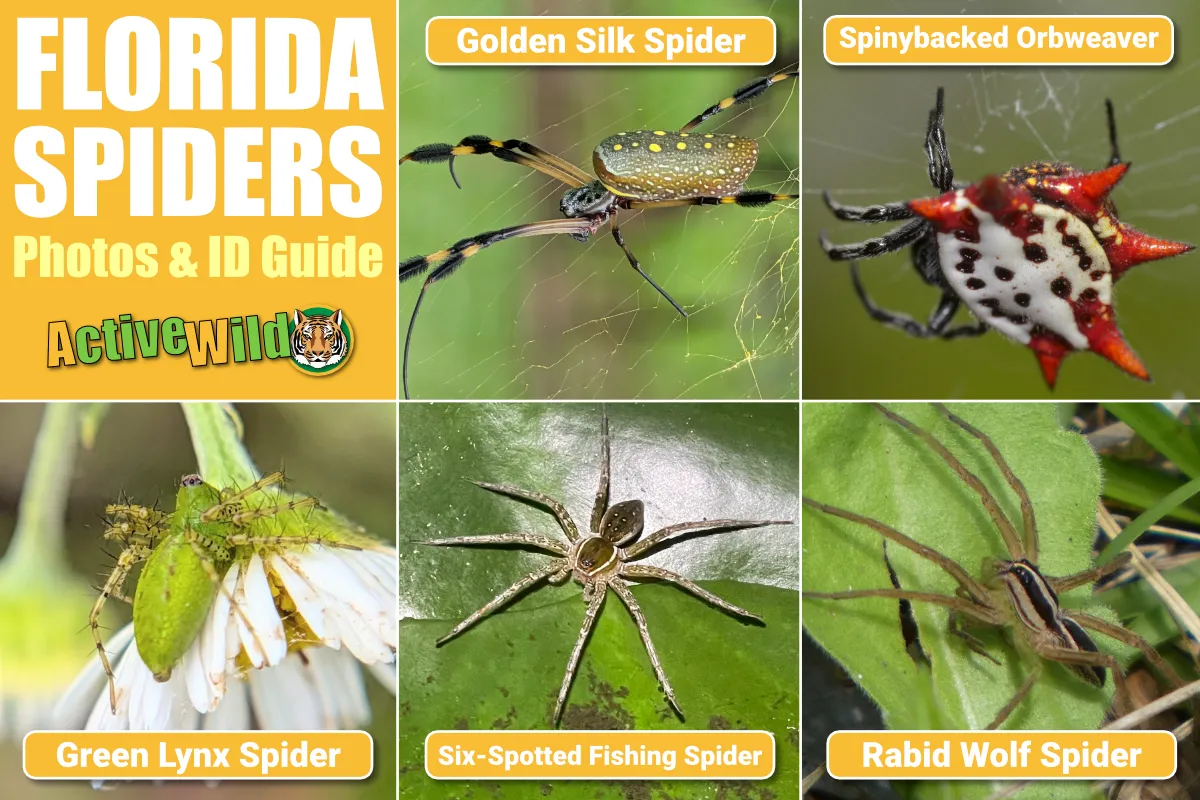
Florida spiders list with pictures and ID guide.
With its wealth of habitats and wild places, Florida is home not just to its iconic mammals, reptiles and birds, but also to countless smaller, but no less important species, including numerous spiders. Florida spiders range from colorful orb-weavers and agile jumping spiders to large wolf spiders and famous widow species.
This guide to common spiders in Florida includes identification tips, habitat information, and key features to help readers recognize species found in gardens, forests, wetlands, and homes across the state.
Whether you’re interested in Florida wildlife, learning about native spider species, or identifying backyard spiders, this article highlights some of the most interesting and frequently encountered spiders in Florida.
Have you seen any of these spider species in Florida? Help bring this page to life with your own observations, thoughts and questions in the comments section at the bottom of the page – we’d love to hear from you!
The Active Wild Team
Page Index
Banded Garden Spider
- Scientific name: Argiope trifasciata
- Family: Araneidae
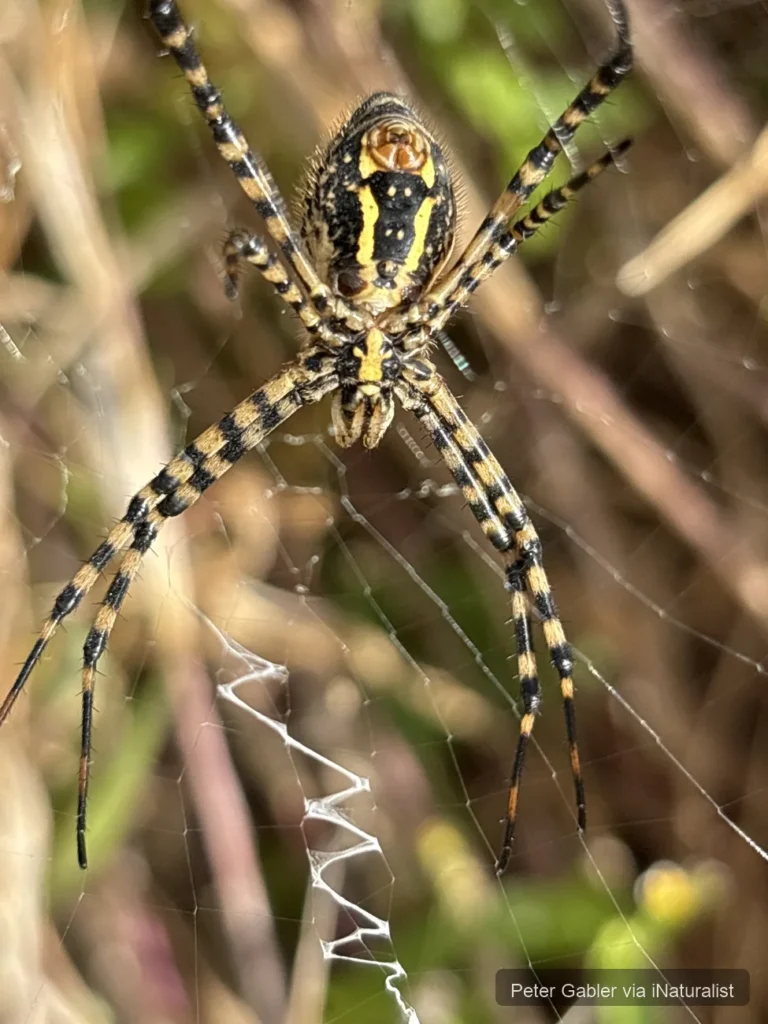
The Banded Garden Spider can be identified by the distinctive yellow and black banded pattern on its abdomen, which is shaped somewhat like a shield. Adult females typically measure between 14 to 19 millimeters in body length, while males are smaller, often less than half that size.
The spider’s legs are long and slender, with black and yellow markings that match the body, and its cephalothorax (the combined head and chest section of the body, where the eyes, mouthparts, legs, and fangs are attached) is silvery with fine hairs.
This species is commonly found in gardens, fields, and open woodlands throughout Florida, where it builds large, circular orb webs. The webs often include a zigzag pattern of silk called a stabilimentum in the center. These spiders tend to position their webs in sunny areas among tall plants or shrubs, allowing them to catch flying insects effectively.
Blacktailed Red Sheetweaver
- Scientific name: Florinda coccinea
- Family: Linyphiidae
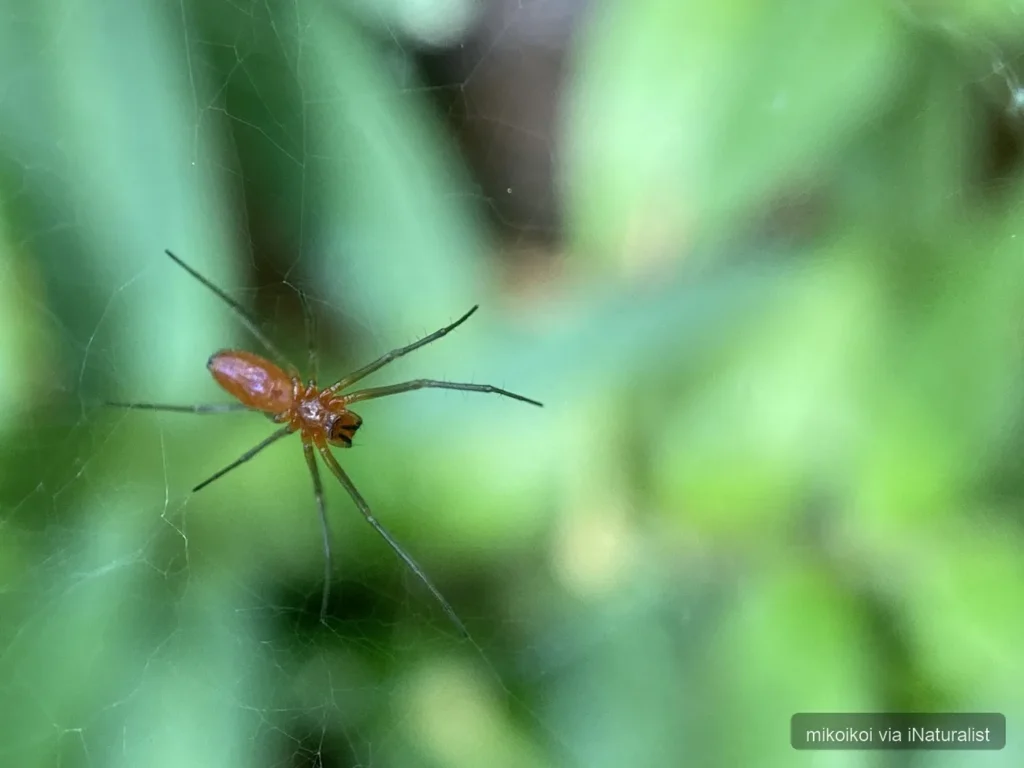
The Blacktailed Red Sheetweaver is identified primarily by its small size and the characteristic low, horizontal sheet web it constructs close to the ground. Adults typically measure between 3 and 5 millimeters in body length. The spider’s coloration ranges from pale yellow to light brown, often with subtle reddish or orange markings on the abdomen. Its legs are relatively short and slender, with fine hairs but no prominent banding or spines, which helps distinguish it from similar small spiders in the same habitat.
This species is usually found in Florida’s grassy areas, low shrubs, and leaf litter in forests or gardens. It prefers shaded, humid environments where it can anchor its sheet-like web among vegetation close to the ground. The web often includes a tangle of irregular threads above the sheet that serve to intercept flying or jumping insects, which the spider captures by dropping onto the prey from below.
In Florida, the Blacktailed Red Sheetweaver plays a role in controlling small insect populations within ground-level habitats, contributing to the ecological balance in both natural and disturbed environments. While it is less conspicuous than larger orb-weavers, its widespread presence in Florida’s understory makes it an important component of the local spider fauna.
Bold Jumping Spider
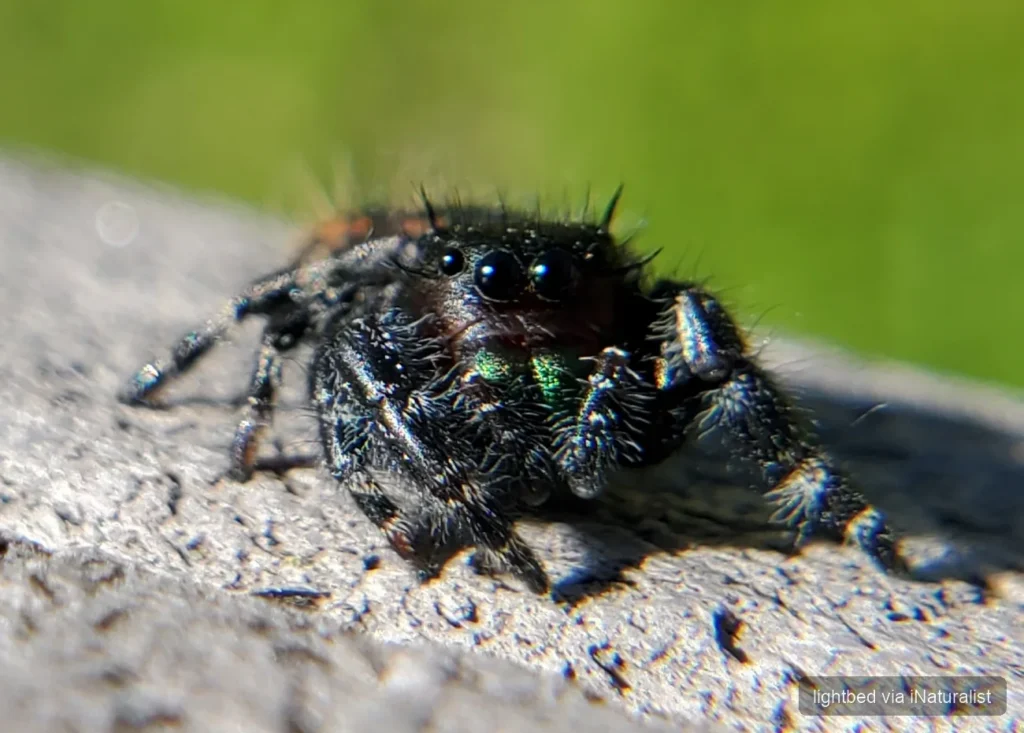
- Scientific name: Phidippus audax
- Family: Salticidae
The Bold Jumping Spider is a medium-sized spider with a compact, sturdy body typically measuring about 8 to 15 millimeters in length. It has a distinctive shape characterized by a relatively large, rounded cephalothorax and a shorter, oval abdomen. The legs are strong and adapted for jumping, with the front pair often held forward.
This species is mainly black with several white spots on the abdomen, which can vary in number but usually include a central row of three or four spots. The body and legs are covered with short, dense hairs that sometimes appear iridescent under light.
Notably, these spiders (and other jumping spiders) have large, forward-facing eyes that provide excellent vision, a key trait of the Salticidae family. In Florida, Bold Jumping Spiders are commonly found in a variety of habitats including gardens, grasslands, and wooded areas, where they actively hunt prey rather than building webs.
The species’ active hunting behavior and tendency to be found on plants or walls during daylight hours also help distinguish it from other local spider species.
Carolina Wolf Spider
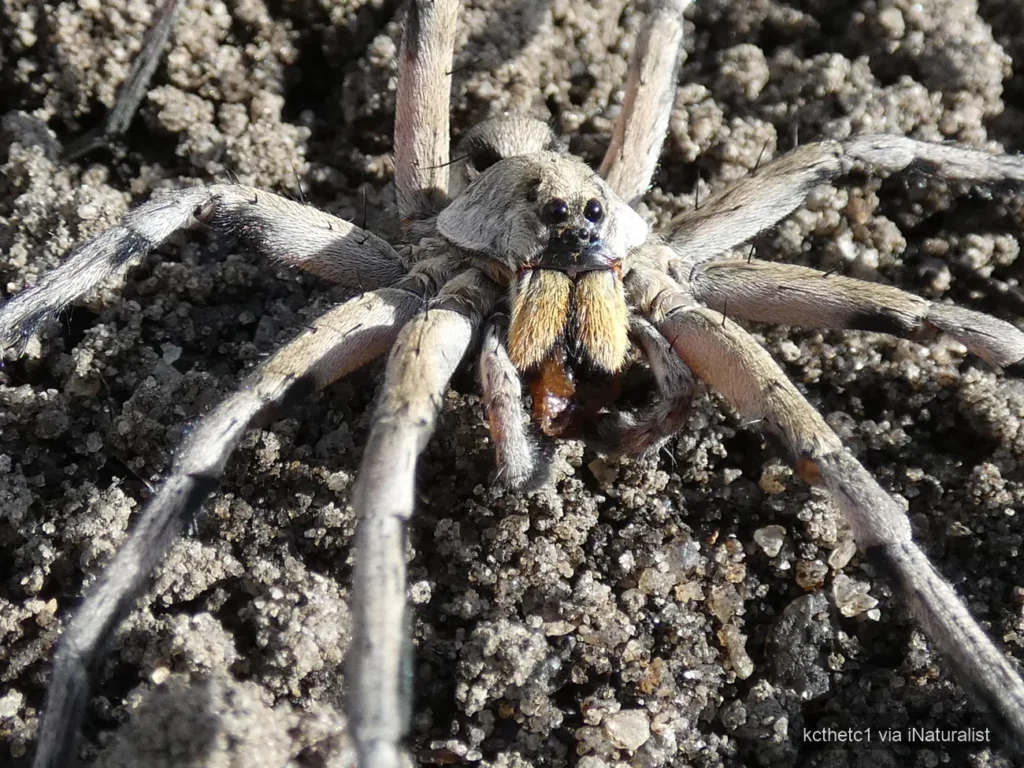
- Scientific name: Hogna carolinensis
- Family: Lycosidae
The Carolina Wolf Spider is found in a variety of habitats across Florida, including grassy fields, open woodlands, and sandy areas. It tends to prefer ground-level environments where it can actively hunt and seek cover under leaves, rocks, or debris. This species does not build webs to catch prey but relies on its speed and agility to capture insects.
Adults of this species are relatively large for wolf spiders, with body lengths typically ranging from 18 to 35 millimeters. The Carolina Wolf Spider has a robust, hairy body with a mottled brown and gray coloration that provides effective camouflage in natural surroundings. Its legs are long and strong, often displaying banded patterns that aid in identification. The cephalothorax features a distinct dark stripe down the center, bordered by lighter areas, which helps distinguish it from other local wolf spiders.
False Black Widow
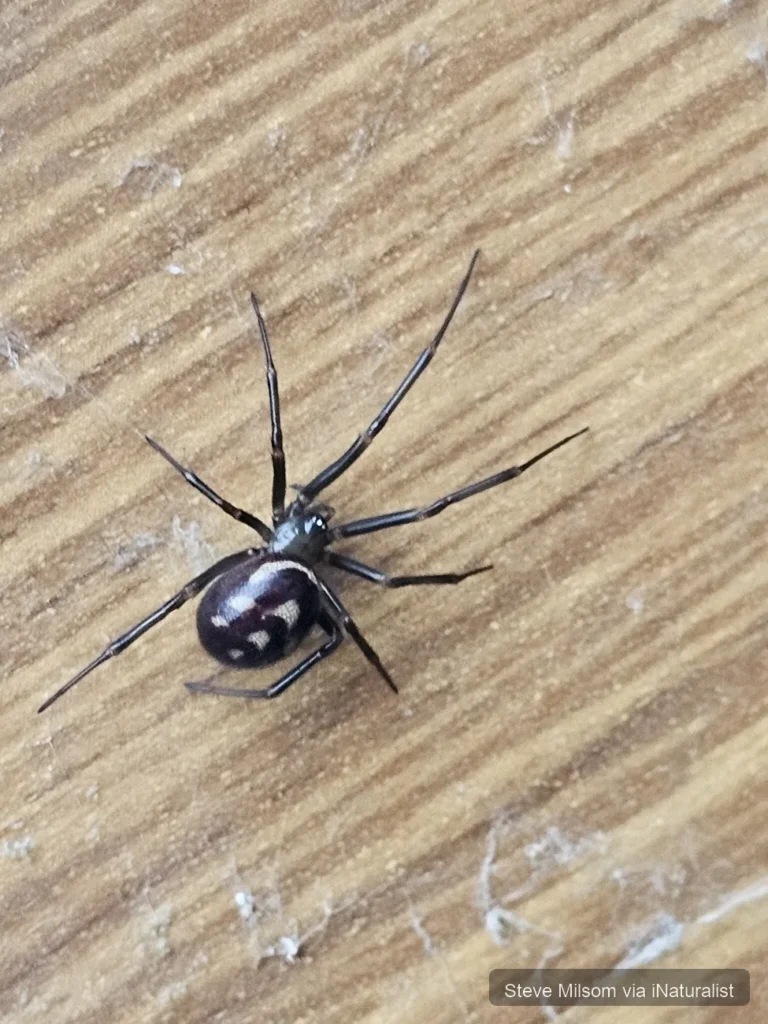
- Scientific name: Steatoda grossa
- Family: Theridiidae
The False Black Widow can be identified by its shiny, dark brown to black body, often with a bulbous, rounded abdomen that may have faint, lighter markings or patterns. Adult females typically measure about 6 to 10 millimeters in body length, while males are smaller and less robust. Its legs are slender and uniformly dark, lacking the distinctive red hourglass marking found on true black widows, which helps differentiate it from those spiders.
In Florida, the False Black Widow is commonly found in human structures such as garages, sheds, basements, and outdoor clutter where it builds tangled, irregular webs. It also inhabits natural settings like woodpiles and under rocks or debris. This species is more likely to be encountered in dark, sheltered locations where it remains relatively inactive during the day and becomes more active at night.
Key identification clues include the spider’s glossy, rounded abdomen with subtle patterning, the absence of the red hourglass shape on the underside, and its preference for web-building in undisturbed, sheltered areas.
Golden Silk Orb-Weaver / Golden Silk Spider (Banana Spider)
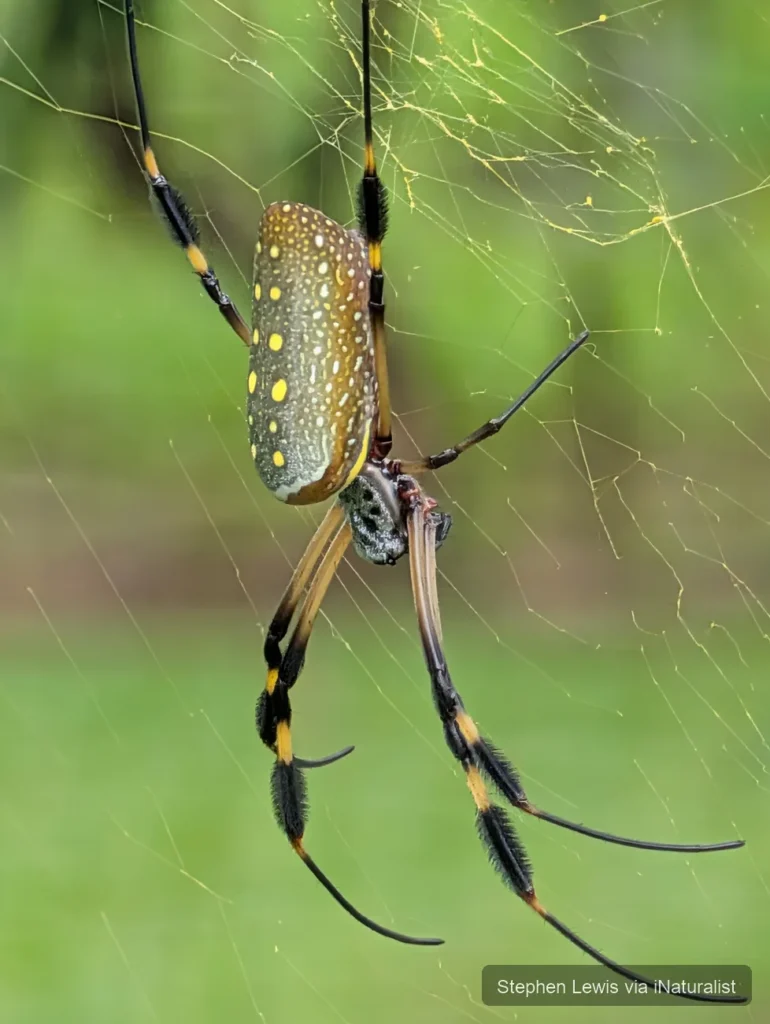
- Scientific name: Trichonephila clavipes
- Family: Araneidae
The Golden Silk Spider is commonly found in Florida’s warm and humid environments, including open woodlands, gardens, and edges of urban areas. It typically builds large, vertical orb webs suspended between trees, shrubs, or man-made structures. These webs are notable for their strong, golden-colored silk threads, which can often be seen glistening in sunlight.
Adult female Golden Silk Spiders are relatively large, with body lengths ranging from 25 to 40 millimeters. Their elongated abdomens are bright yellow-golden and may show subtle pale markings. The legs are long and banded with alternating black and yellow colors, often covered with fine hairs and small spines. Males are much smaller and less conspicuous. Identification is aided by the spider’s size, distinct leg banding, and the characteristic golden hue of its silk web.
The Golden Silk Orb-Weaver prefers warm, humid environments and is active throughout much of the year in Florida’s climate.
Green Lynx Spider
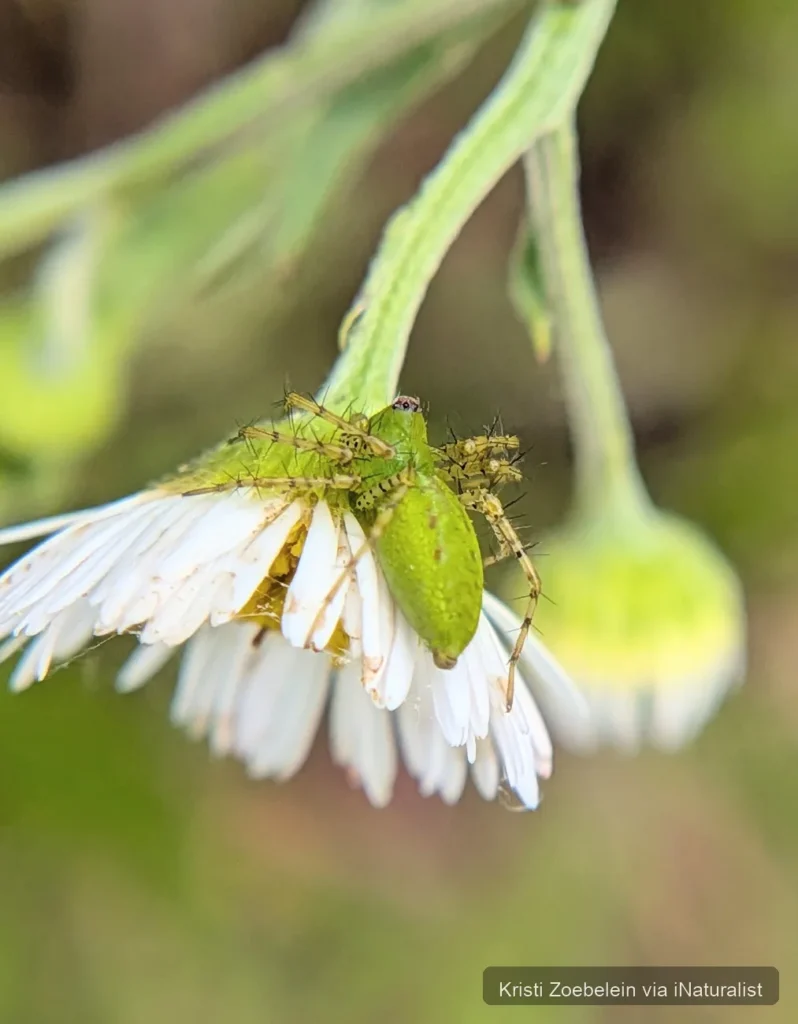
- Scientific name: Peucetia viridans
- Family: Oxyopidae
The Green Lynx Spider is a medium-sized spider with a slender, elongated body measuring about 12 to 22 millimeters in length. It has long, spiny legs that extend outward, giving it a somewhat angular appearance.
The overall color is bright green, which helps it blend into leafy vegetation, and the abdomen often features a series of small red or orange spots along its sides. The eyes are arranged in two distinct rows, typical of the family Oxyopidae.
This species is commonly found in Florida’s open areas such as gardens, shrubs, and fields where there is abundant low vegetation. It does not build webs to catch prey but actively hunts during the day by leaping on insects. Identification is aided by its vivid green color, long spiny legs, and the presence of red markings on the abdomen. The Green Lynx Spider’s behavior of sitting openly on plants and its distinctive coloration make it relatively easy to identify.
Long-Jawed Orb Weaver
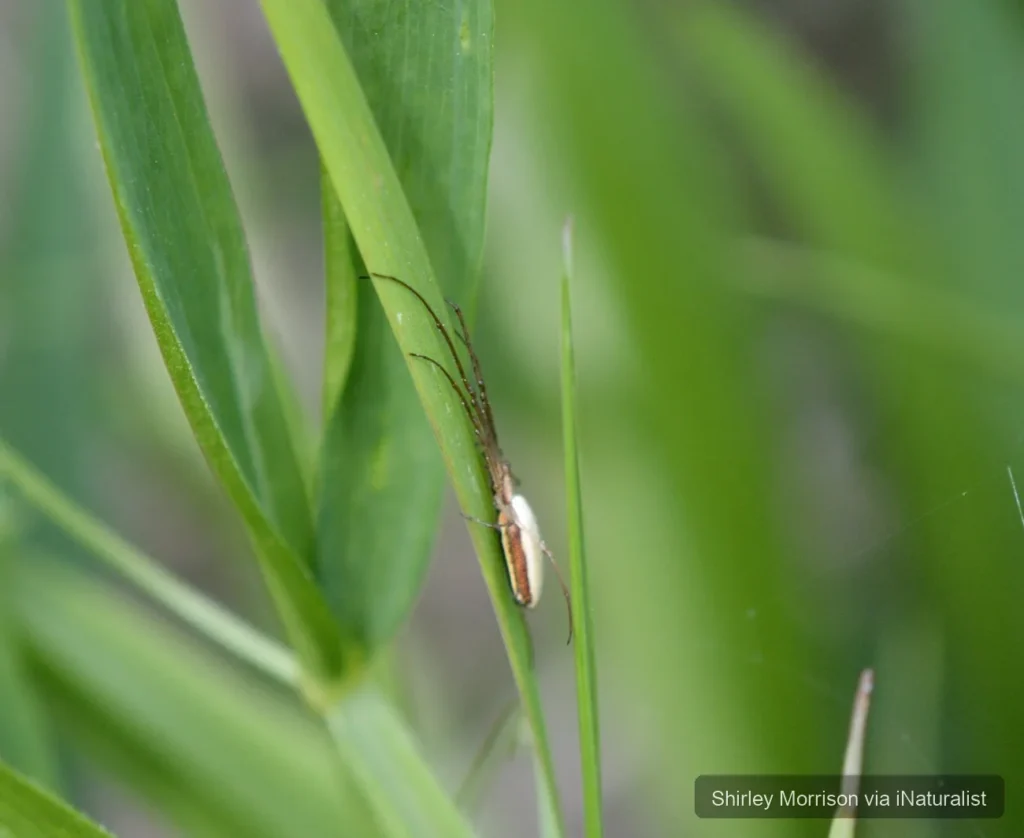
- Scientific name: Tetragnatha laboriosa
- Family: Tetragnathidae
The Long-Jawed Orb Weaver is usually found near bodies of water such as ponds, lakes, and marshes throughout Florida. It prefers habitats with abundant vegetation where it can anchor its large, orb-shaped webs, often stretched horizontally between plants or over the water surface. This spider is active mainly at dusk and night, remaining close to its web during these periods.
Physically, this spider has a slender, elongated body that measures approximately 10 to 15 millimeters in length. Its most distinctive feature is its long, narrow jaws (chelicerae), which extend noticeably beyond the head and are used for capturing prey. The coloration is typically pale yellow to greenish with subtle darker markings on the abdomen, aiding camouflage among foliage. Its legs are long and thin, often held outstretched to reduce its profile.
Mabel Orchard Orbweaver
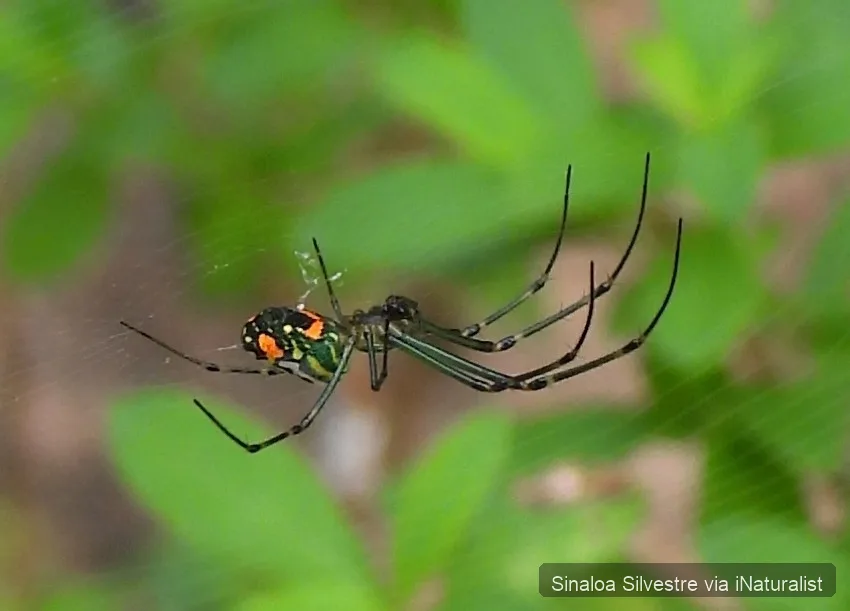
- Scientific name: Leucauge argyrobapta
- Family: Tetragnathidae
The Mabel Orchard Orbweaver has a distinctive silvery-green body with iridescent, metallic markings. The abdomen is elongated and somewhat flattened, featuring a pattern of bright silver and green hues often bordered by black lines. Adult females typically measure around 8 to 12 millimeters in body length, with males being slightly smaller. Its long, slender legs are banded with alternating light and dark segments, which contrast with the shiny body.
This orbweaver is commonly found in Florida’s wooded areas, particularly in leafy shrubs and low trees where it spins horizontal orb webs. These webs are often constructed in shaded, moist environments such as forest edges or near streams.
Orchard Orb-Weaver
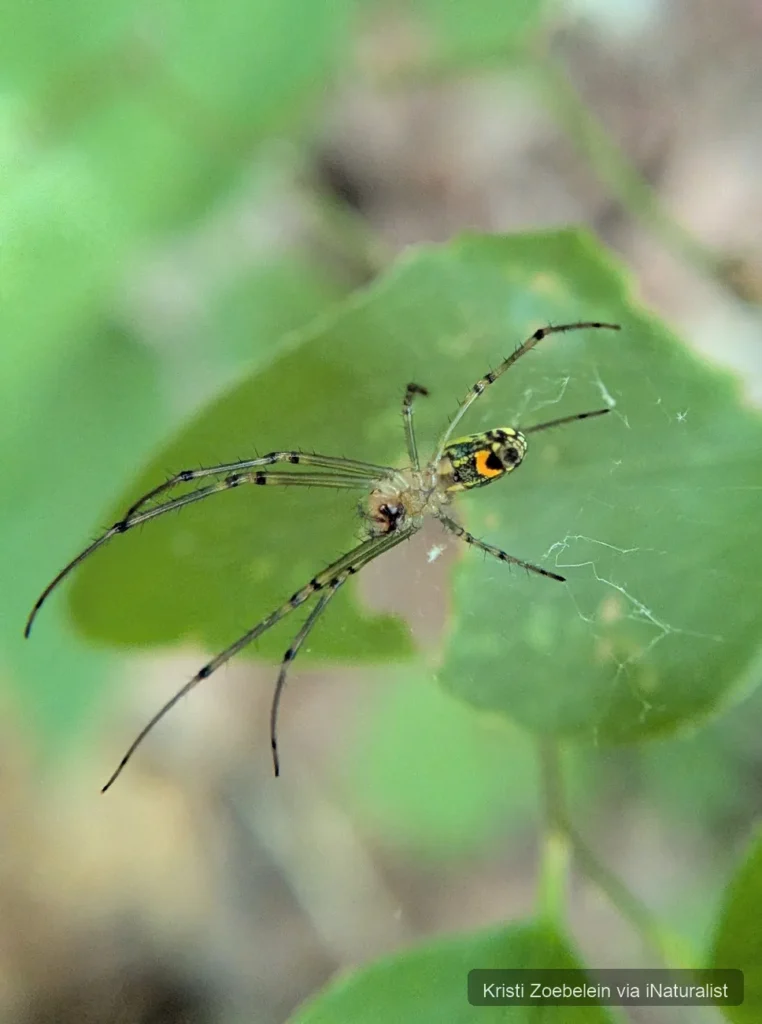
- Scientific name: Leucauge venusta
- Family: Tetragnathidae
The Orchard Orb-Weaver is recognizable by its slender body with a bright, silvery-green abdomen marked by black and yellow patterns. The abdomen is elongated and slightly tapered, often displaying a series of dark lines running lengthwise with a central bright stripe. Its legs are long and thin, typically showing alternating bands of light and dark coloration, which contrast with the shiny body surface.
Adult females usually measure around 6 to 9 millimeters in body length, while males are somewhat smaller. This species is commonly found in Florida’s forests, gardens, and orchards, where it builds horizontal orb webs in low vegetation such as shrubs and small trees. The webs are often constructed in shaded, moist environments, making the spider’s presence more noticeable in these habitats.
Rabid Wolf Spider
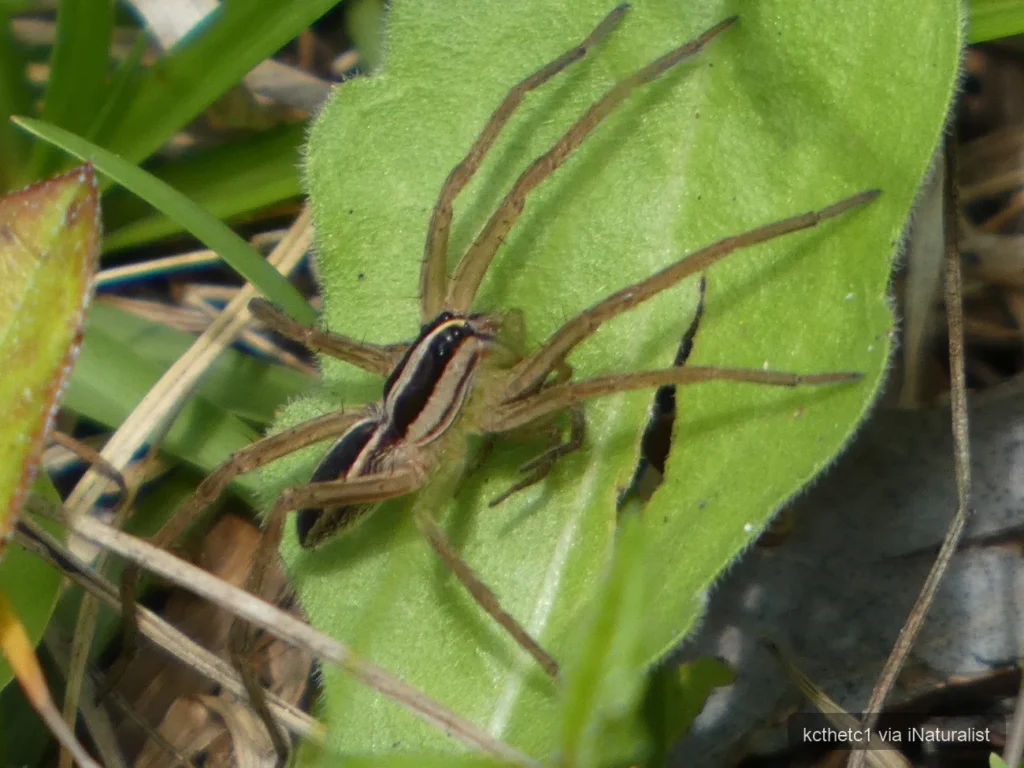
- Scientific name: Rabidosa rabida
- Family: Lycosidae
The Wolf Spider has a body that is primarily brown with a pattern of darker stripes running longitudinally along the cephalothorax and abdomen. The abdomen features a central light stripe bordered by darker areas, giving it a somewhat banded appearance. Its overall silhouette is robust and agile, with long, strong legs covered in fine hairs. Adults typically range from 15 to 30 millimeters in body length, making them relatively large compared to many other spiders in Florida.
Rabidosa rabida is commonly found in a variety of habitats across Florida, including grasslands, open woodlands, and sometimes suburban yards. Unlike web-building spiders, wolf spiders are ground dwellers that do not spin webs to catch prey. Instead, they actively hunt and chase down insects and other small arthropods. They often seek shelter under leaf litter, stones, or logs during the day and are more active at night.
Six-Spotted Fishing Spider
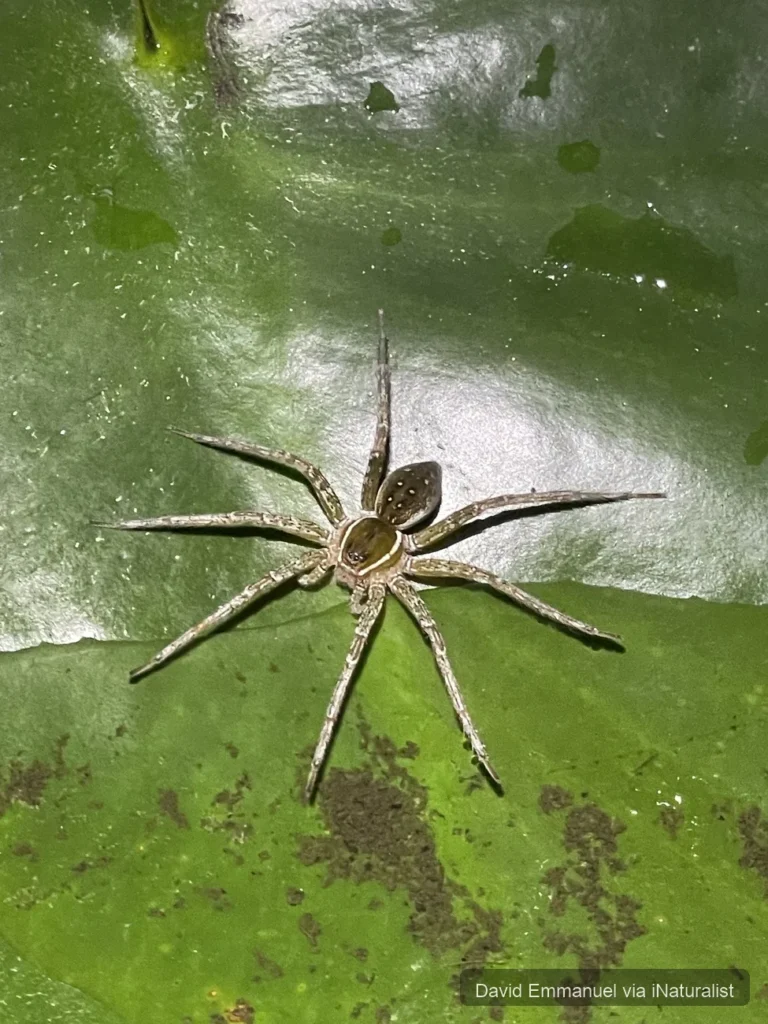
- Scientific name: Dolomedes triton
- Family: Pisauridae
The Six-Spotted Fishing Spider is a large, robust spider with a body length ranging from about 15 to 25 millimeters, making it one of the larger spider species found in Florida. It has a broad, flattened body and long legs, which aid in its ability to move on water surfaces. The coloration is typically brown or grayish with distinctive pale spots or markings on the abdomen, including six lighter spots that contribute to its common name. The legs are banded with darker and lighter segments, and the spider’s eyes are arranged in two rows, with the front row noticeably larger.
This species is commonly found near bodies of fresh water such as ponds, lakes, marshes, and slow-moving streams throughout Florida. It prefers habitats with abundant vegetation at the water’s edge, where it can hunt both on land and water surfaces.
The Six-Spotted Fishing Spider is adapted to a semi-aquatic lifestyle, often seen resting on floating vegetation or along shorelines, where it waits to catch aquatic insects and small fish. It is able to walk on water and sometimes dive beneath the surface.
Southern Black Widow
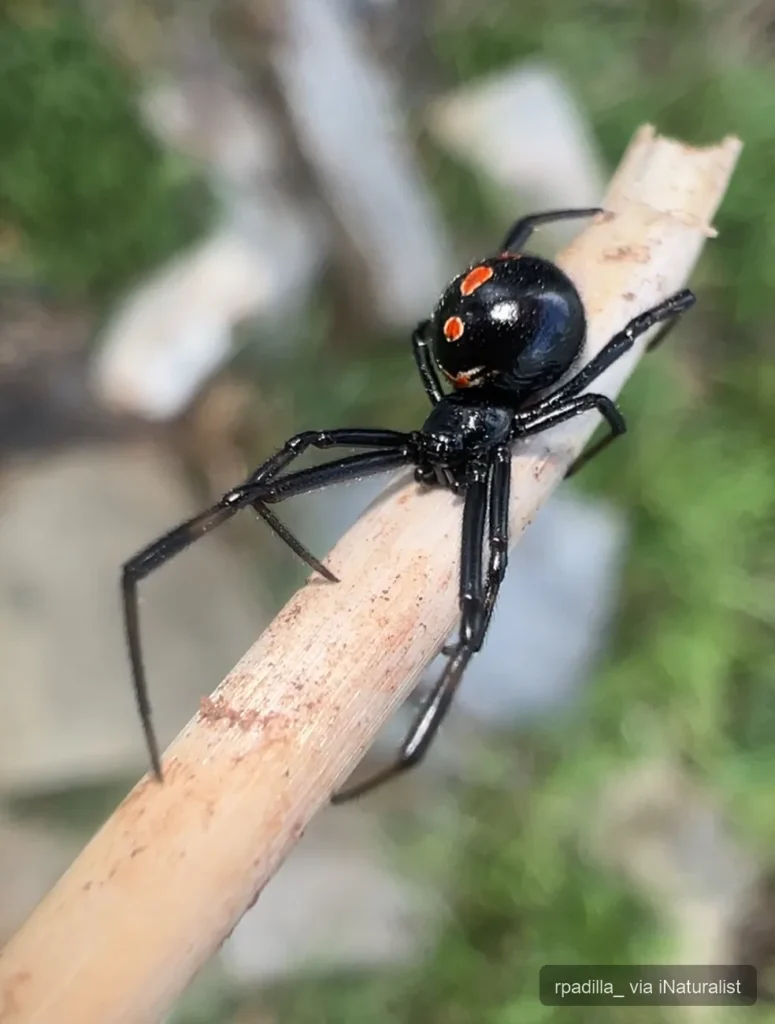
- Scientific name: Latrodectus mactans
- Family: Theridiidae
The Southern Black Widow is recognized by its glossy black body and distinctive hourglass-shaped red marking on the underside of its round abdomen. Adult females are about 8 to 13 millimeters in body length, with long, slender legs that appear shiny and smooth. Males are smaller, typically less than half the size of females, and may have lighter coloration with red or white markings on their backs, but they lack the prominent red hourglass.
This spider is commonly found in Florida in dark, sheltered locations such as woodpiles, under rocks, inside hollow logs, and around structures like sheds and garages. It builds irregular, tangled webs close to the ground where it waits for prey. The Southern Black Widow prefers warm, dry habitats and can be found near human dwellings.
Spiny Orb-Weaver / Spinybacked Orbweaver
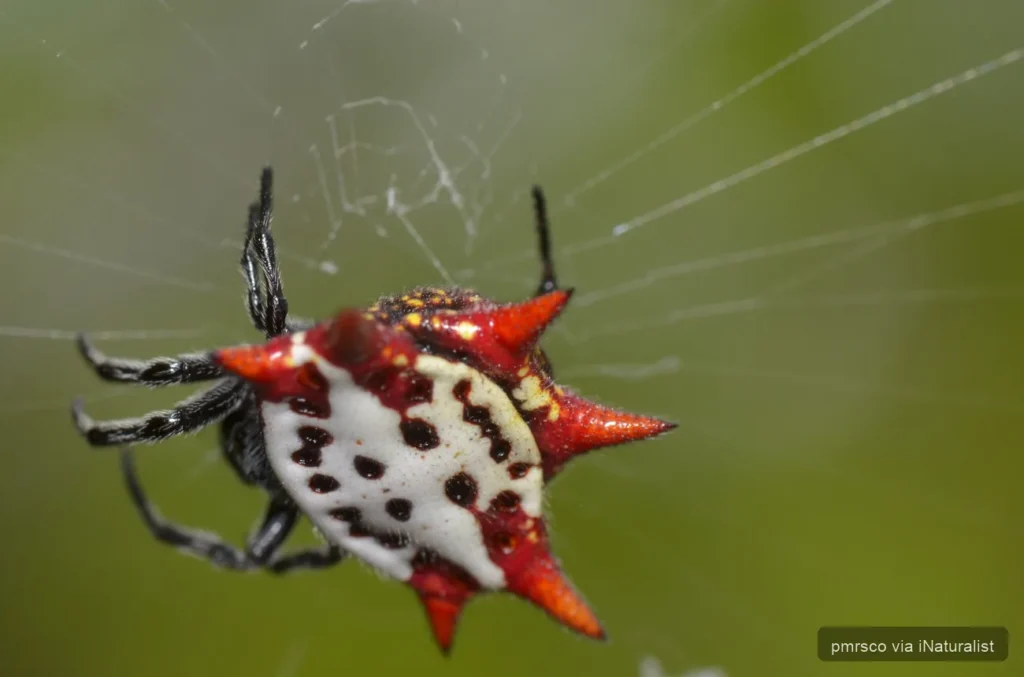
- Scientific name: Gasteracantha cancriformis
- Family: Araneidae
The Spiny Orb-Weaver is commonly found in Florida’s gardens, woodlands, and shrublands where it builds its distinctive orb-shaped webs. This spider prefers open areas with ample vegetation to attach its web, often positioning webs between tree branches or shrubs. It is active during the warmer months and can be seen in a variety of habitats ranging from suburban yards to natural forest edges.
Adult Spiny Orb-Weavers are small to medium-sized, with a body length of about 5 to 9 millimeters. They are easily identified by their broad, hard, and flattened abdomen, which is adorned with six prominent spines or “horns” projecting outward. The abdomen is typically white or yellow with black or dark red markings, providing a striking contrast. Their legs are relatively short and sturdy compared to other orb-weaver spiders, and the overall shape resembles a small, spiny crab.
White-Banded Fishing Spider
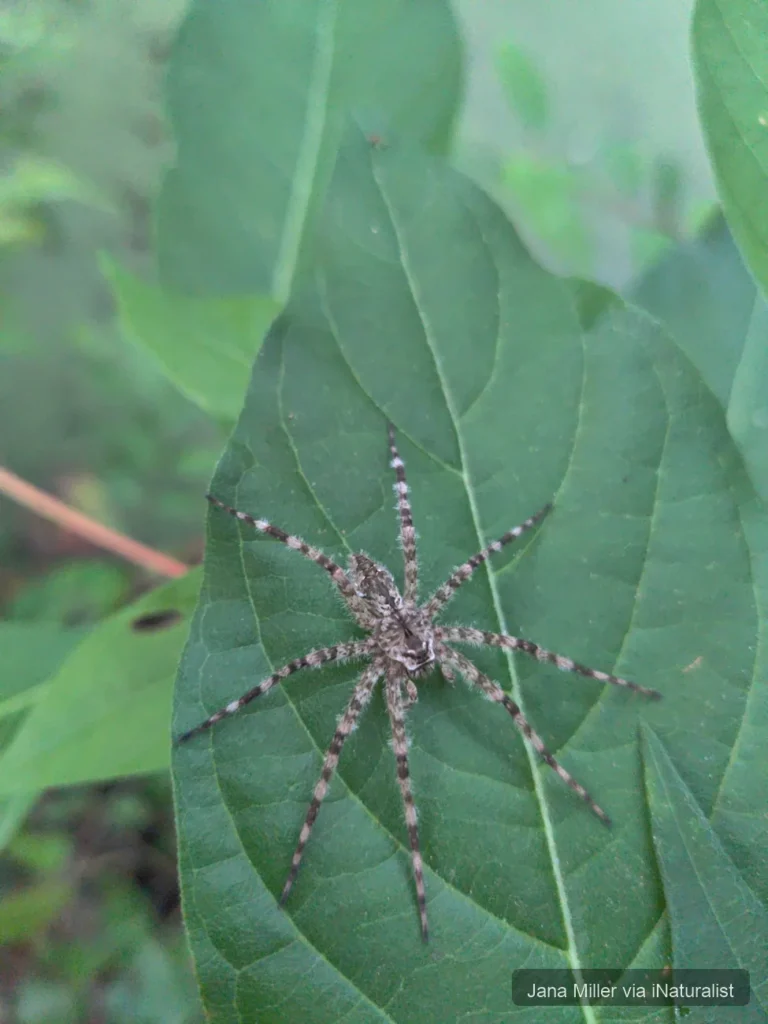
- Scientific name: Dolomedes albineus
- Family: Pisauridae
The white-banded fishing spider is a large spider with a body length typically ranging from 18 to 25 millimeters, featuring a robust and elongated shape. Its legs are long and strong, adapted for moving quickly over water surfaces. The coloration is generally brown or gray with distinct lighter markings on the legs and body, including white or pale bands along the legs and a characteristic pattern on the abdomen that helps differentiate it from other fishing spiders.
This species is commonly found near freshwater habitats in Florida, such as ponds, marshes, swamps, and slow-moving streams. The Florida Fishing Spider is semi-aquatic and often hunts on or just above the water surface, using its legs to detect vibrations from prey. It prefers vegetation or debris close to water where it can rest and ambush insects or small aquatic animals.
Further Reading
You can discover more Florida wildlife on the following pages:
- Complete guide to Florida wildlife: Florida Nature – Complete Guide
- Birds of Florida
- Snakes of Florida
- Lizards of Florida
- Scorpions of Florida
Discover more about spiders and other arachnids on these pages: