
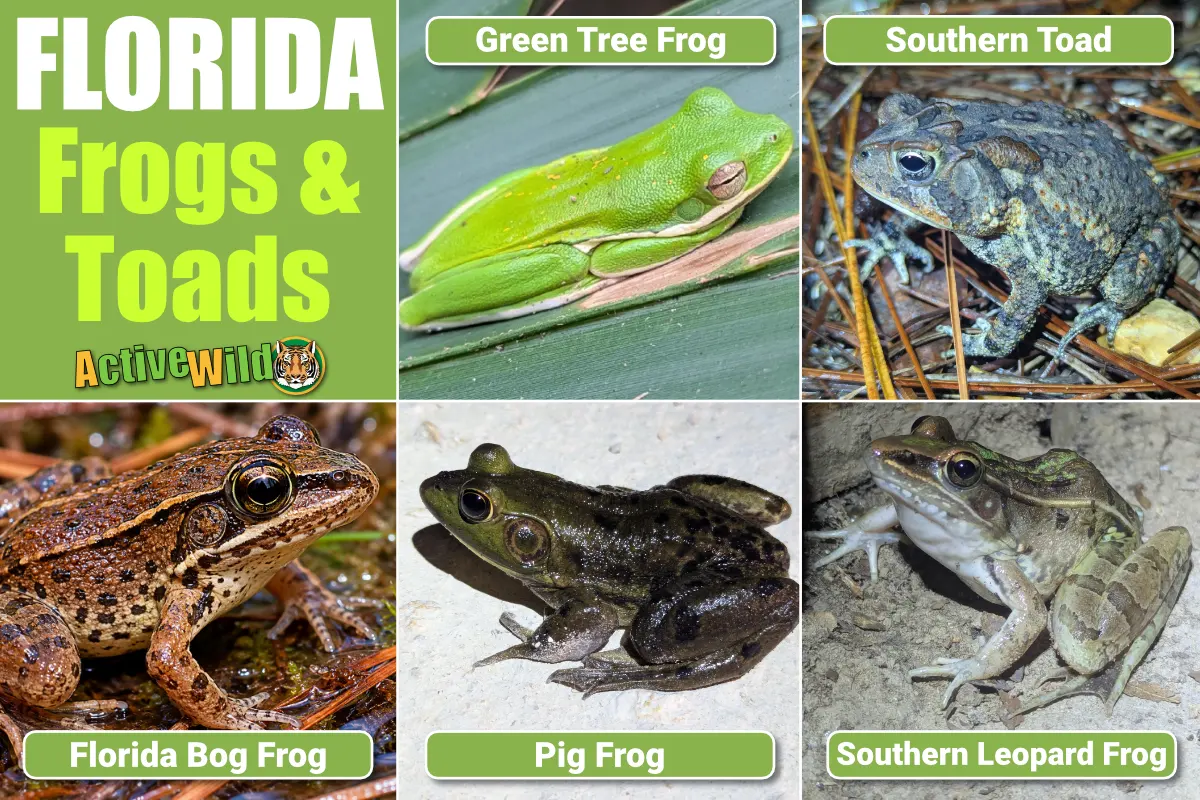
Florida frogs and toads are spoilt for choice with the Sunshine State’s varied aquatic ecosystems.
On this page, you’ll find a selection of frog and toad species and subspecies that are commonly encountered or hold particular significance in Florida’s natural history, such as the Cope’s Gray Treefrog, Florida Bog Frog, and Southern Leopard Frog, among others.
Page Index
Cope’s Gray Tree Frog
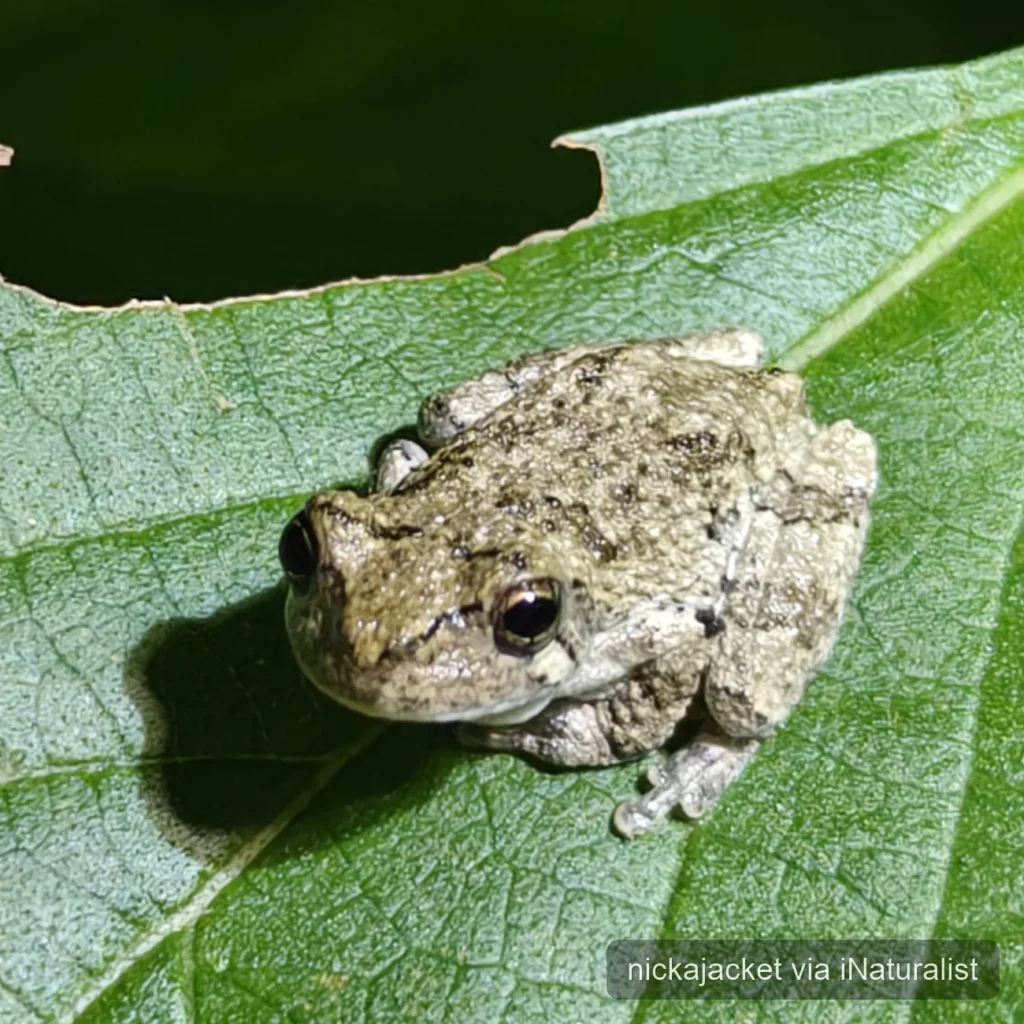
- Scientific name: Dryophytes chrysoscelis
- Family: Hylidae
- Rank: species
Cope’s Gray Tree Frog is recognizable by its mottled gray or greenish skin that provides excellent camouflage against tree bark. This small frog measures about 1.25 to 2 inches in length. It has a distinctive white or yellowish spot beneath each eye and strong toe pads that help it cling to vertical surfaces. The skin texture is rough and warty compared to smoother treefrogs.
In Florida, this species is commonly found in wooded areas near ponds, swamps, and wetlands. It is mostly active at night and often heard rather than seen, with a distinctive rapid trill call.
Cope’s Gray Treefrog is notable in the region for its ability to survive in both natural forests and suburban environments, making it a common indicator of healthy wetland ecosystems. Its coloration and call help distinguish it from the similar Gray Tree frog species.
Eastern Narrow-mouthed Toad
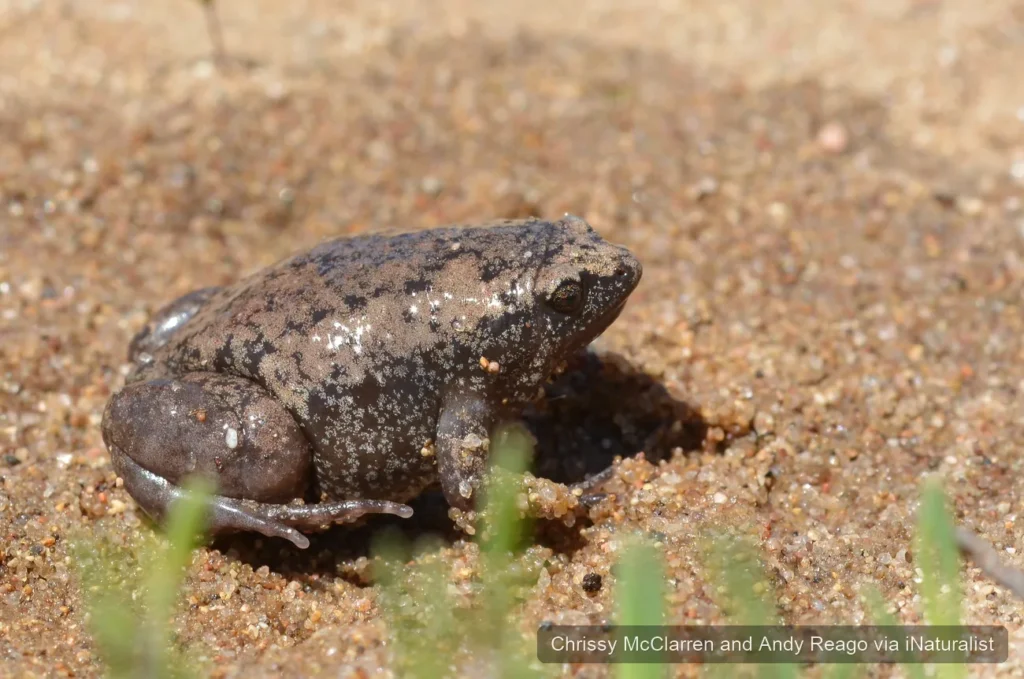
- Scientific name: Gastrophryne carolinensis
- Family: Microhylidae
- Rank: species
The Eastern Narrow-mouthed Toad is a small, stout amphibian, usually measuring about 1 to 1.5 inches long. It has a smooth, pointed head with a narrow mouth, which distinguishes it from other toads. Its coloration ranges from gray to brown, often with a dark triangular patch on the head and scattered small spots on the back. The skin is relatively smooth, lacking prominent warts.
This species is typically found in moist habitats such as wetlands, marshes, and damp forests across Florida. It is often encountered hiding under leaf litter or logs during the day.
The toad’s small size, narrow mouth, and smooth skin help identify it, as does its distinctive pointed head shape.
Florida Bog Frog
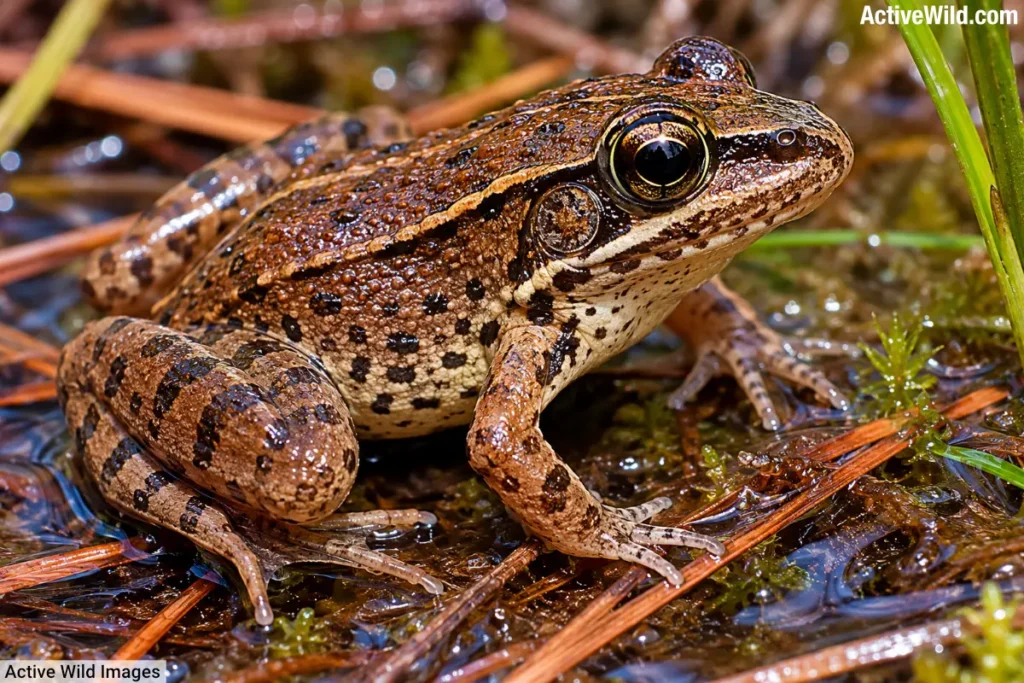
- Scientific name: Lithobates okaloosae
- Family: Ranidae
- Rank: species
The Florida Bog Frog has a smooth, bright green to yellow-green body with a distinctive pale stripe running down each side. Adults typically measure about 1.5 to 2 inches in length. Its legs are long and slender, aiding in strong, agile jumps. The belly is lighter in color, often white or cream, and the skin lacks the rough texture seen in many other frogs.
This species is found exclusively in the bogs and seepage slopes of the Florida Panhandle, favoring wet, grassy habitats with abundant vegetation. It is most often encountered near shallow, slow-moving water.
Males call with a distinctive, low-pitched growl during the breeding season, a useful identification clue. Its limited range makes it regionally notable as a conservation priority within Florida’s unique wetland ecosystems.
Florida Cricket Frog
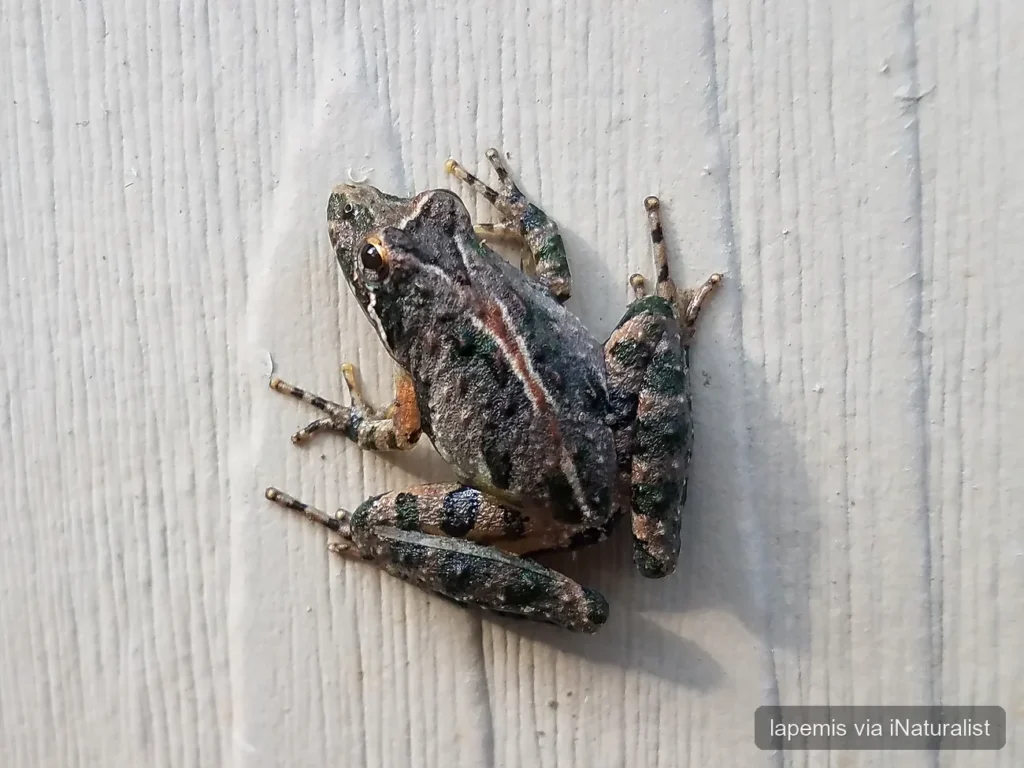
- Scientific name: Acris gryllus dorsalis
- Family: Hylidae
- Rank: subspecies of southern cricket frog
The Florida Cricket Frog is commonly found in grassy, marshy areas, often near ponds, streams, and wetlands throughout Florida’s coastal plain. It favors shallow water with abundant vegetation where it can easily hide and hunt for small insects.
This small frog typically measures about 1 to 1.5 inches long. Its back is gray or brown with irregular dark spots and a distinctive dark triangle between the eyes. The frog’s skin is smooth and its toes are unwebbed or only slightly webbed, unlike many other frogs. When disturbed, it makes quick, cricket-like jumps rather than long leaps.
Males tend to have a slightly higher-pitched call and may be smaller than females. The Florida Cricket Frog is notable for its adaptability to a variety of wet habitats and is a common amphibian in Florida’s diverse wetland ecosystems.
Gopher Frog
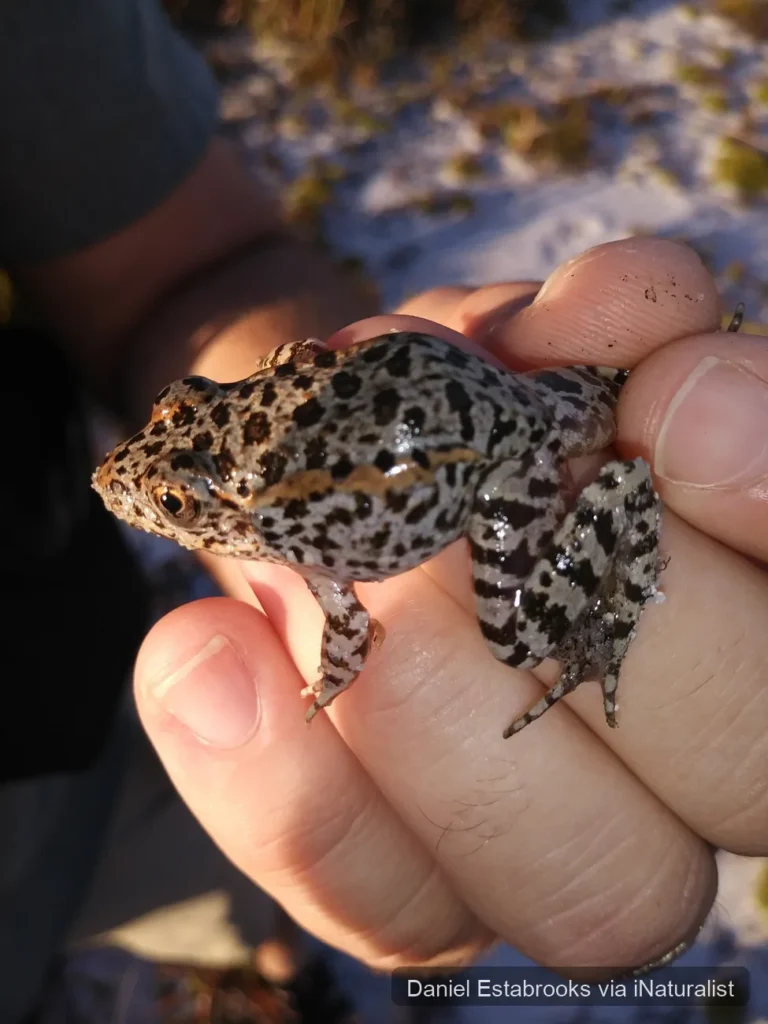
- Scientific name: Lithobates capito
- Family: Ranidae
- Rank: species
The gopher frog is a robust amphibian with a broad head and stout body, typically measuring 3 to 4 inches in length. Its skin is rough and warty, colored yellowish to brown with irregular dark blotches.
A key identification feature is the prominent dorsolateral ridges running from behind the eyes down the back. The belly is pale, often white or cream, sometimes with faint spotting. Males develop dark nuptial pads on their thumbs during the breeding season and have a deep, resonant call.
This species is usually found in upland sandy or pine flatwoods habitats in Florida, often near temporary ponds or wetlands used for breeding. It spends much of its time underground or in burrows, which is why it is less commonly seen.
The gopher frog is regionally notable for its dependence on both terrestrial and aquatic habitats, making it sensitive to habitat loss.
Green Treefrog
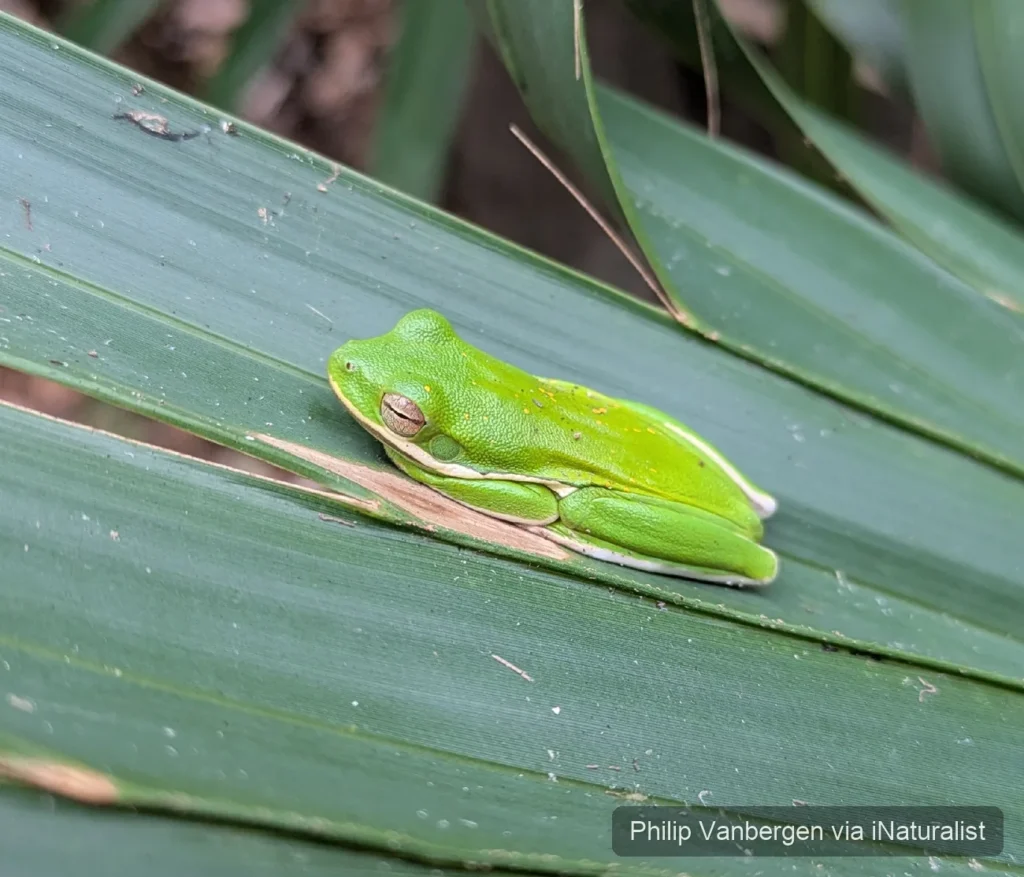
- Scientific name: Dryophytes cinereus
- Family: Hylidae
- Rank: species
The green treefrog is a medium-sized frog, typically 1.5 to 2.5 inches long, with a slender body and long legs suited for climbing. Its smooth skin is bright green, sometimes with small white or yellow spots, and a distinctive white or cream stripe runs along each side from the upper lip to the groin. The toe pads are large and rounded, aiding in gripping surfaces.
This frog is commonly found in Florida’s wetlands, including swamps, marshes, and wooded areas near ponds or slow-moving water. It often perches on vegetation or trees, making it easy to spot by its vivid color.
Males can be identified by their loud, nasal calls during breeding season. The green treefrog is notable in Florida for its adaptability to a variety of wet habitats and is one of the most familiar treefrogs in the region.
Greenhouse Frog
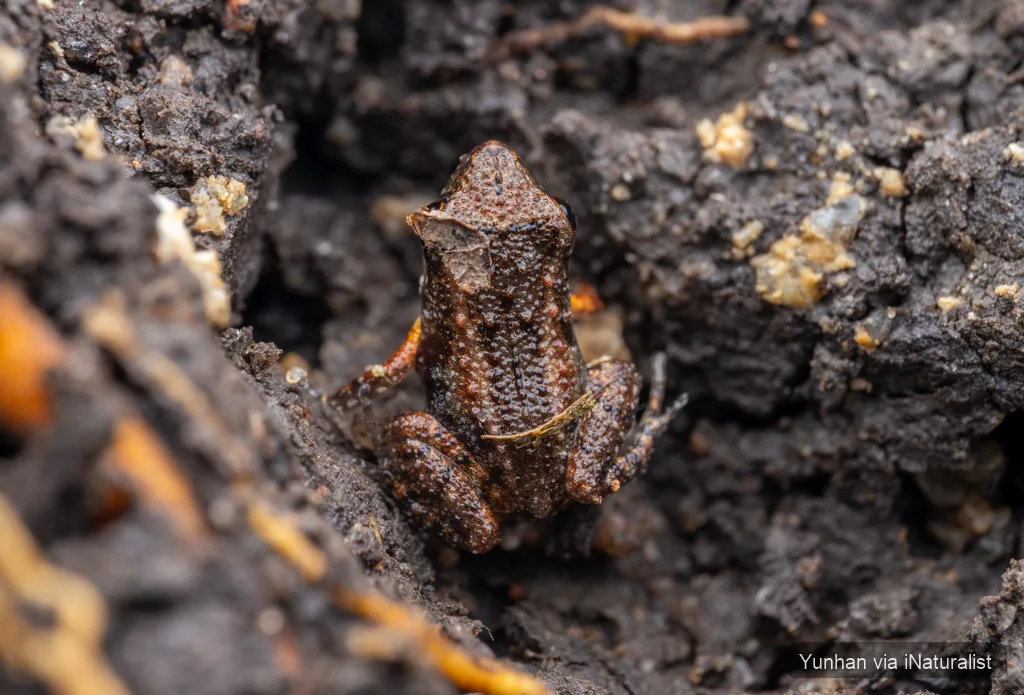
- Scientific name: Eleutherodactylus planirostris
- Family: Eleutherodactylidae
- Rank: species
The greenhouse frog is a small amphibian, measuring about 0.75 to 1.25 inches in length. It has a rounded body and smooth skin that varies from light to dark brown, often with scattered darker spots or mottling. Its head is broad with a flattened snout, and the eyes are relatively large. Unlike many frogs, it lacks toe pads and has short legs, giving it a squat appearance.
In Florida, this species is commonly found in urban and suburban areas, often around gardens, greenhouses, and leaf litter. It prefers moist, sheltered places such as under logs, stones, or plant debris.
The greenhouse frog is notable in the region for being a non-native species that has successfully established populations, likely introduced through the plant trade. Its small size and terrestrial habits help distinguish it from other local frogs.
Oak Toad
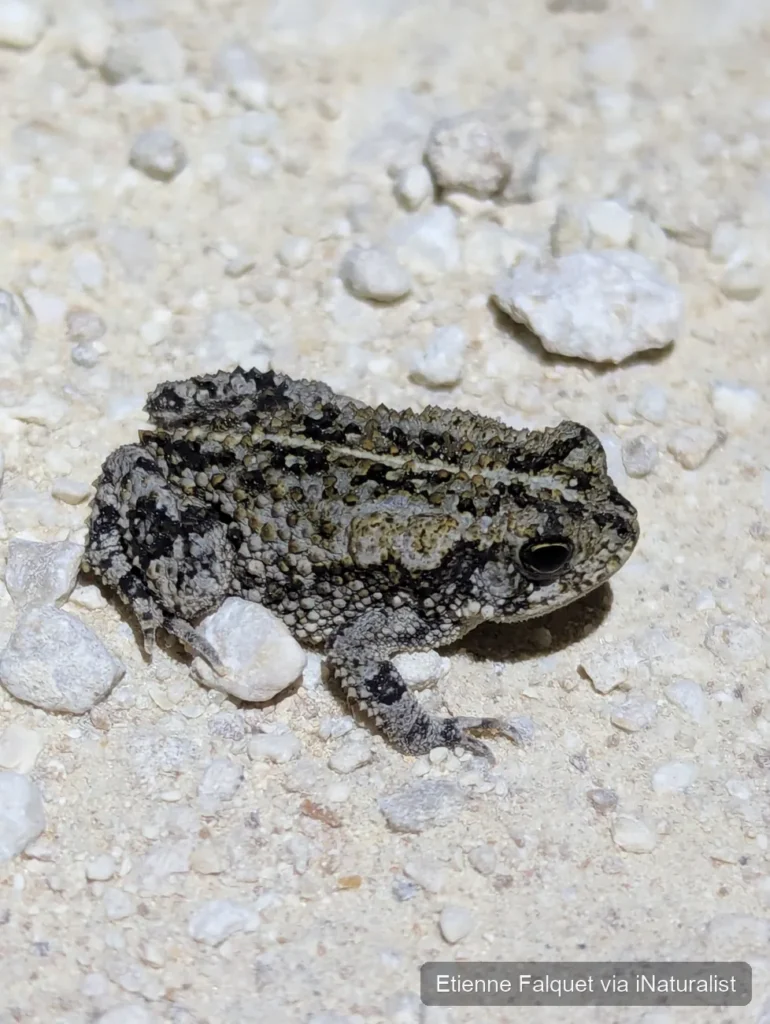
- Scientific name: Anaxyrus quercicus
- Family: Bufonidae
- Rank: species
The oak toad is a small toad, typically measuring about 0.75 to 1.25 inches in length. It has dry, warty skin that ranges in color from yellow to reddish-brown, often with a distinctive dark stripe running down the middle of its back. Its short legs and rounded body give it a compact appearance. Males are generally smaller and may have darker throats during the breeding season.
This toad is commonly found in dry, sandy habitats such as pine flatwoods, scrub, and oak hammocks throughout Florida. It is often seen on the ground near leaf litter or pine needles, especially after rains. The oak toad’s preference for upland habitats and its small size make it one of the region’s most distinctive and recognizable toads.
Pig Frog
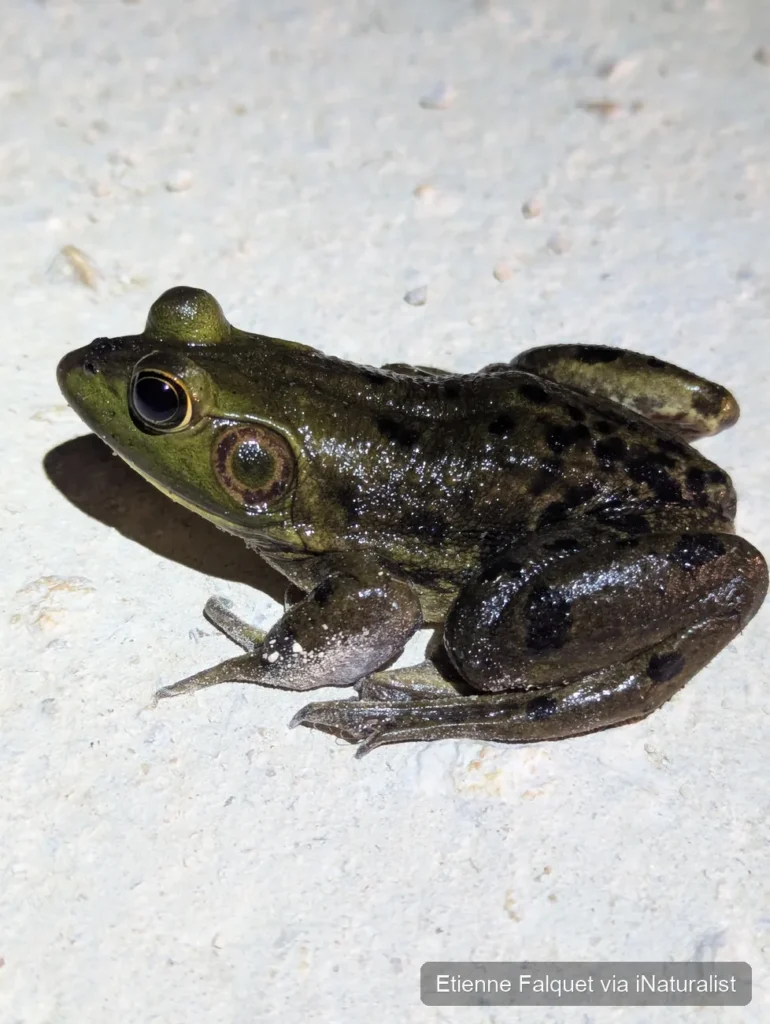
- Scientific name: Lithobates grylio
- Family: Ranidae
- Rank: species
The pig frog is a large, robust amphibian characterized by a green to olive-brown body with darker blotches or mottling. Its smooth skin and prominent ridges along the back help distinguish it from other frogs. This species typically measures between 4 and 6 inches long, making it one of the larger frogs in Florida. A notable feature is its pig-like grunting call, which is often heard near water.
Pig frogs inhabit freshwater environments such as ponds, lakes, marshes, and slow-moving streams, often found sitting on vegetation or partially submerged. They are primarily aquatic and rarely venture far from water.
In Florida, they are regionally notable for their size and distinctive call, which can help with identification during the breeding season. Males may be slightly larger and have a more pronounced throat during calling.
Southern Chorus Frog
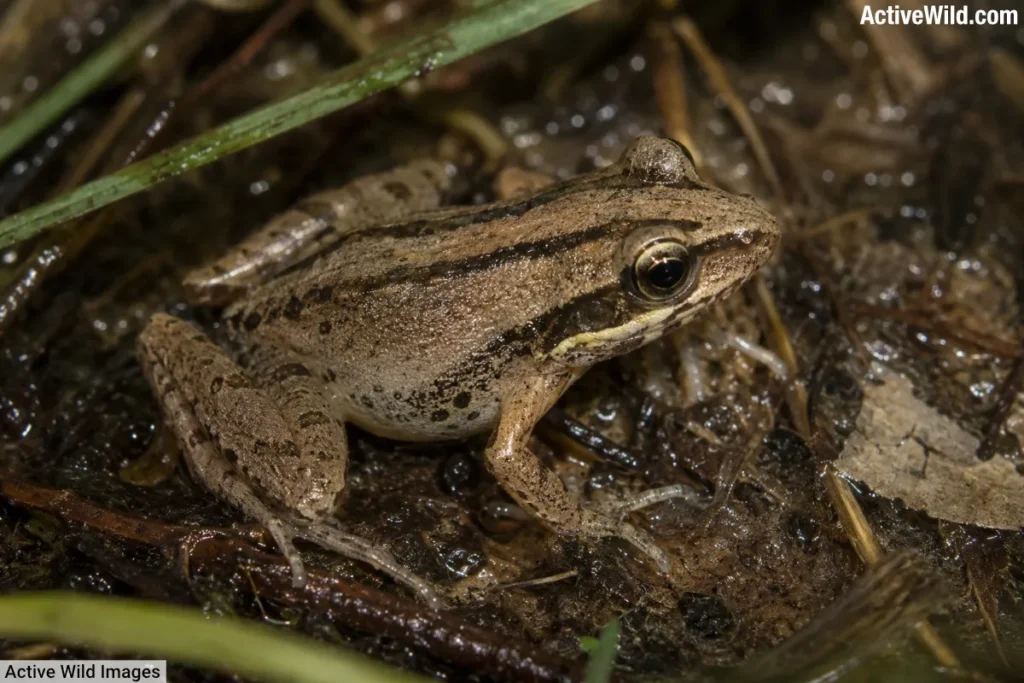
- Scientific name: Pseudacris nigrita
- Family: Hylidae
- Rank: species
The southern chorus frog is a small frog, usually around 1 to 1.5 inches long, with a slender body and smooth skin. Its color varies from gray to brown or greenish, often marked by three dark stripes running lengthwise down its back. These stripes are a key feature for identification. The frog’s toes are unwebbed or only slightly webbed, and it has a rounded snout.
This species is commonly found in Florida’s wetlands, including marshes, wet pine flatwoods, and flooded fields. It is most often heard during the breeding season, when males produce a distinctive, rapid trilling call.
Southern chorus frogs are typically encountered near shallow, temporary pools or other standing water, where they breed.
Southern Leopard Frog
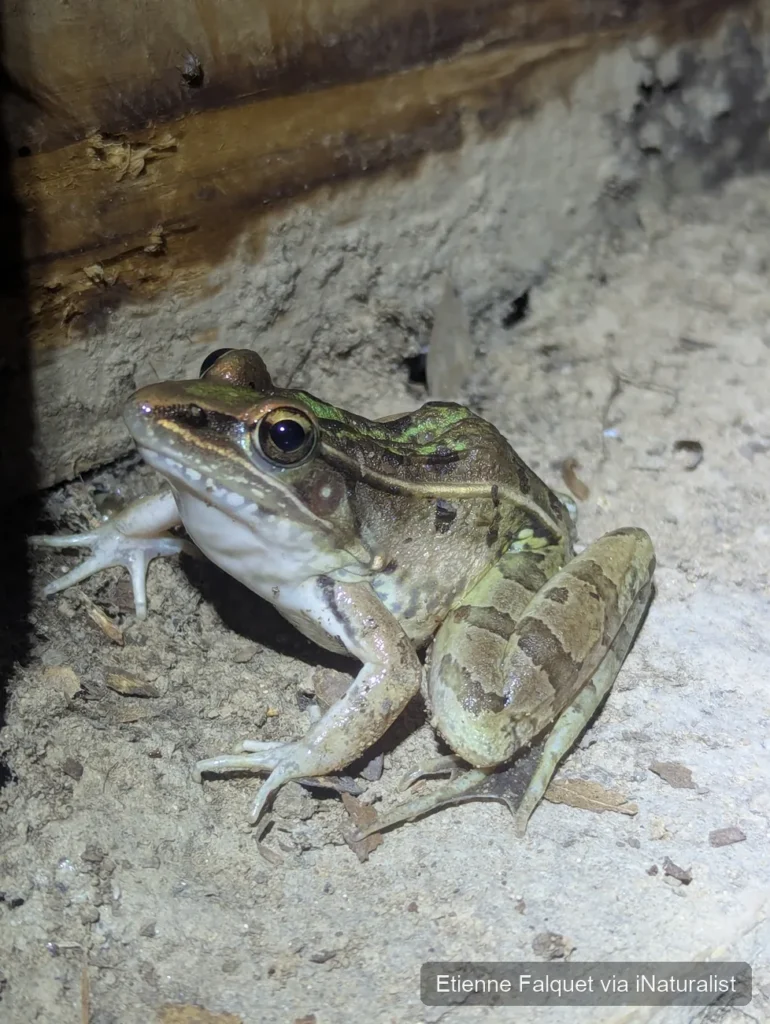
- Scientific name: Lithobates sphenocephalus
- Family: Ranidae
- Rank: species
The Southern Leopard Frog has a green or brown body marked with large, dark spots edged in lighter color, giving it a distinctive leopard-like pattern. It has a white or cream-colored belly and two prominent ridges running from behind the eyes down the back. Adults typically range from 2.5 to 4 inches long. The long legs and slender body create a streamlined silhouette useful for jumping.
This frog is commonly found in Florida’s freshwater habitats such as ponds, marshes, ditches, and slow-moving streams. It often perches near water or on vegetation. Identification is aided by the prominent dorsal ridges and spotted pattern.
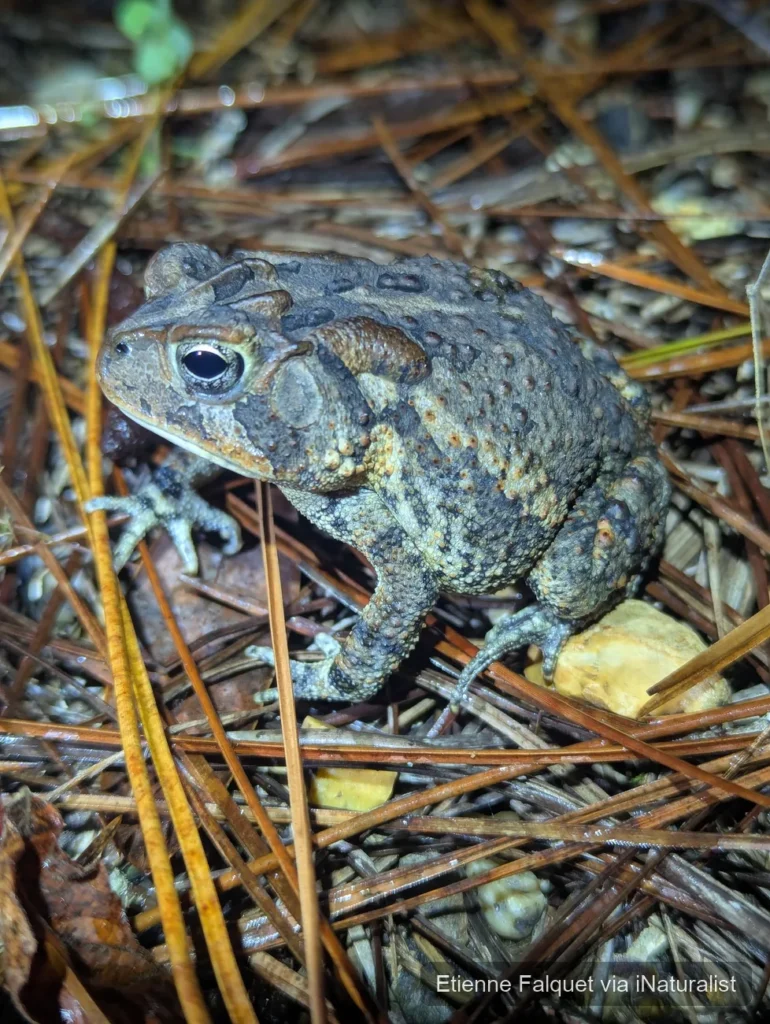
Southern Toad
- Scientific name: Anaxyrus terrestris
- Family: Bufonidae
- Rank: species
Commonly found in sandy uplands, pine flatwoods, and suburban yards throughout Florida, the Southern Toad is a stout amphibian typically measuring 2 to 3.5 inches long. Its skin is rough and covered in warts, with a coloration ranging from gray to brown or reddish, often featuring darker spots. A key identification feature is the presence of prominent cranial crests—bony ridges running from the eyes toward the back of the head.
This toad is active mostly at night and is commonly encountered near moist environments such as ponds, ditches, and wet depressions where it breeds. Males often have darker throats during the breeding season due to vocal sacs used in their distinctive trilling calls.
The Southern Toad is regionally notable for its adaptability to various habitats, making it one of Florida’s most frequently observed toads.
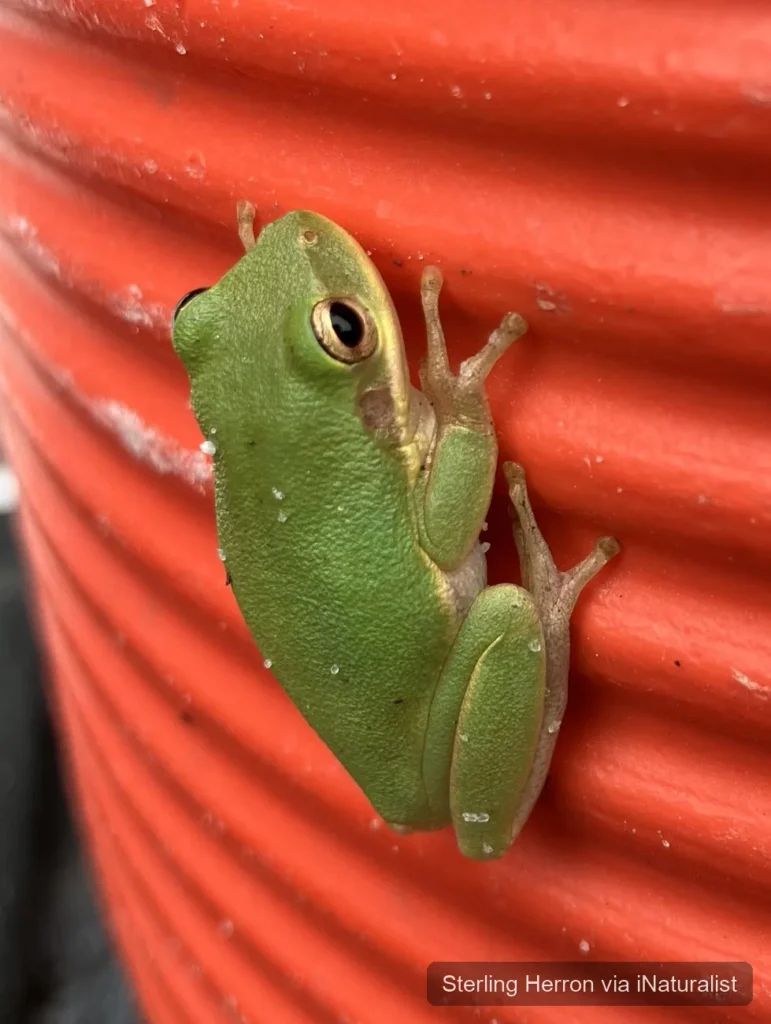
Squirrel Tree Frog
- Scientific name: Dryophytes squirellus
- Family: Hylidae
- Rank: species
The squirrel tree frog is recognized by its small size, typically 1 to 1.5 inches long, and its smooth skin that varies in color from bright green to brown, often changing to match its surroundings. It usually has a white or yellow stripe running along each side of the body, extending from the upper lip to the groin, which helps distinguish it from similar species. Its large toe pads aid in climbing, and the belly is pale and unmarked.
This frog is commonly found in Florida’s pine flatwoods, marsh edges, and suburban gardens, especially near temporary or permanent water sources. It is often heard before seen, as males call with a high-pitched, rapid trill during the breeding season. The squirrel treefrog’s distinctive coloration provides excellent camouflage in leafy or grassy environments.
Further Reading
You can find out more about the wildlife of Florida on the following pages:
- Florida Wildlife – The Ultimate Guide
- Mammals of Florida
- Birds in Florida
- Snakes in Florida
- Lizards in Florida
- Spiders in Florida
- Scorpions in Florida
Discover more North American amphibians on this page
Discover more about amphibians on these pages: