
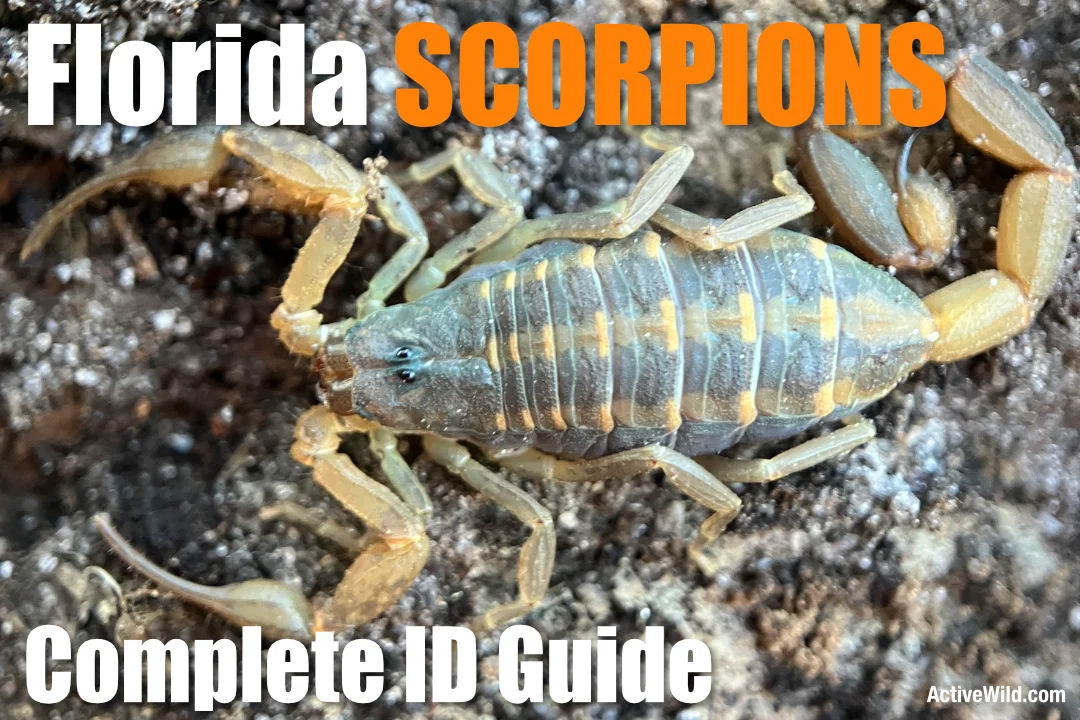
Scorpions are among the most distinctive arachnids found in Florida, though they are far less diverse here than in the deserts of the western United States.
On this page you will find pictures and information on all three types of scorpions found in Florida.
Seen a scorpion in Florida or have a question about one? Share your sightings, photos, and experiences in the comments—your observations can help others learn more about these fascinating arachnids.
Page Index
Scorpions
Belonging to the order Scorpiones, scorpions are ancient arthropods that are easily recognized by their pincers, segmented tails, and curved stingers. Florida is home to only a handful of species, all from the genus Centruroides (bark scorpions) which thrive in the state’s warm, humid climate.
- You can find out more about scorpions on this page: Scorpion Facts
- You can find out more about arachnids on this page: Arachnid Facts
Most Florida scorpions are small, secretive, and nocturnal, spending daylight hours hidden beneath bark, rocks, or debris, and emerging at night to hunt insects and other invertebrates. While their appearance can be intimidating, their ecological role is beneficial, helping to control pest populations.
As with all wildlife, scorpions should be observed from a safe distance and not handled. Understanding how to identify and coexist with these animals can make outdoor exploration safer and more rewarding.
Are Florida Scorpions Dangerous?
Most scorpion stings in Florida are not life-threatening (typically no more severe than a bee sting for most people), but they can cause pain, swelling, and numbness.
Seek medical attention if severe pain, allergic reactions, or unusual symptoms occur, especially in children or sensitive individuals.
How Many Types Of Scorpions Are Found In Florida?
Florida has three recognized scorpion species, all belonging to the genus Centruroides:
- Hentz striped scorpion (Centruroides hentzi) – the most widespread and commonly encountered species
- Florida bark scorpion / Slender Brown Scorpion (Centruroides gracilis) – Florida’s largest scorpion, mainly found in southern Florida
- Guiana striped scorpion (Centruroides guianensis) – a rarer, likely introduced species in the far south
Of these, only the Hentz striped scorpion is native and broadly distributed across the state. The others are more localized, particularly in tropical southern regions such as the Florida Keys.
Overall, Florida’s scorpion diversity is low compared to arid regions like the southwestern United States, but these few species are well adapted to the state’s warm, humid environments.
Florida Bark Scorpion / Slender Brown Scorpion
Centruroides gracilis
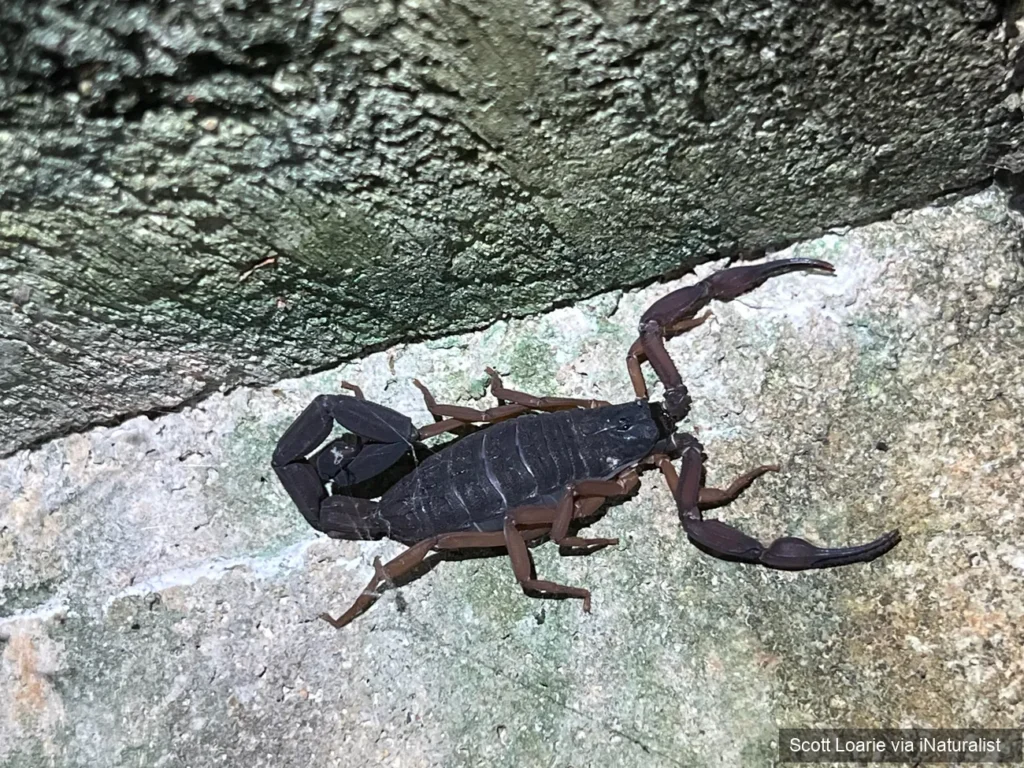
The Florida bark scorpion (also known as the slender brown scorpion) is a slender, long-tailed scorpion commonly found in southern Florida, especially in warm, humid environments. Despite its name, the Florida bark scorpion is not native to the state, and is likely to have originated in Central America.
The largest scorpion found in Florida, adults typically reach 3.5–6 in (9–15 cm) in length and appear in a variety of colors, from dark brown / black to yellowish, often with faint darker striping that helps them blend into bark and leaf litter. The pincers are relatively narrow, while the tail is elongated and curves upward, ending in a venomous stinger.
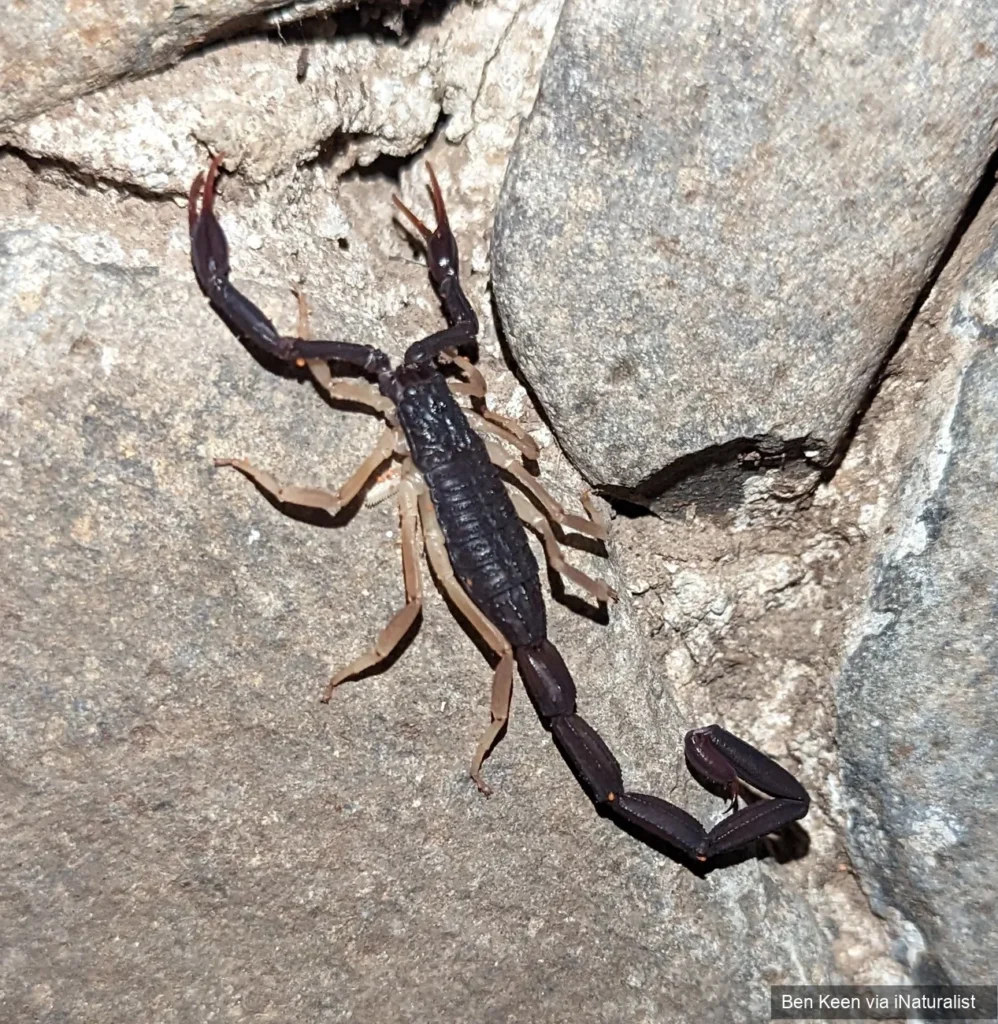
This species is primarily nocturnal, hiding by day under loose bark, logs, rocks, or inside buildings, and emerging at night to hunt insects and other small invertebrates. It is an agile climber and may be found on walls or ceilings.
Although its sting is painful, it is not usually dangerous to healthy adults; symptoms may include localized pain, swelling, and tingling.
Hentz Striped Scorpion
Centruroides hentzi
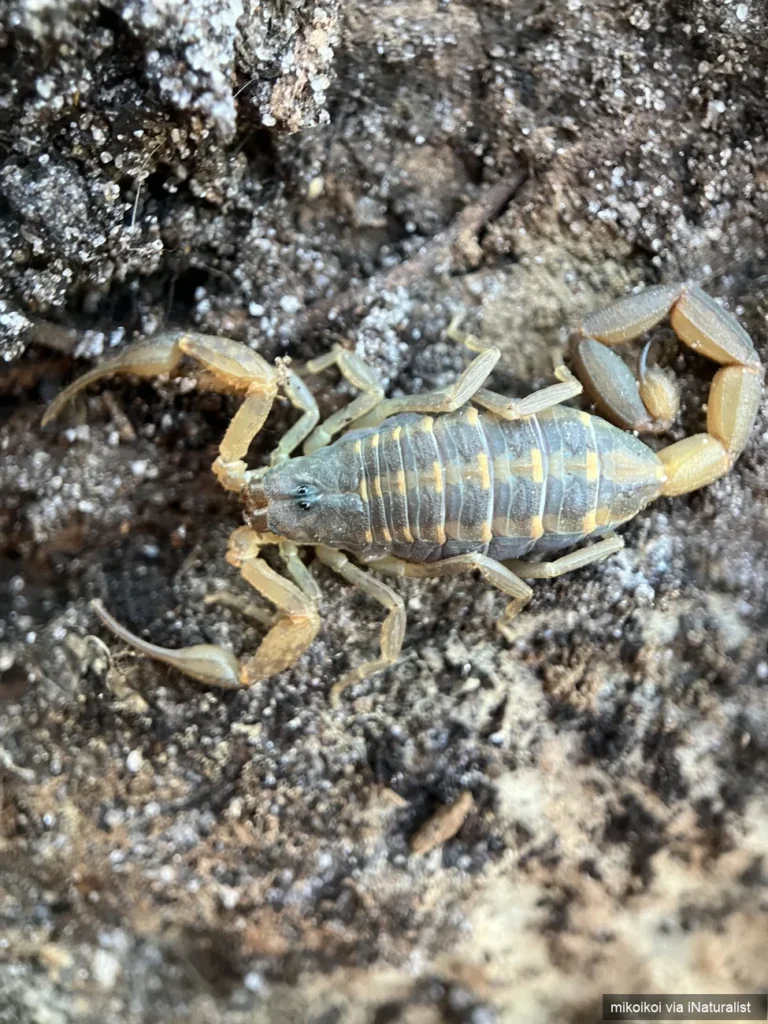
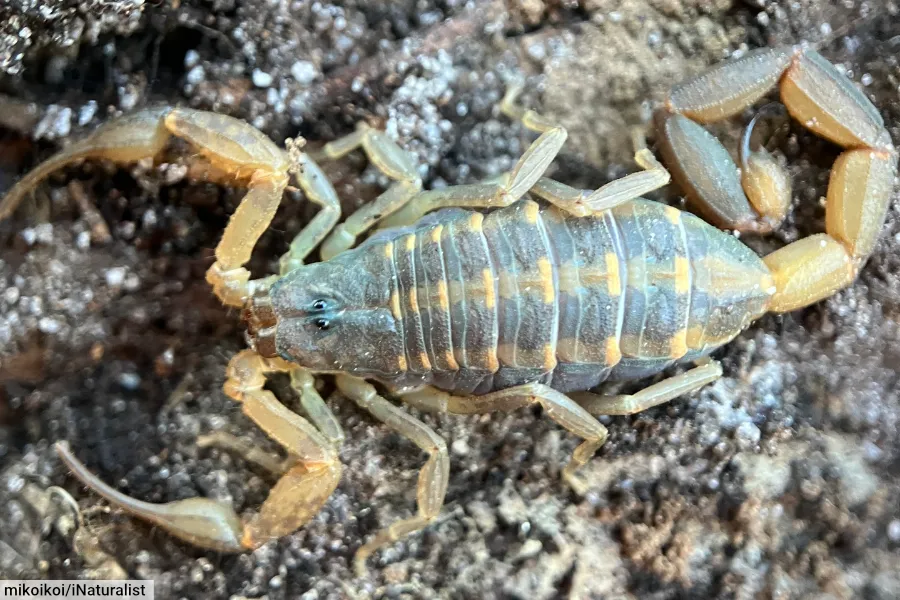
The Hentz striped scorpion is the most widespread scorpion species in Florida and a common sight in dry, sandy habitats.
Adults typically measure 1.5–3 in (4–7 cm) long and are pale yellow to light brown, marked with two distinct dark stripes running lengthwise along the back—its key identifying feature. The body is slender, with narrow pincers and a relatively thin, curved tail tipped with a stinger.
The Hentz striped scorpion is best identified by its striped pattern, small size, and preference for dry, well-drained environments.
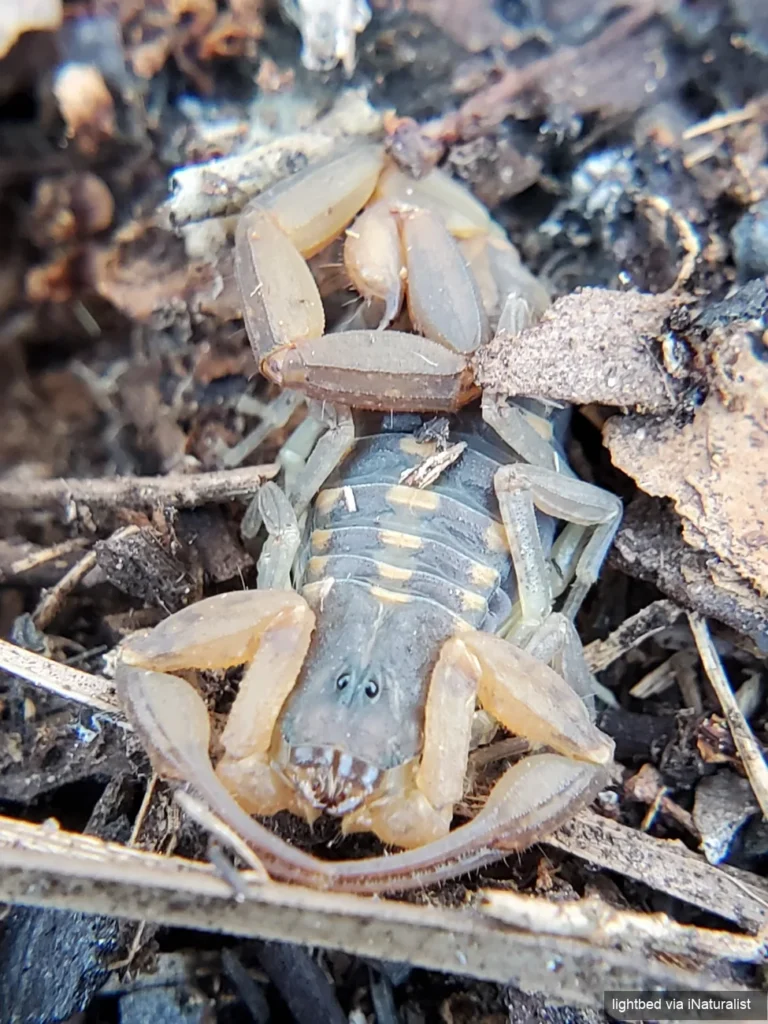
This species is nocturnal, sheltering during the day beneath logs, rocks, leaf litter, or loose bark, and occasionally entering homes. At night, it emerges to hunt insects and other small prey, using its venom to subdue them.
While the sting can be sharp and painful, it is generally not medically significant, producing effects similar to a bee sting in most people.
Guiana Striped Scorpion
Centruroides guanensis
(No photo available)
The Guiana striped scorpion is a small, slender scorpion occasionally recorded in southern Florida, likely as an introduced species.
Adults typically reach 1–2.5 in (3–6 cm) in length and are pale yellow to light tan, with faint longitudinal striping along the back that may be less distinct than in related species. The pincers are narrow and delicate, while the tail is elongated and curves upward, ending in a fine, venomous stinger.
Identification relies on its small size, subtle striping, and occurrence in tropical or urban microhabitats.
This species favors warm, humid environments and is most often found under bark, leaf litter, stones, or within human structures. Like other members of its genus, it is nocturnal, emerging at night to hunt insects and other small invertebrates.
Further Reading
Florida Wildlife
- A complete guide to Florida wildlife can be found on this page: Florida Nature
- Discover Florida’s snake species: Florida Snakes
- Discover the lizards found in Florida: Florida Lizards
- Discover Florida’s bird species: Florida Birds
Scorpions & Arachnids
- You can find out more about scorpions on this page: Scorpion Facts
- You can find out more about arachnids on this page: Arachnid Facts